


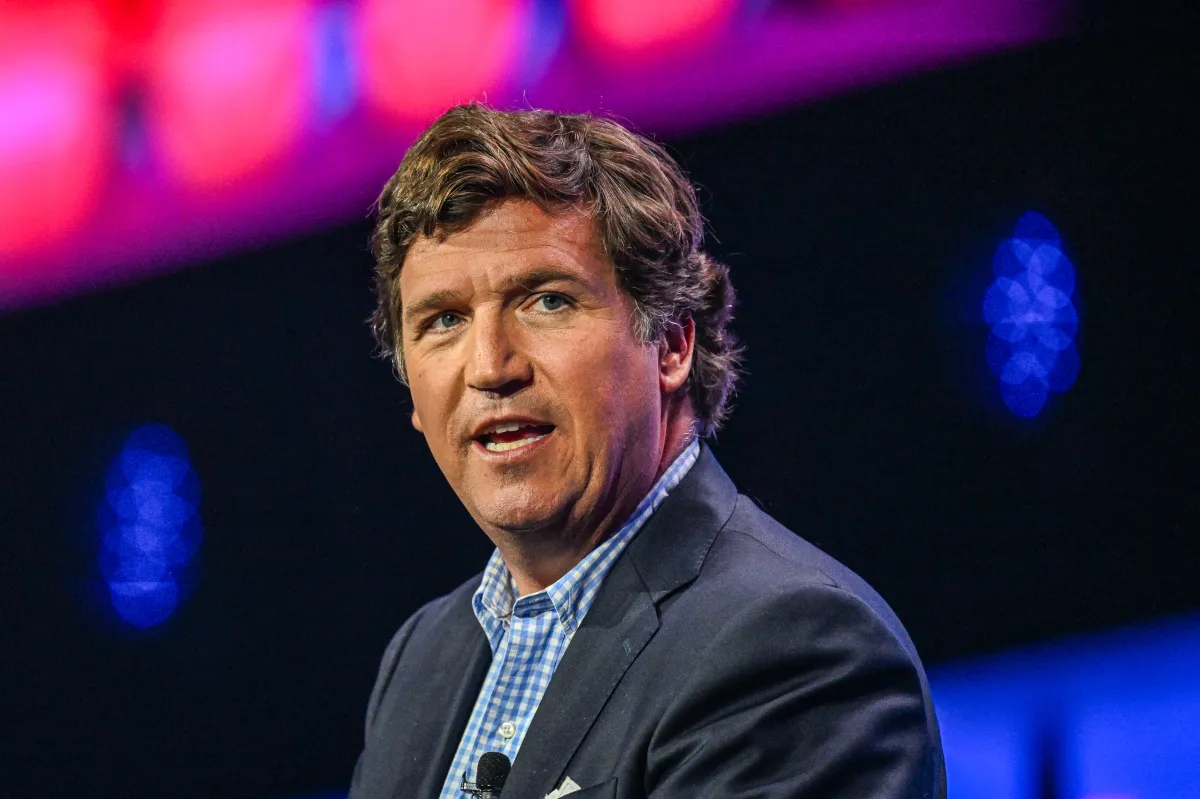
In the rapidly shifting kaleidoscope of American politics, few transformations have been as jarring, or as profoundly revealing of our polarized era, as the quiet ideological migration of Tucker Carlson. Once the undisputed crown prince of conservative populist media, Carlson has spent the opening act of 2026 methodically dismantling the very altar of public opinion he helped build over decades in the spotlight. In an extraordinary moment that reverberated across the global media landscape, Carlson sat down with Britain’s Sky News to perform what can only be described as a public act of contrition—an unexpected, deeply personal admission that his years of hardline, anti-Muslim rhetoric were not just politically incendiary, but fundamentally wrong. Looking directly into the camera, the former Fox News host characterized his past commentary as a product of collective post-9/11 hysteria, admitting that he had spent years convincing himself and millions of loyal viewers that Islam was an inherently violent, medieval suicide cult bent on Western destruction. This sudden, almost spiritual reassessment marks a startling departure for a man who, just days prior, formally declared himself “out” of the Republican Party, having already severed ties with the standard-bearer of the modern conservative movement, Donald Trump, and publicly apologized for misleading the public into supporting him. To watch Carlson untangle himself from the dogmas of his own making is to witness a profound psychological unraveling of the populist right, leaving observers to wonder whether this is a genuine intellectual awakening or a calculated pivot designed to survive a rapidly collapsing political paradigm.
To truly appreciate the gravity of Carlson’s confession, one must confront the sheer scale and impact of the hostile rhetoric he is now trying to scrub from his legacy. During his high-water mark of media dominance at Fox News, he was not merely a passive participant in the post-9/11 culture wars; he was their chief orchestrator, utilizing his high-rated platform to paint a vibrant, menacing target on the backs of Muslim Americans. Night after night, Carlson welcomed firebrand critics to dissect and disparage the faith of over a billion people, framing simple gestures of civic outreach by secular leaders as dangerous appeasements of extremist groups like the Muslim Brotherhood. Organizations like the Council on American-Islamic Relations (CAIR) spent years pleading with network executives to pull him off the air, citing what they described as a dangerous climate of Islamophobia and white supremacist agitation designed to marginalize vulnerable communities. Yet, in a shift that began to crystallize toward the end of 2025, the fierce advocate of travel bans and national security crackdowns began to sound like his former detractors, suddenly labeling domestic attacks on Muslims as “disgusting” and dismissing the threat of radical Islam as a specter manufactured by foreign actors. By dismissing the foundational fears that fueled his rise to power, Carlson has forced his audience to look into the mirror and ask painful questions about the authenticity of the outrage they consumed for so long, prompting a broader conversation about the responsibility of media figures in shaping public hatred.
The catalyst for this ideological house-cleaning appears to be a profound rewrite of Carlson’s foreign policy worldview, particularly regarding America’s relationship with Israel. Carlson’s latest statements reveal a man deeply disillusioned by what he perceives as a profound metamorphosis of the Jewish state, lamenting that the Israel he first visited decades ago—a nation he felt genuine sympathy for—has been entirely replaced by a political entity he no longer recognizes, respects, or wishes to support. This intellectual break is not merely academic; it is a full-scale assault on the cornerstone of American neo-conservative policy, challenging the long-held assumption that Israel’s security interest is inherently synonymous with America’s national interest. In his current formulation, Carlson has gone so far as to claim that the long-standing American obsession with the threat of “radical Islam” was largely a narrative sleight-of-hand orchestrated by the Israeli government and its informal agents within the United States. This geopolitical reassessment represents a total inversion of his past worldview, shifting the blame for decades of Middle Eastern conflict away from religious theology and directly onto the shoulders of statecraft, lobbying, and the quiet machinations of international diplomacy. It is a cynical, yet deeply human realization that the enemies we are taught to fear are often constructed to serve the political agendas of foreign nations rather than the safety of the citizens at home.
Predictably, this aggressive shift in focus has drawn fierce, unrelenting accusations of antisemitism from his critics, thrusting Carlson into a raw and deeply personal ideological war. Prominent watchdog groups like the Anti-Defamation League (ADL) have wasted no time in labeling him one of the most dangerous mainstream transmitters of antisemitic tropes and conspiracy theories in modern memory. This firestorm reached a fever pitch in late 2025 when Carlson hosted the notorious white nationalist Nick Fuentes on his program, a decision that horrified even some of his remaining supporters when he appeared to trivialize Fuentes’s Holocaust denial by comparing it favorably to the ongoing loss of life in modern geopolitical conflicts. Carlson, however, has fiercely resisted these labels, clashing spectacularly with figures like the BBC’s Victoria Derbyshire, where he adamantly defended his integrity by arguing that criticizing the actions of a foreign government should never be conflated with prejudice against an ethnic or religious group. In Carlson’s view, the label of “antisemite” has become a rhetorical shield used by his adversaries to shut down legitimate, uncomfortable debates about how foreign influences steer American soldiers and tax dollars into foreign entanglements that do not serve the home nation. This ongoing defense illustrates the messy, often dangerous territory a public figure enters when they attempt to redraft their intellectual boundaries in real-time.
While Carlson’s personal evolution might seem like an isolated act of political theater, it is actually deeply intertwined with seismic shifts in how the American public views religion, race, and international alliances. Paradoxically, the broader American landscape has grown increasingly hostile toward Muslims in recent years, even as Carlson attempts to steer his own followers away from that animosity. Data from the Institute for Social Policy and Understanding’s National Islamophobia Index reveals a troubling spike in anti-Muslim sentiment, climbing sharply from 2022 to late 2025, driven largely by shifting attitudes among white Evangelicals, Catholics, and Jewish Americans. This rising tide of suspicion reveals a country deeply divided along partisan lines: while the vast majority of Democrats continue to view Muslims favorably, support among Republicans has collapsed to less than half of what it was just a few years ago. Carlson is navigating a cultural minefield where his new message of tolerance directly contradicts the hardening prejudices of the very base that once worshipped him, suggesting his evolution could either bridge a deep partisan divide or isolate him entirely from the audience he spent a lifetime cultivating. It highlights the tragic irony of a media figure who helped build a monster of public intolerance, only to find himself unable to easily tames it once his own perspective shifted.
This dramatic domestic tension is mirrored even more vacationally in Americans’ rapidly deteriorating relationship with Israel, a trend of public opinion that Carlson is both riding and actively accelerating. For the first time in over twenty years of polling, majorities of Americans—particularly those under fifty—express more sympathy for the plight of Palestinians than for the state of Israel, signaling a profound generational shift that could alter the course of global politics. This erosion of support is no longer confined to the progressive left; even within the Republican Party, historical unwavering loyalty has cracked, with favorable views of Israel dropping to historic lows. As Carlson steps away from the GOP and aligns himself with this rising tide of skepticism, he positions himself not as a voice in the wilderness, but as the vanguard of a new, deeply nationalistic American populism that prioritizes domestic preservation over foreign alliances. Whether his historical apology for Islamophobia is remembered as a genuine act of human maturity or a brilliant piece of political survival, it reflects a larger truth: the old ideological maps of American politics are being burned, and in their place, a complicated and unpredictable new world is being born.