





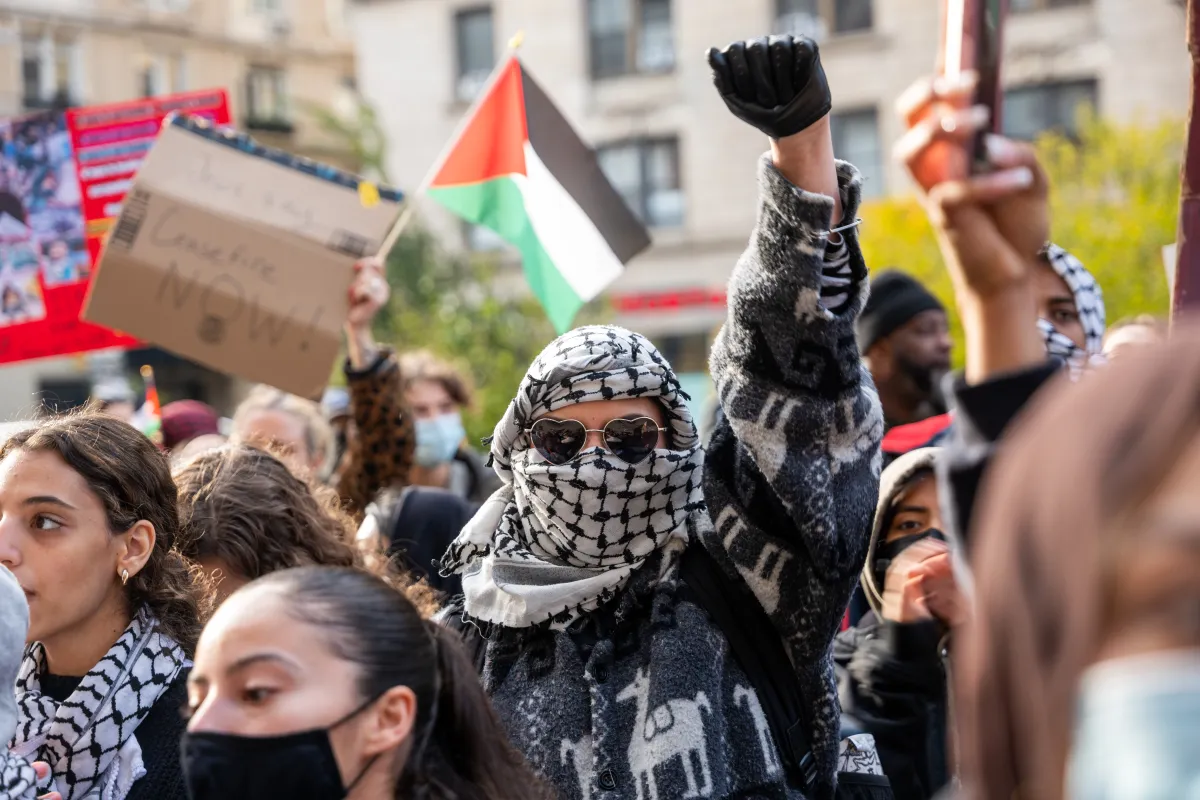
In a moment that cuts to the very heart of American identity, a federal judge has delivered a resounding rebuke to the Trump administration, ruling that its aggressive efforts to cancel visas and deport noncitizen college students for their pro-Palestinian advocacy and criticism of Israel are fundamentally unconstitutional. The ruling, issued on Friday by U.S. District Judge Noel Wise in the Northern District of California, strikes down the administration’s misuse of immigration statutes as a blunt instrument for punishing political speech. At the core of this landmark decision is a profound, almost poetic reaffirmation of the First Amendment: “Stated plainly, in the United States, freedom of speech belongs to the people. It is not the government’s to take.” These words land with the weight of constitutional history, dismantling the dangerous premise that the rights of noncitizens are merely provisional privileges to be revoked at the whim of the executive. Judge Wise’s decision is a stark rejection of the notion that holding a visa equates to surrendering one’s fundamental human right to articulate dissent. Throughout the opinion, she meticulously exposed how the administration’s actions threatened not just the individual students targeted, but the entire ecosystem of democratic discourse. The ruling underscores that when a government deports people for what they say, it sends a chilling message that silences everyone, citizen and noncitizen alike. By declaring these actions unconstitutional, the court has reinforced the foundational principle that the strength of the United States lies precisely in its tolerance of uncomfortable, controversial, and even unpatriotic-sounding speech. This is a decisive legal victory for free expression, proving that no executive action, no matter how forcefully pursued, can override the sacred text of the Constitution when it comes to the marketplace of ideas. As the nation watches the fallout from this decision, it is clear that the judiciary has stepped in as the ultimate protector of civil liberties against the encroachment of political expediency.
The lawsuit that catalyzed this historic ruling was not filed by a major legal behemoth, but by The Stanford Daily, the independent student newspaper of Stanford University—a fitting plaintiff given that the First Amendment’s protection of a free press is its lifeblood. The newspaper argued that Secretary of State Marco Rubio and the broader Trump administration deliberately leveraged the visa system to target noncitizen students for deportation based solely on their protected speech, which included writing op-eds, organizing protests, and attending campus demonstrations in support of Palestinian rights. The university’s student journalists alleged that these government actions created a pervasive atmosphere of fear, effectively suppressing the voices of noncitizen students who were terrified that expressing any viewpoint critical of Israel or supportive of a ceasefire would mark them for retribution. This legal battle unfolded against the backdrop of a massive nationwide immigration crackdown, where the administration aggressively revoked visas and pursued deportation proceedings against any noncitizen involved in campus political activism. The efforts gained national infamy following the high-profile arrests of Columbia University graduate Mahmoud Khalil and Tufts University student Rumeysa Ozturk, both of whom were detained for their pro-Palestinian activism. These arrests sent shockwaves through academic communities, signaling that the administration was prepared to dismantle the lives of students for exercising their rights to assembly and speech. The Stanford Daily stepped into this fray, recognizing that its own noncitizen reporters and editors were at risk, and that the documentary record of campus life itself was being adulterated by a climate of fear. By taking the government to court, the newspaper sought not only to protect its individual staff members but to preserve the integrity of the student press as an institution. Student journalism has historically been the incubator for groundbreaking reporting of civil rights and anti-war movements, and this case places the Stanford Daily squarely within that hallowed tradition, ensuring that future generations can document history without fear of state reprisal. The case became a crucial test of whether the Bill of Rights extends its protective mantle over everyone physically present in the United States, or merely those who hold a passport. Ultimately, the judge’s ruling affirmed that the protections are universal, shielding the journalistic endeavor and academic freedom from the poised scalpel of political censorship.
To grasp the magnitude of Judge Wise’s ruling, one must understand the specific, formidable legal provisions the administration invoked to justify its unconstitutional actions. The government relied on two distinct sections of the Immigration and Nationality Act (INA). The first provision grants the Secretary of State the sweeping authority to initiate deportation proceedings if he personally determines that a noncitizen’s speech “compromises a compelling foreign policy interest”—a standard so vague and subjective that it effectively hands a single political appointee the power to silence any voice he dislikes. The second provision allows the Secretary to revoke the visa of any noncitizen at his complete discretion, with no requirement for cause, justification, or evidentiary support. Attorneys for The Stanford Daily argued that applying these provisions to constitutionally protected speech violates both the First Amendment (freedom of expression) and the Fifth Amendment (due process). Judge Wise, an appointee of former President Joe Biden, wholly agreed with this assessment. She articulated a critical legal principle: when a noncitizen’s speech is the “but-for factor” in a visa revocation and subsequent deportation, the government is unmistakably singling out that speech for disfavored treatment based on its viewpoint or content, which is the exact “bedrock” violation the First Amendment was designed to prevent. She noted that the framework of the INA, when twisted to target opinions, becomes a weapon of ideological persecution. The judge’s reasoning dismantled the government’s defense that immigration is purely a matter of executive grace, reminding the court that while the government has broad power over admissions, it cannot exercise that power to punish expressive conduct within U.S. borders. By piercing through the legal jargon, Wise reaffirmed that the Bill of Rights functions as a distinct check on the plenary powers of immigration control. She asserted that the government cannot hide behind national security or foreign policy interests when the demonstrable intent is the suppression of disfavored viewpoints. This meticulous legal analysis provides a robust precedent that future administrations cannot casually disregard, ensuring that the freedom to criticize official policy remains a vibrant and enforceable right for all.
Perhaps the most compelling aspect of Judge Wise’s ruling is her vivid acknowledgment of the chilling effect that the administration’s policies had on the entire student body and beyond. She accepted the plaintiffs’ argument that the government’s actions had created a censorious environment where free speech was paralyzed by the fear of retaliation. In a passage that resonated with human empathy and constitutional urgency, the judge wrote: “The government has offered a chilling message regarding protected speech—speak out against Israel or in support of Palestinians and we will revoke your visa and deport you. Behave.” She poignantly noted that noncitizen students “heard the warning and heeded. And, as the idiom goes, the silence is deafening.” This observation captures the true cost of such policies—not just the deportation of individuals, but the wholesale silencing of a generation of scholars and activists who feared losing everything they had worked for. Wise expanded her concern beyond the immediate issue of the Middle East conflict, warning that this laser-focused targeting sets a dangerous precedent that could be applied to any dissenting voice. She raised a terrifying hypothetical: what if tomorrow the targets include someone who merely criticizes right-wing influencer Charlie Kirk? The judge starkly warned that the administration’s tactics represent a “downward spiral” that is antithetical to the Constitution. “Today’s targets may include anyone in the United States who exercises their freedom of speech to simply express opinions the government does not like,” she wrote. Her words serve as a stark reminder that the erosion of free speech for one group invariably paves the way for the erosion of freedom for all. She beautifully captured the paradox of a mature democracy: “Here you can simultaneously hate the content of a person’s speech and love the country that cherishes the freedom to allow it.” This philosophical meditation is not mere rhetoric; it is the foundational logic that separates democracies from authoritarian regimes. By curtailing this chilling effect, the court restores the vibrant, sometimes raucous, marketplace of ideas that is essential to academic excellence and civic engagement.
The immediate reactions to Judge Wise’s decision were a mix of relief, vindication, and celebration from the plaintiffs and civil liberties advocates. Conor Fitzpatrick, an attorney with the Foundation for Individual Rights and Expression (FIRE), which represented The Stanford Daily, encapsulated the ruling’s significance with a simple yet profound statement: “In America, free speech doesn’t just belong to the people who say things the government agrees with. Today’s ruling proves that free speech isn’t a privilege, but the inalienable right of every man, woman, and child.” This legal mantra reinforces the idea that free expression is a birthright, not a dispensation from the state. George Porteous, the editor-in-chief of The Stanford Daily, spoke directly to the human impact of the decision, expressing the immense relief felt by his newsroom. “The reporters in our newsroom shouldn’t have to fear that writing a story will result in their deportation,” Porteous said. “Today’s victory means they won’t have to. The Court’s decision will enable our reporters to focus on what they do best: asking tough questions and reporting the truth.” These words humanize the abstract legal victory, showing that the ruling restores a sense of security and purpose to the student journalists who dedicate their lives to public service through information. The decision also sends a powerful signal to the executive branch that it cannot so casually weaponize federal agencies against its political opponents. The injunction effectively freezes the administration’s ability to utilize these specific provisions against any student, not just those at Stanford, until the case is fully resolved, providing a temporary nationwide shield for academic freedom. It forces the administration to reconsider its tactics, injecting a vital check into a system that had veered toward authoritarian overreach. Students across the country, from Stanford to Tufts, can now breathe a little easier, knowing that their professors and peers won’t be snatched away in the night for writing a controversial essay or attending a rally. The ruling does not only protect the specific plaintiffs; it shields the entire academic community from the coercive power of immigration enforcement. This moment of judicial courage restores faith that the courts remain the ultimate arbiters of justice, even when public opinion is divided and political pressure is immense.
The ruling by Judge Wise marks a pivotal moment in the ongoing national debate over immigration, campus activism, and the limits of executive power. It echoes a similar decision issued earlier by U.S. District Judge William Young in Boston, who likewise ruled that the Trump administration had violated the Constitution by targeting foreign students for their pro-Palestinian activism. The convergence of these two rulings from different corners of the country establishes a formidable judicial consensus that the First Amendment’s shield extends unambiguously to noncitizens residing within U.S. borders. Together, these decisions send an unmistakable message to the executive branch: the government’s sweeping powers over immigration do not confer a license to penalize dissent. They reaffirm that the United States is defined not by loyalty oaths or ideological conformity, but by the robust and fearless exchange of ideas. The significance of this ruling transcends the specific geopolitical conflict of the moment; it addresses the very character of the nation. Judge Wise’s eloquent assertion that “free speech…is not a sign of our democracy’s fragility. It is evidence of its strength” serves as a potent correction to those who would equate dissent with disloyalty. The decision upholds the lofty ideal that even those without citizenship possess the fundamental right to critically examine their government, to challenge its foreign policy, and to advocate for human rights without fearing deportation. As the country moves forward, this ruling provides a vital legal bulwark against the whims of political expediency, ensuring that the foundational freedoms enshrined in the Constitution are not eroded by the shifting sands of partisan agendas. For students, journalists, and activists, it is a declaration that their voices matter, that their courage is protected, and that the spirit of the American experiment—the freedom to speak truth to power—remains vibrantly alive. Ultimately, this decision is a resounding victory for the people, reinforcing that in the United States, liberty is not a privilege granted by the government, but an inherent right that the government is sworn to protect.