


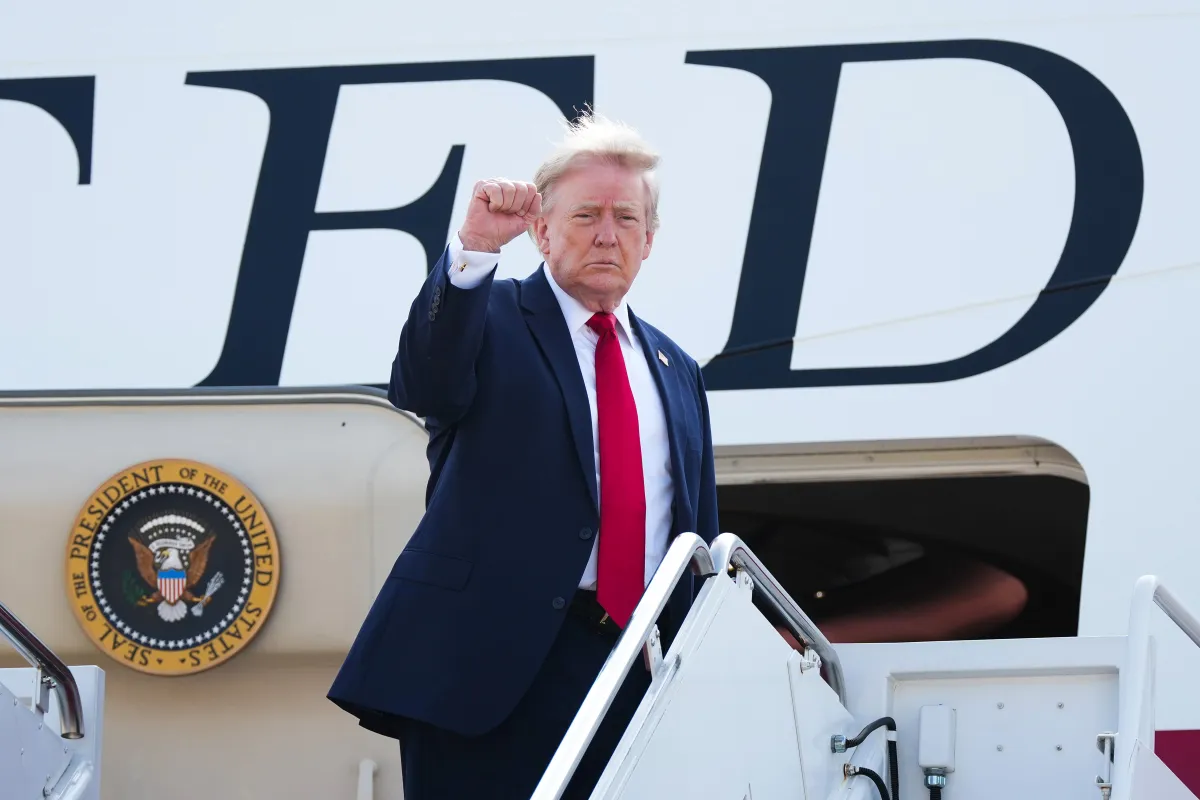
This Independence Day, millions of American families will have a new reason to celebrate as the federal government officially launches its highly anticipated “Trump Accounts” initiative on July 4. Designed as a cornerstone of the Trump administration’s recent tax-and-spending package, this ambitious savings program aims to give the nation’s youth a solid financial foundation right from the start. To kick off the program, the federal government will distribute a one-time $1,000 seed contribution to eligible children, depositing the funds directly into newly established investment accounts. Administered through a user-friendly mobile application, the initiative is designed to demystify investing for everyday households, encouraging early financial literacy and long-term planning. By leveraging the wealth-generating power of the American stock market, the program hopes to foster a new generation of micro-investors and build lasting financial security for families across the country.
At its core, the program represents a sweeping effort by the Trump administration to establish a universal, investment-based safety net for American children. Treasury Secretary Scott Bessent championed the launch as a historic step toward economic inclusion, emphasizing that the program’s primary goal is to foster long-term financial strength by making wealth creation accessible to everyday households from day one. By placing easily manageable investment tools directly into the hands of parents and young adults, policymakers hope to bridge the socioeconomic divide. In theory, providing every newborn with an active stake in the financial markets could help narrow the country’s persistent wealth gap over time. However, the program has also sparked healthy debate, with some critics questioning whether it might disproportionately benefit affluent families who have the extra cash flow to maximize annual contributions, rather than addressing immediate social safety net needs.
To qualify for the initial $1,000 federal deposit, children must meet specific criteria outlined in the latest Treasury Department guidelines. Eligible recipients must be United States citizens born between January 1, 2025, and December 31, 2028, and they must possess a valid, work-authorized Social Security number. Additionally, parents or authorized legal guardians must actively open a Trump Account on the child’s behalf to claim the funds. While children born before 2025 are unfortunately excluded from receiving the initial $1,000 government seed money, the broader program remains highly inclusive. Any American child under the age of 18 with a valid Social Security number is fully eligible to participate in the program, allowing families to open accounts and contribute their own private funds to build an investment nest egg for their teenage children.
Formally classified by some experts as “530A accounts,” Trump Accounts function very similarly to traditional individual retirement accounts (IRAs). The funds must be invested in approved, broad-based mutual funds or exchange-traded funds (ETFs) that track major American stock market indexes, such as the S&P 500. This ensures that the investments are tied directly to the growth of the broader U.S. economy. Under the current rules, the money grows tax-deferred, and any future withdrawals are generally taxed as ordinary income. Because the accounts are strictly intended for long-term wealth accumulation rather than short-term spending, early withdrawals are heavily discouraged and may face a 10 percent tax penalty on earnings. To help the accounts grow, the program allows parents, extended family members, employers, and even charities to make annual private contributions up to a current limit of $5,000.
While the program holds immense promise, financial advisors urge parents to view these accounts as tools for distant adulthood rather than near-term milestones like college tuition. Because the money remains locked up for years to maximize market compounding, experts suggest that traditional 529 plans remain a superior choice for higher education savings due to their tax-free withdrawals for qualified school expenses. Furthermore, financial educators caution that the initial $1,000 government deposit, while a generous head start, will not create life-changing wealth on its own. For the program to truly move the needle, families must commit to consistent contributions over time. The real magic lies in compound interest; mathematical projections show that a simple $1,000 investment left untouched for 18 years at a modest 7 percent annual return will grow to nearly $6,800, while families who manage to max out the $5,000 annual limit could amass close to $100,000 by the time their child reaches adulthood.
As the July 4 launch date approaches, the Treasury Department is preparing to open its digital platform and mobile app to receive enrollments and private contributions. To maximize the impact of the program, financial experts are advising working parents to look into potential employer matching programs, as major corporations like Charles Schwab, Uber, JPMorgan Chase, and Chipotle have already signaled their intent to offer matching contributions. This corporate backing effectively provides families with “free money” on top of the government’s initial seed deposit. Ultimately, the long-term success of the Trump Accounts program will depend on community involvement, consistent savings habits, and how effectively the federal government can encourage lower-income families—who may not have substantial disposable income to save—to engage with the platform and watch their children’s financial futures grow.