


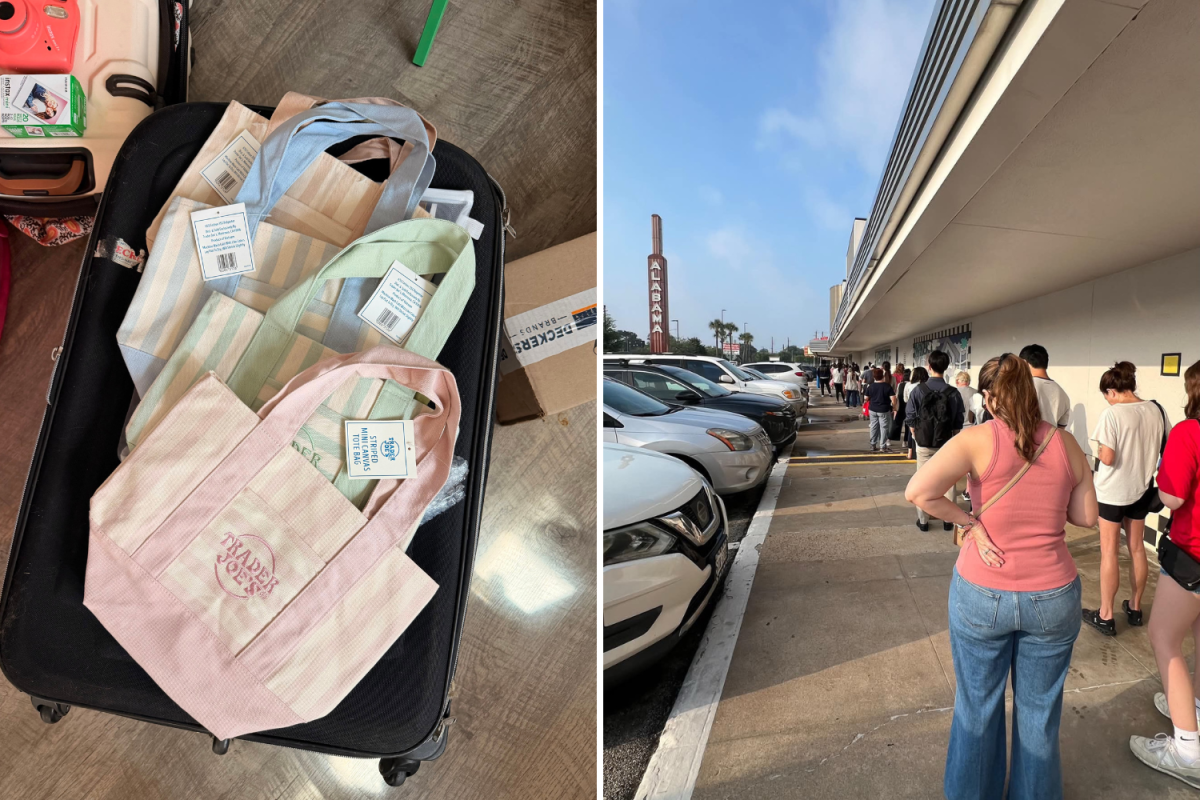
On a blistering, ordinary Monday morning in mid-June, the quiet, predictable routine of American grocery shopping was spectacularly upended. Across the nation, from the humid suburban strips of New Jersey to the sun-baked, neon-lit thoroughly modern valleys of Las Vegas, thousands of hopeful shoppers abandoned their morning sleep to stand in long, sweltering lines snaking around brick buildings, desperately hoping to secure one of Trader Joe’s latest limited-edition offerings: the pastel-striped canvas mini tote bag. Sold for a mere $2.99 and released on June 17, these tiny, cheerful accessories triggered the kind of consumer hysteria typically reserved for high-end sneaker drops or front-row concert tickets, with entire store inventories wiping out within minutes of the automatic doors sliding open. For many who braved the rising summer heat, the grueling wait ultimately ended in heartbreak and empty hands, highlighting an extraordinary and fascinating disconnect between the low-cost utility of the object and the feverish desperation of the crowd assembled to buy it. What was originally designed as a simple, durable cotton carrier for quick shopping trips had miraculously transfigured into a collective cultural pilgrimage, a vivid manifestation of a hyper-connected consumer landscape where a grocery store accessory becomes the ultimate status symbol of the season.
To understand how a simple canvas container measuring roughly thirteen by eleven inches could spark a nationwide obsession, one must look closely at its visual design and how it fits into the fluid, rapidly shifting currents of contemporary fashion. Available in four soft, candy-striped pastel colorways, these mini bags tap directly into a broader aesthetic shift toward playful, nostalgic comfort. Renowned fashion experts like stylist Michelle Barrett have noted that these designs are perfectly calibrated for upcoming style cycles, representing a joyful departure from the sterile, subdued minimalism that has dominated the retail sphere for years. By leaning into bright, optimistic hues like soft pastels and vibrant citrus tones, Trader Joe’s managed to create an accessory that feels both effortlessly chic and disarmingly unpretentious. The compact scale of the tote—initially intended to comfortably hold a few light items—adds to its quirky, collectible charm, transitioning it from a utilitarian grocery sack into a versatile, daily-wear purse. Crucially, its price point is the ultimate game-changer; at under three dollars, it offers a refreshing, democratic alternative to the prohibitively expensive designer luxury market, allowing everyday consumers to participate in a high-fashion, high-sentiment aesthetic without experiencing the associated financial strain.
The meteoric rise of the Trader Joe’s striped mini tote is also deeply intertwined with the algorithmic echo chambers of social media, where hyper-niche micro-trends are incubated and escalated to a fever pitch at dizzying speeds. Platforms like TikTok and Instagram acted as digital accelerants, turning store shelves into sensory battlegrounds as influencers and everyday creators shared their “hauls,” styling videos, and frantic store-run diaries. This constant digital exposure breeds an intense feeling of FOMO—fear of missing out—which fundamentally alters how consumers perceive value, transforming a cheap, mass-produced item into an artificially scarce relic of cultural relevance. Eager to capitalize on this manufactured desperation, an aggressive secondary market swiftly emerged, with optimistic digital entrepreneurs listing the $2.99 bags on third-party resale sites for astronomical markups that mock the original retail price. To combat this predatory bulk buying and ensure a fairer, more democratic distribution of joy, individual Trader Joe’s locations were forced to implement strict per-customer purchasing caps, often restricting eager shoppers to just four bags each. This intersection of rapid social media amplification, speculative resale markets, and artificial supply constraints has redefined modern retail, proving that in the digital age, the thrill of the chase and the validation of ownership are often far more intoxicating than the product itself.
Behind the viral hashtags and analytical market statistics lie the deeply personal, human stories of the individuals who stood on the physical front lines of the frenzy, driven by love, curiosity, and family connection. In Houston, Texas, Rachel Ghiamina’s family experienced the chaotic reality firsthand when her husband ventured to their local store shortly before the doors unbolted, only to find a massive line already wrapping around the corner of the building under the oppressive morning sun. The atmosphere was thick with anticipation and nervous energy, but through patience and quick coordination, he managed to navigate the store’s strict four-bag limit and secure their prized spoils. For Rachel, the exhausting ordeal was not a hollow consumerist exercise, but a labor of love; she kept one bag for herself and lovingly gifted the remaining three to her daughter, mother-in-law, and sister-in-law, keeping them safe from the inflated margins of online resellers. Her heartwarming experience reflects that of countless others nationwide who braved the elements not to turn a quick profit, but to share a small, affordable token of affection with those they held dear, proving that even amidst the madness of modern commercialism, human warmth, generosity, and genuine connection can find a way to thrive in the most unexpected of places.
Trader Joe’s corporate headquarters has watched this grassroots phenomenon unfold with a mixture of pride, caution, and protective vigilance. Company spokesperson Nakia Rohde explained that these striped canvas totes are deliberately designed as limited-time treasures, born from the global scouting efforts of their buying team who travel the world to source unique, exceptional products that they believe will deeply resonate with their loyal customer base. However, the unprecedented scale of the mania has presented significant logistical challenges, leading to highly volatile inventory levels that vary wildly from store to store, forcing the corporate office to rely heavily on the patience of customers and the grace of their front-line in-store crew members. More distressingly, the explosion of demand gave rise to an influx of low-quality counterfeit bags circulating on unauthorized online marketplaces, prompting the grocer to take the unusual step of filing federal lawsuits to protect consumers from being swindled. In public statements, the company firmly reiterated its commitment to authenticity, reminding fans that genuine Trader Joe’s merchandise is sold exclusively within the brick-and-mortar walls of their neighborhood stores, establishing a hard line against the predatory secondary economy while attempting to preserve the wholesome, community-centric ethos that has defined the brand for decades.
Ultimately, the saga of the $3 pastel mini tote serves as a fascinating mirror for our contemporary societal condition, illustrating the strange ways we seek community, identity, and fleeting happiness in an increasingly turbulent world. As shoppers keep a hopeful eye on their local stores for whisperings of a surprise restocking, the empty shelves stand as a quiet monument to a culture obsessed with temporary novelty and tactile connection. In an era dominated by digital interactions, inflation-weary budgets, and isolating screens, the physical act of standing in a physical line, chatting with neighbors in the heat, and clutching a humble piece of colorful striped canvas offers a strange comfort. It is an affordable luxury, a shared cultural moment, and a low-stakes adventure wrapped into a single, modest purchase. While this particular summer craze will eventually fade into retail history, replaced by the next viral sensation, it leaves behind a compelling testament to the enduring power of community, the irresistible thrill of collectibility, and our collective, deeply human desire to hold onto something bright, cheerful, and tangibly real.