




Paragraph 1: The Return of a Forgotten Nightmare
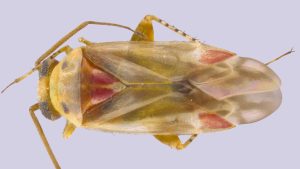
In the sweltering heat of southern Texas, where the Gulf breeze carries the scent of salt and dry grass, an old and vicious ghost has reappeared. For more than six decades, the United States waged and won a war against the New World screwworm, a parasitic fly so gruesome that its very name once instilled terror in ranchers and families alike. Through a brilliant, decades-long campaign of releasing sterile male flies, the nation eradicated this flesh-eating scourge, relegating it to the history books of agricultural triumph. But history has a way of repeating itself, and with the parasite’s first incursion across the Mexican border in over sixty years, a quiet yet profound crisis is unfolding—not just in the pastures where cattle graze, but in the cramped, barking corridors of Texas animal shelters. The New World screwworm itself is a thing of chilling biology. The adult fly is unassuming, but the female seeks out any open wound—a scratch, a tick bite, a surgical incision—to deposit her eggs. Within hours, those eggs hatch into maggots that burrow deep into living tissue, feeding greedily on the host’s flesh. For a beloved family pet, the infection means unimaginable pain; without swift veterinary care, it can mean death. While the agricultural world trembles at the threat to its $113 billion cattle industry, a more poignant and overlooked tragedy is brewing: the lives of thousands of adoptable dogs and cats hang in the balance, caught in a bureaucratic crossfire designed to stop an insect they never asked to host. The implications stretch far beyond the borderlands, reaching into the quiet suburbs of New York, the windswept plains of the Midwest, and the hearts of rescue volunteers who have built a fragile lifeline across an entire nation.
Paragraph 2: The Great American Adoption Highway and Its Sudden Closure
To grasp how a parasitic fly could spell doom for shelter pets hundreds of miles away, one must first understand the unconventional ecosystem of American animal rescue. Texas, for all its vastness, suffers from a devastating overpopulation of companion animals. The state’s shelters are perpetually overwhelmed, taking in more strays, abandoned litters, and surrendered pets than local families can possibly adopt. Conversely, states in the Northeast, Pacific Northwest, and Midwest have a higher demand for adoptable dogs and cats than they can locally supply. For years, a dynamic and compassionate solution has bridged this gap: the adoption transport. Every single week, dedicated volunteers and rescue drivers load up vans and trailers with crates of hopeful animals, driving hundreds of miles across state lines to deliver them to partner shelters in places like New York, Colorado, and New Jersey. This pipeline is not just a convenience; it is a wholesale lifesaving mechanism. In 2025 alone, according to the ASPCA, Texas transferred nearly 89,000 dogs and almost 53,000 cats out of its shelters to other parts of the country—by far the highest volume of any state. Without these transfers, the math becomes brutal and unforgiving. Texas shelters already recorded approximately 45,000 dog euthanasias and nearly 29,000 cat euthanasias in that same period. The theory is simple: every kennel freed up by a successful out-of-state adoption is a kennel available for a new arrival from the streets. But when federal and state officials, responding to the screwworm outbreak, slammed the doors shut with movement restrictions, quarantines, and mandatory vet certifications, the entire system veered off a cliff. The 20-kilometer infestation zones established around confirmed cases in southern Texas became invisible walls, halting the flow of lives destined for brighter futures.
Paragraph 3: Inside the Overflowing Kennels—A Community on the Brink
Nowhere is the pain of this sudden freeze more visceral than at shelters like the Gulf Coast Humane Society in Corpus Christi. In the stifling heat of the Texas summer, the shelter operates as a bustling, emotional triage center, its halls echoing with a cacophony of barks and whimpers. On a normal week, a team of logistics coordinators and volunteers would be arranging the next big transport to New York—a destination where a Texas mutt can find a loving home in days rather than months. But with the screwworm restrictions in place, those transport slots evaporated. The shelter found itself in a panic mode that has become all too familiar across the state. Its population swelled from approximately 325 animals to nearly 450 in a matter of weeks, as incoming strays continued to arrive from the streets regardless of the interstate travel bans. Space, once a scarce resource, became an absolute luxury. Staff converted offices into makeshift kennels, stacked crates in hallways, and prayed that no disease outbreak would compound the overcrowding. The emotional toll on shelter workers is staggering. They are forced into an agonizing position: when every kennel is full and a new stray arrives with an injury, they must make the dark calculus of who gets to live. The euthanasia room becomes a place they visit not only with clinical detachment but with crushing guilt. Shelter directors have spoken publicly about the hollowness they feel watching animals who had already been promised a van ride to freedom—who had been vaccinated, vetted, and photographed for adoption listings—instead face a needle because the bureaucracy had no mechanism for the patience of a frightened dog.
Paragraph 4: A National Lockdown, a Microscopic Enemy
To understand why 45 states have responded with such severity, one must acknowledge the terrifying efficiency of the screwworm as a biological weapon. The USDA, along with state agricultural agencies, knows that a single infected dog traveling to a new region could reignite an outbreak that took decades and billions of dollars to vanquish originally. The sterile-fly release program that eradicated the pest in the 1960s used millions of radiation-sterilized flies to break the breeding cycle; reintroducing the parasite to a cattle-rich state like Nebraska or Kansas would be an agricultural catastrophe. Thus, the regulations are draconian by design. States have implemented sweeping import rules, requiring health certificates, meticulous inspections for wounds, and rigorous documentation that an animal has not been in a quarantine zone. For many shelters, fulfilling these requirements is logistically impossible—rural shelters lack the veterinary staff to do full body examinations on every animal, and the permits can take days to clear. The irony is biting and tragic: a parasite that primarily targets cattle and livestock has effectively placed a blockade on the transportation of dogs and cats. While $113 billion in livestock equity is protected, the lives of thousands of pets are being gambled in a game where the stakes are their very existence. The economic impact of the livestock industry is undeniable and understandably a priority for the Department of Agriculture, but animal welfare advocates argue that the pendulum has swung too far, strangling the grassroots lifelines that have saved hundreds of thousands of animals over the past decade.
Paragraph 5: Cracks in the Iron Curtain—A Glimmer of Adaptation
Yet, amidst the gloom, there are signs of human ingenuity and compassion pushing back against the red tape. Animal welfare organizations have not simply accepted the fate of these stranded dogs; they have pivoted to new, slower, but safer methods of transfer. Some states, most notably New York—a top destination for Texas rescues—have begun allowing animals back across their borders, provided they carry a certificate from a licensed veterinarian stating that the animal has been examined and found free of screwworm. This has sparked a flurry of activity at shelters, where mobile veterinary clinics have been set up in parking lots, not just to treat illnesses but to perform the administrative duty of certification. Transport drivers are adapting, planning longer routes and coordinating drivers across quarantine zones—a relay race of compassion where a dog might be handed off at a highway rest stop outside the infestation area. There is a bureaucratic hope emerging that with the implementation of rigorous screening, a sterile-fly control program ramping up in Mexico, and the federal government’s eradication funds being mobilized, the parasite can be pushed back south of the border again. But for the 45 states still holding strict restrictions, the process remains painfully slow. Shelters are caught in a purgatory of paperwork, unable to send animals out fast enough to cope with the steady influx of new arrivals. The welcome re-opening of certain corridors is a Band-Aid on a hemorrhage, proving that while the political and agricultural systems can adapt, the emotional and physical resources of local shelters are finite.
Paragraph 6: A Race Against the Clock and a Plea for Patience
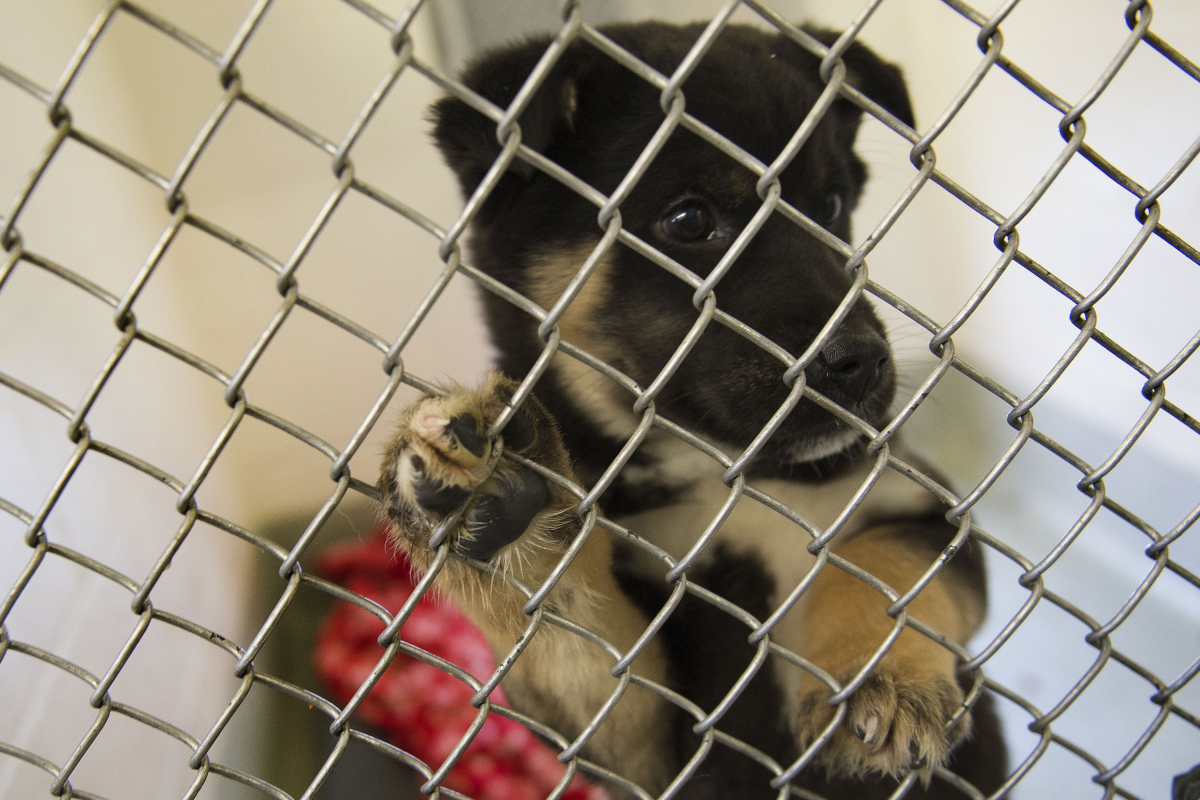
The end of this crisis is not yet in sight, and the clock is ticking for the dogs and cats waiting in limbo. The stark contrast between the 45,000 dog euthanasias last year and the potential spike this year serves as a chilling forecast. Rescue organizations are sounding the alarm with an urgent, desperate clarity: the longer the movement restrictions persist, the higher the kill rates will climb. This is not a hypothetical fear; it is a mathematical inevitability. Every day that a transport is delayed is a day closer to the euthanasia room for a dog that otherwise would have had a mind on its stomach and a home in its future. The human story here is one of resilience in the face of an invisible enemy—whether the enemy is a maggot or a mandate. Shelter workers, volunteers, and drivers are pleading not only for a swift scientific solution but for public understanding. They ask adoptive families in the north to bear with the delays, and they ask legislators to consider streamlined protocols that prioritize animal welfare alongside livestock security. In a quiet corner of a Corpus Christi kennel, a golden retriever mix presses its nose against the chain-link, watching the parking lot, waiting for a van that hasn’t come yet. Its survival is now a test of administrative flexibility, scientific diligence, and the collective will of a nation that has always prided itself on its love for man’s best friend. The fight to keep the screwworm at bay is a fight for our cattle herds, but for these animals, it is a fight for their very next breath. Their fate hangs in the balance between a microscopic larva and the slow grind of bureaucracy—and the heartbreak is that they have no say in the outcome.