


The sweltering heat of late July brings with it a familiar, electric charge that sweeps across the country, signaling the long-awaited resurrection of the American football calendar. For fans and athletes alike, the arrival of NFL training camps represents a sacred transition, a shifting of gears from the quiet contemplation of the offseason to the thunderous, pad-popping reality of gridiron preparation. This year, the journey to the ultimate prize feels particularly poignant as teams eye the grueling road ahead. The emotional crescendo begins in earnest on Thursday, August 6, 2026, when the Arizona Cardinals and the Carolina Panthers grace the pristine turf of Canton, Ohio, colliding in the annual Hall of Fame Game broadcasted live on NBC. This historic exhibition serves as the ceremonial opening archway, leading directly into the official starting gun of Preseason Week 1 on August 13. All of this, of course, is a feverish build-up to the grand spectacle awaiting us on Sunday, September 9, when “Sunday Night Football” hosts a magnificent, high-stakes Super Bowl LX rematch between the Seattle Seahawks and the New England Patriots to open the regular season. For those weeks in between, however, the primary storyline shifting under the public eye is not about championship rings, but about survival.
Beneath the glitz and glamour of prime-time television broadcasts lies the deeply human, often heartbreaking business of the NFL roster cutdown. While fans look forward to seeing their beloved star quarterbacks shake off the rust, coaching staffs and front offices are quietly entering a crucible of brutal decision-making, tasked with whittling a ninety-man roster of hopeful dreamers down to a lean, hyper-competitive squad of fifty-three. This period is a psychological war of attrition where careers are saved or shattered over the course of a single practice block or missed assignment. Among the franchises facing the most intense scrutiny this summer are the New York Giants, a team caught in a transition phase, needing to reconcile their grand competitive ambitions with the cold, unyielding reality of their depth chart. As camp progresses, the pressure mounting inside the Giants’ facility in East Rutherford is palpable, particularly for a handful of veterans who find themselves standing on the precarious precipice of the roster bubble. For these men, training camp is not an acclimation period; it is an unforgiving, high-wire act where the net has been completely removed.
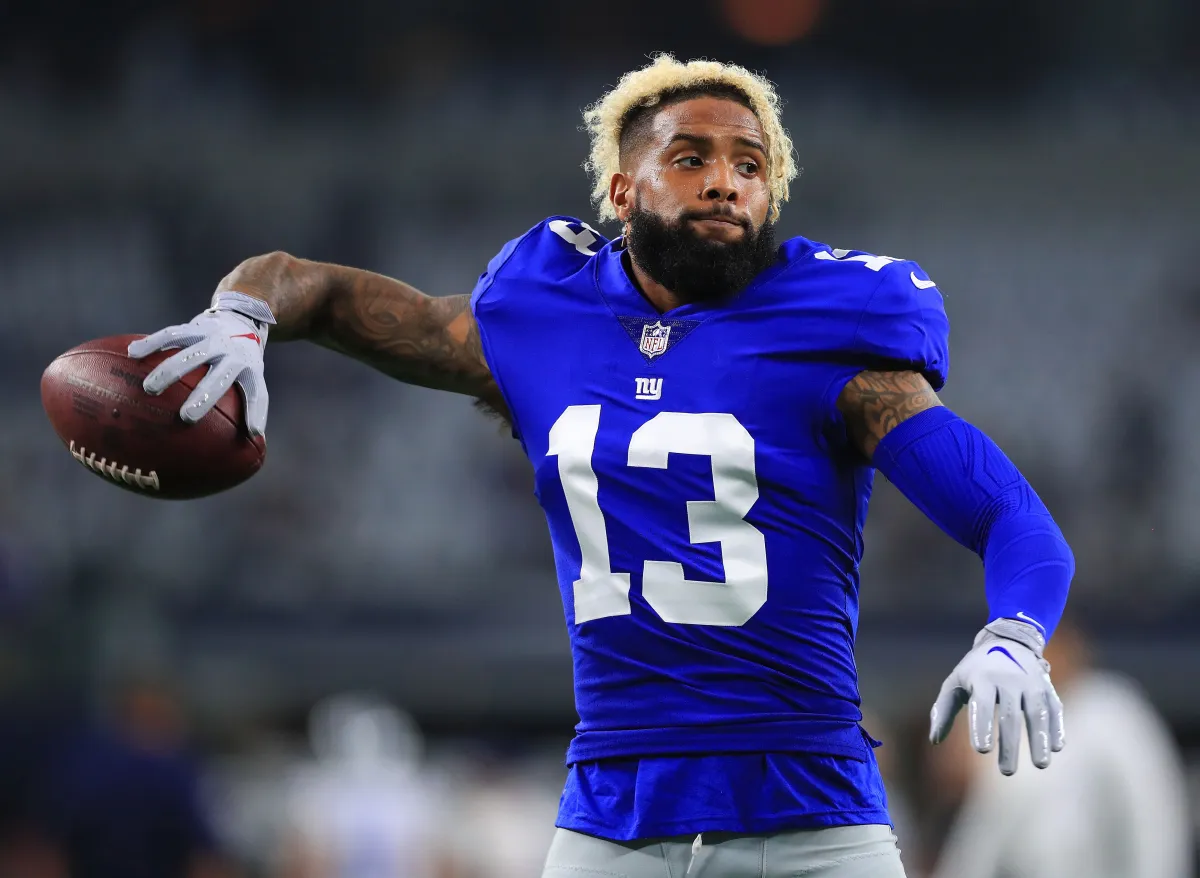
Nowhere is this dramatic tension more vividly illustrated than in the poignant journey of Odell Beckham Jr., whose return to the Giants represents one of the most sentimental, yet deeply fragile, storylines of the season. To understand the gravity of Beckham’s situation, one must look past the nostalgia of his legendary, gravity-defying one-handed catches in blue and recognize the stark, uncompromising reality of his current football life. At thirty-three years old, Beckham is no longer the explosive, elusive phenom who took the league by storm; he is a battle-worn veteran who has not played a single snap of competitive football in over a year, and whose body has restricted him to a mere twenty-three game appearances over the last four grueling seasons. The sentimentality of a homecoming is a luxury the Giants’ front office simply cannot afford, especially after undergoing a complete philosophical overhaul of their wide receiver room this offseason. Following the painful departure of the young and versatile Wan’Dale Robinson to the Tennessee Titans in free agency, New York went on a relentless crusade to inject youth, speed, and durability into their passing offense. They drafted the highly touted Malachi Fields and aggressively flooded the depth chart with free-agent acquisitions, including Darnell Mooney, JuJu Smith-Schuster, Calvin Austin III, Braxton Berrios, and Xavier Gipson. In a room suddenly bursting at the seams with younger, cheaper, and healthier targets, Beckham finds himself caught in a ruthless numbers game, where his past legendary status must contend with the physical limitations of the present.
While the wide receivers dance in space, an equally tense and far less glamorous battle is quietly unfolding down in the absolute dirt and grime of the trenches, where offensive guard Aaron Stinnie is fighting to protect his livelihood. Life as an offensive lineman in the NFL is a demanding, often thankless existence where your absolute best plays go entirely unnoticed by the casual viewer, while your worst moments are dissected frame-by-frame under the harsh glare of film-study projectors. Over his two seasons with the Giants, Stinnie has lived on the outer fringes of the offensive rotation, registering a scarce 249 snaps—a clear indication that he has struggled to cement a permanent place in the team’s long-term offensive schemes. Desperate to fortify the protective wall around their quarterback, the Giants’ braves-in-office chose to aggressively challenge the status quo this spring by bringing in brute-force competitors Daniel Faalele and Lucas Patrick to fight for the starting guard position opposite the newly acquired Jon Runyan. This sudden influx of proven starting caliber has triggered a massive domino effect down the depth chart, effectively squeezing Stinnie from both sides as promising, hungry interior prospects like Joshua Ezeudu and undrafted rookie Jake Kubas claw their way up the ladder in a bid for backup jobs. For Stinnie, the math of camp is simple yet devastating: with limited spots available and the team heavily prioritizing youth and raw physical upside, he enters August as the proverbial odd man out, fighting an uphill battle to prove his veteran wisdom can outweigh the raw athletic promise of his younger counterparts.
The defensive side of the ball offers no reprieve from this harsh reality, especially within a defensive tackle room that has been completely reconstructed from the ground up following a monumental, franchise-altering transaction. The trading of three-time Pro Bowler Dexter Lawrence to the Cincinnati Bengals sent shockwaves through the Giants’ fan base and severed the physical identity of New York’s defensive front, leaving a massive, gaping volcanic crater right in the middle of their defensive line. In a desperate scramble to replace Lawrence’s immense production and physical gravity, the front office aggressively pursued a strategy of safety in numbers, importing foreign veterans Shelby Harris, Zacch Pickens, D.J. Reader, and Josh Tupou through free agency. With returning defensive contributors Darius Alexander and Roy Robertson-Harris already firmly entrenched in the defensive scheme, the Giants’ defensive tackle meeting room has become a crowded, high-stakes battleground of eleven imposing athletes fighting for a mere handful of active-day roster spots. Caught directly in the crosshairs of this massive numbers crunch is Sam Roberts, a twenty-eight-year-old defensive journeyman who has spent his career fighting tooth and nail for survival during brief, turbulent stints with the New England Patriots, Carolina Panthers, and Atlanta Falcons. Roberts possesses the classic, admirable profile of a hard-nosed NFL journeyman, yet his modest career highs—never having surpassed eighteen tackles or a single sack in any individual season—make him incredibly vulnerable in a deep defensive tackle rotation that now craves either high-ceiling youth or proven, high-end veteran starting capabilities.
When we look past the schemes, the salary caps, and the depth chart projections, we are left with the profound human drama that makes the NFL preseason so uniquely compelling. As the calendar inches closer to the official preseason kickoffs on August 13, it is easy for fans and fantasy managers to view these exhibition games through a clinical lens, treating the players as abstract pieces on a digital board. But for men like Odell Beckham Jr. fighting the cruel march of time, Aaron Stinnie battling in the anonymous shadows of the offensive line, and Sam Roberts trying to find a permanent home after years of nomadic survival, these games are nothing short of life-altering battlegrounds. Behind every pink slip handed out at the end of August is a human being who has dedicated their entire life, from the muddy fields of childhood pop-warner leagues to the clinical lights of collegiate stadiums, to perfect a craft that can be taken away in a single afternoon meeting. As we stand on the threshold of another spectacular NFL season, watching these athletes run onto the field under the lights of training camp, we are witnessing the beautiful, tragic, and utterly captivating spectacle of human beings pushing their bodies and spirits to the absolute limit, all for the precious chance to keep their lifelong dreams alive for just one more week.