

The remarkable ascent of the Houston Texans has emerged as one of the most compelling human-interest stories in recent professional sports, charting a course from a franchise searching for stability to a legitimate powerhouse in the AFC. Finishing the 2025 campaign with an impressive 12-5 record, the Texans proved to their passionate fan base and the rest of the football world that they are no longer a young team merely happy to be in the conversation, but a formidable threat built to compete at the highest level. Yet, inside the walls of NRG Stadium, there is a collective understanding that complacency is the ultimate enemy of progress in a hyper-competitive league. While a 12-5 finish and a strong run to the number two spot in the highly contested AFC South is an achievement to be proud of, the standard in Houston has shifted dramatically under a visionary coaching staff and a relentlessly ambitious front office. They are no longer content with moral victories or respectability; they want to capture the division crown, dominate the conference, and ultimately bring a Lombardi Trophy home to Texas. To bridge the gap between being a very good team and an elite, unstoppable championship favorite, the organization must be willing to make difficult, unsentimental choices regarding roster construction. Standing still in the modern NFL is equivalent to moving backward, as rival franchises constantly retool their rosters to exploit even the slightest weaknesses. This drive for perfection is fueling speculation about strategic roster adjustments as the team prepares for the grueling summer months and looks toward the start of the 2026 season with championship expectations.
This brand of proactive, forward-thinking management is precisely why leading national analysts are urging the Texans to keep their foot on the gas and look for opportunities on the trade market before training camp begins. Moe Moton, a highly respected analyst for Bleacher Report, recently published an intriguing blueprint suggesting one major, blockbuster trade that every NFL franchise should realistically consider executing before the 2026 regular season kicks off. Moton correctly points out that the dog days of summer, leading up to the absolute deadline for final roster cuts on August 30, represent a crucial window where savvy general managers can extract maximum value from their surplus talent. In the high-stakes chess match of NFL front offices, retaining valuable players who are destined to sit on the bench is a luxury that teams cannot afford when those same assets could be traded for draft picks or immediate help at thinner positions. For a young, ascending roster like Houston’s—which has been carefully constructed through draft-day steals and strategic free-agent acquisitions—the depth chart has reached a point of saturation where highly capable players are inevitably going to be squeezed out of meaningful playing time. Instead of risking losing these players for nothing on the waiver wire or letting their trade value decay, elite front offices capitalize on this specific summer window to orchestrate mutually beneficial deals that position the team for a deeper postseason run.
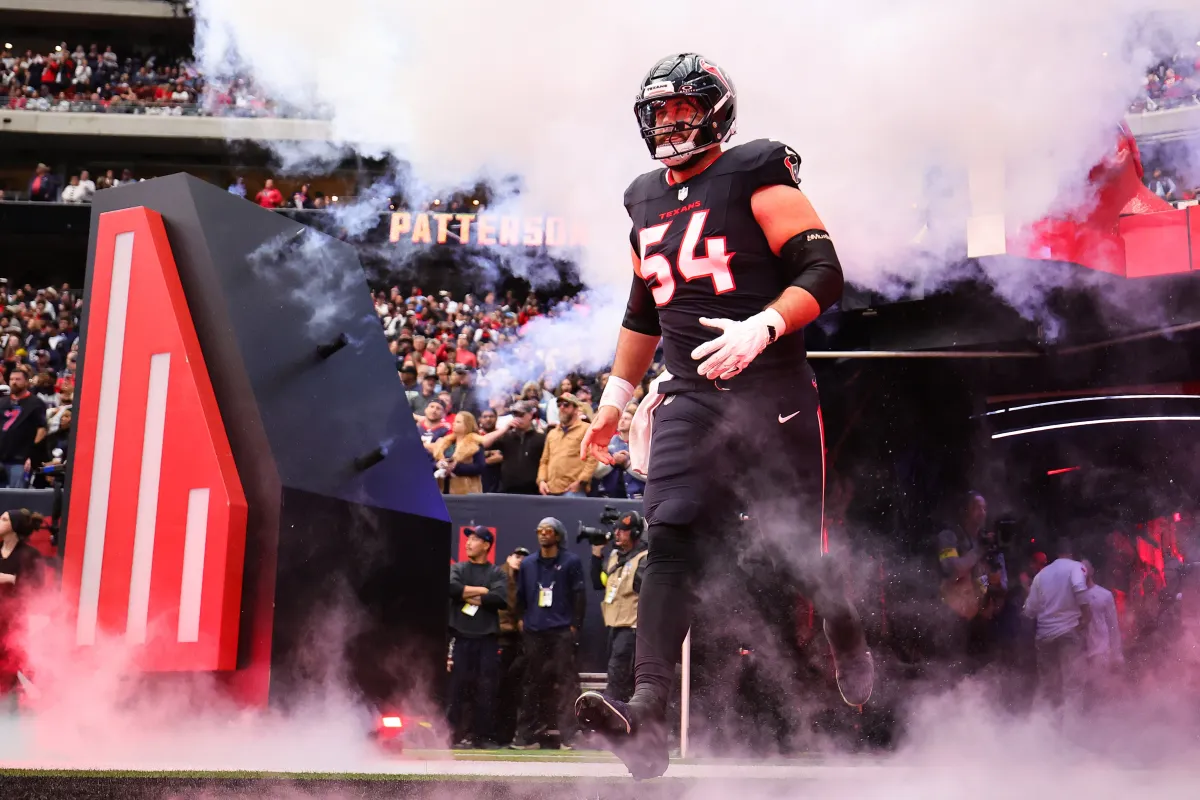
At the very center of these intriguing trade discussions for the Houston Texans is interior offensive lineman Jarrett Patterson, a player whose current career trajectory reflects the complicated, often harsh realities of life in the National Football League. Since arriving in Houston, Patterson has earned the respect of his teammates and coaches alike, serving as a gritty, highly dependable “part-time starter” who brought stability to the interior of the line whenever injuries or inconsistent play threatened to derail the offense. However, the NFL is a league defined by constant evolution, and past contributions, no matter how admirable, do not guarantee future security on an ascending roster. As Moton points out in his analysis, as the Texans continue to aggressively overhaul and upgrade the physical profile of their offensive line, a reliable veteran like Patterson risks falling further and further down the depth chart. For Patterson as an individual, a trade could actually represent a massive professional breakthrough rather than a step backward; he has put enough quality tape together during his time on the field to prove he has the talent to start for several offensive-line-needy teams across the league. In Houston, however, the sheer volume of incoming talent and high-earning veterans means his path to the starting lineup is effectively blocked, transforming him from a key rotational piece into the ultimate trade chip for a front office looking to maximize its assets.
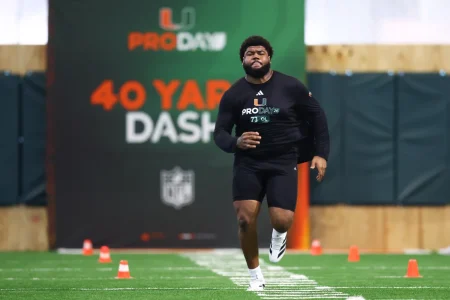
The primary catalyst for this shift on the interior line is the franchise’s bold decision to invest high-value draft capital in the trenches, specifically with the acquisition of rookie sensation Keylan Rutledge in the first round of the recent draft. Coming out of Georgia Tech, Rutledge built a reputation as an incredibly powerful, technically sound right guard who dominated defenders in the run game and showed the elite lateral mobility required to thrive in a modern wide-zone blocking scheme. However, the Texans’ coaching staff has detailed a much more ambitious vision for the rookie, intending to transition him from his natural guard position to center, a move that requires a rare combination of physical dominance and high-level cognitive processing to handle pre-snap protections and coordinate line calls. Because a first-round selection carries an immense amount of organizational pressure and expectations, the coaching staff will naturally feel compelled to give Rutledge every opportunity to win the starting job outright during training camp. If the Georgia Tech product can successfully navigate this challenging positional transition and assert himself as the central anchor of the offensive line, it will trigger a dramatic domino effect across the rest of the depth chart, severely limiting the snaps available for established players and making Patterson an expensive luxury.
Adding to the complexity of the situation inside the Texans’ offensive line room is the presence of proven, battle-tested veterans who further crowd the pathway to consistent playing time for someone like Patterson. With veteran powerhouses like Wyatt Teller and the versatile Evan Brown locked into key roles, the coaching staff already possesses a level of interior depth that most NFL coordinators can only dream of. Teller brings a physically imposing, Pro-Bowl-caliber edge to the guard position, establishing a culture of violence in the run game, while Evan Brown’s intelligence, versatility, and experience across multiple positions make him the ideal safety net for a young offense. When you combine the established excellence of these veteran anchors with the sky-high potential of a first-round rookie like Rutledge, the simple mathematics of the roster dictate that Patterson is unlikely to find a consistent role on game days. Keeping a starting-caliber offensive lineman on the bench as a backup is comforting for a head coach, but from a strategic, high-level business perspective, his value is exponentially higher as a trade asset that can be flipped to help address other vulnerable areas of the team.
Ultimately, executing a proactive, pre-season trade involving Jarrett Patterson is precisely the type of decisive, strategic move that separates championship-caliber organizations from those content to merely make the playoffs. While it is always difficult for an organization to part ways with a hard-working, character-driven player who has done everything asked of him, the NFL is an uncompromising business where success is defined by a ruthless optimization of the roster. By finding a willing trade partner for Patterson now, the Texans can capital-optimize their asset management, allowing a young and deserving player to secure a starting opportunity elsewhere while clearing a direct pathway for Keylan Rutledge to blossom into the franchise center of the future. This hypothetical trade reflects a front office completely aligned with its coaching staff’s vision, demonstrating a clear willingness to make the tough, forward-looking decisions required to safeguard their franchise quarterback and sustain a championship window. For the Houston Texans, the upcoming 2026 season is not about testing the waters or gaining valuable experience; it is about a relentless, single-minded pursuit of a championship, and embracing bold moves like this trade proposal might be the exact catalyst needed to elevate them to the very top of the football world.