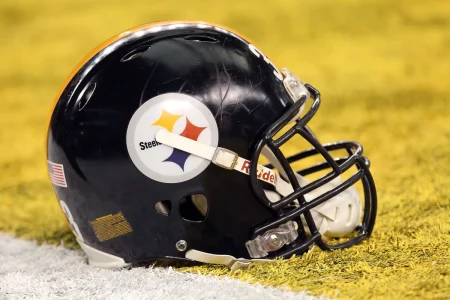



The Pittsburgh Steelers entered the first round of the NFL Draft with a highly publicized, ambitious blueprint designed to fundamentally rewrite the competitive hierarchy of the AFC North. At the very core of their strategic focus was an intense desire to secure a dynamic, game-changing threat on the perimeter: wide receiver Makai Lemon. This potential selection was envisioned not merely as an addition of young talent, but as a critical, foundational pillar for a newly engineered offensive system tailored specifically to accommodate veteran superstar quarterback Aaron Rodgers. Rodgers, whose high-profile acquisition and subsequent arrival before the team’s Organized Team Activities (OTAs) in May had sent waves of ecstatic electricity through the city of Pittsburgh, needed a reliable, explosive weapon to maximize his legendary arm talent and pre-snap brilliance. The franchise’s front office, coaching staff, and fanbase had spent months dreaming of a lethal synergy between the veteran pocket-passer and the lightning-fast rookie receiver, expecting that Lemon’s precision route-running and vertical speed would instantly unclog intermediate passing lanes and elevate the entire offense to championship-caliber heights. However, the cutthroat reality of the NFL Draft floor quickly shattered these lofty expectations. Recognizing the Steelers’ obvious targeting of the elite pass-catcher, the cross-state rival Philadelphia Eagles orchestrated an aggressive, calculated trade-up maneuver, jumping ahead of Pittsburgh just as they were preparing their draft card. In a single, heart-wrenching moment, the draft-day board was thrown into absolute chaos; the dream pairing of Rodgers and Lemon dissolved, forcing the Steelers’ management to quickly regroup under the pressure of a ticking clock and formulate an emergency contingency plan that shifted their entire draft philosophy from perimeter fireworks to the harsh, practical realities of interior battlefields.
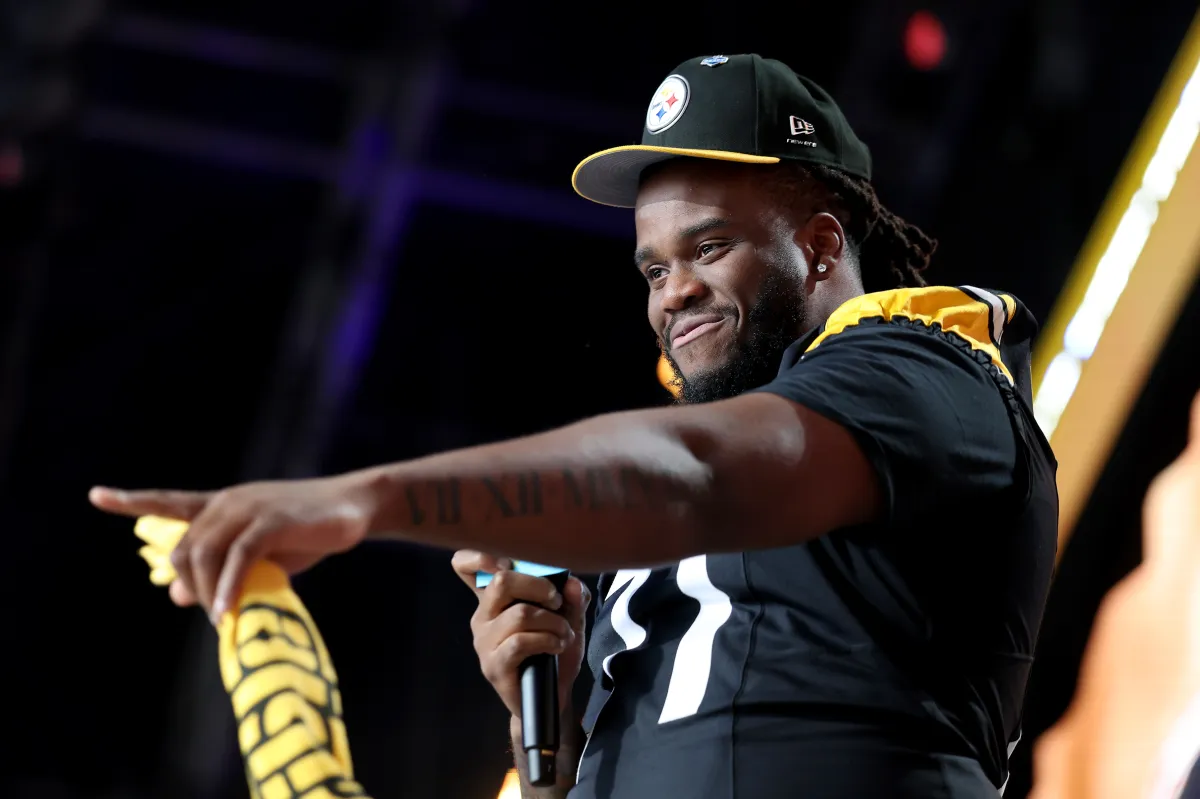
Left without their preferred offensive weapon and forced to pivot on a dime at pick No. 21, the Steelers’ brass made the pragmatic decision to turn their attention away from the flash of potential receiving stars and focus instead on the demanding, brutal wars fought along the line of scrimmage. This dramatic shift led them to select Arizona State’s physical specimen, offensive tackle Max Iheanachor. The pick was far from a luxury; it was a direct, urgent response to a developing crisis surrounding the franchise’s offensive line, specifically the concerning status of sophomore tackle Broderick Jones. Jones, who had been drafted with the high expectation of anchoring the blindside for the foreseeable future, was sidelined following a devastating, season-ending neck injury that required delicate, highly invasive offseason surgery and a prolonged, grueling rehabilitation process. In the wake of this news, both regional media and the passionate Steel City fanbase instantly projected Iheanachor as the immediate, plug-and-play savior who would step onto the field in Week 1 to shield Aaron Rodgers from relentless opposing pass rushers. The narrative seemed clean: one highly touted tackle replaces another, ensuring the multi-million dollar quarterback investment remains upright and healthy. Yet, as the intense adrenaline of draft night gave way to the quiet, methodical reality of spring workouts, the coaching staff quickly realized that Iheanachor’s path to the active starting lineup would be far more circular and complex than simply handing him a helmet and pointing him toward the left tackle position.
The early reports emerging from Pittsburgh’s OTAs and mandatory minicamps have temperately shifted general expectations, revealing that the rookie from Arizona State is far more of a long-term project than an immediate solution. According to insights provided by veteran ESPN journalist Brooke Pryor, whose deep ties to the locker room carry significant weight, Iheanachor has yet to receive any meaningful repetitions with the first-team offensive unit, instead working almost exclusively with the depth players—a development that sparked immediate concern among fans but represents a highly calculated, protective strategy by the organization. Pryor noted that Iheanachor remains broadly characterized within the building as a “developmental” project, a designation that highlights both his immense physical upside and his lack of fundamental experience. To truly appreciate the necessity of this slow-burn approach, one must look at his remarkable athletic background: Iheanachor has been playing organized football for less than five years. While he possesses the rare, jaw-dropping physical dimensions, outstanding wingspan, and natural athletic explosion that allow scouts to fantasize about an All-Pro ceiling, he lacks the thousands of physical repetitions, instinctual spatial awareness, and muscle memory that only come from years of high-level competition. Throwing a player with such limited football mileage directly into the line of fire against the NFL’s most creative and punishing defensive coordinators could permanently crush his confidence, expose him to unnecessary injury, and ultimately derail what could otherwise be a stellar, decade-long professional career.
Confronted with the double challenge of Broderick Jones’s ongoing recovery and Iheanachor’s developmental status, head coach Mike Tomlin and his offensive staff have implemented a highly fluid, creative reshuffling of their front-line protection. In order to construct a reliable wall for their veteran quarterback, the team has strategically shifted Troy Fautanu over to the demanding left tackle position, while simultaneously elevating Dylan Cook to handle the starting duties at right tackle. This tactical arrangement provides the offense with a veteran-adjacent baseline of competence and stability, while freeing up the coaching staff to execute a unique, experimental development plan for their rookie first-rounder. Rather than abandoning Iheanachor to the brutal, isolated island of the tackle position where advanced edge-rushers can effortlessly exploit technical flaws, the Steelers have begun actively training him on the interior of the offensive line. By giving the young rookie extensive reps at the guard position during offseason practices, the coaching staff is forcing him to develop his horizontal spatial awareness, adjust to much quicker and more violent hand-combat scenarios, and master the art of leverage in highly congested spaces. This interior training acts as an intensive, accelerated laboratory of offensive line play; it allows Iheanachor to build his confidence, enhance his foot speed, and refine his core strength, all while buffered on either side by experienced veterans who can guide him through the complex, pre-snap defensive adjustments that define modern professional football.
This patient, meticulously crafted developmental strategy is spearheaded and heavily defended by veteran offensive line coach James Campen, who firmly believes that rushed arrivals often lead to ruined careers in the modern, hyper-aggressive NFL. Campen has spoken highly of Iheanachor’s intellectual capacity and raw physical power, arguing that the rookie’s current situation is actually an enviable luxury rather than a setback. In Campen’s experienced view, because the Steelers possess a stable of capable, veteran blockers who can manage the immediate starting responsibilities, the young former Arizona State standout does not have to bear the crushing weight of learning from his mistakes during high-stakes regular-season games. He has the rare privilege of observing, absorbing, and modeling the preparation habits, recovery routines, and subtle technical adjustments of established professionals who have already navigated the league’s steepest learning curves. Campen pointed out that the breathtaking natural athleticism they saw on Iheanachor’s collegiate game film remains fully intact and highly impressive; the primary objective of this developmental period is simply to marry those elite physical traits with a deep, instinctual understanding of the playbook. By ensuring that Iheanachor does not have to start from “square one” under the unforgiving spotlight of live-game pressure, the coaching staff is guaranteeing that his eventual transition to starting tackle will be defined by confident, cerebral dominance rather than anxious, reactionary survival.
While fans and fantasy managers who crave instant gratification and explosive, high-octane offensive football might find this methodical approach frustrating, it represents a deeply humanized, highly responsible form of franchise management that prioritizes player welfare over short-term public relations. Max Iheanachor will almost certainly not be standing in the huddle when the Steelers launch their regular-season campaign, but his developmental role remains incredibly vital to the team’s ultimate success over a grueling, unpredictable seventeen-game schedule. He provides the franchise with a gold-standard insurance policy—a highly athletic, versatile “swing tackle” who can step up to play multiple positions across the line should injuries strike the starting unit in the late quarterback-saving stretches of the winter months. More importantly, this patient strategy buys invaluable, non-negotiable time for Broderick Jones to complete his comprehensive neck rehabilitation without the toxic, external pressure to rush back prematurely and risk his long-term health. By opting to cultivate Iheanachor’s immense potential carefully behind closed doors, Pittsburgh is building a foundation of resilience and intellectual depth within their offensive front that will pay massive dividends down the road. It is a stark reminder that in the violently beautiful world of professional football, champions are rarely built by forcing raw rookies onto the field before they are ready, but rather by holding the line, trusting the developmental process, and preparing them to become the indomitable anchors of tomorrow.