



For millions of Americans, the phrase “student loan statement” has become a source of quiet dread—an envelope or an email that carries the weight of a decision made years ago, usually before they understood what it truly meant to borrow. And now, as another major repayment deadline looms, that weight feels heavier than ever. Federal student loan borrowers are being asked to leave the repayment plan that has sheltered them from the worst of their financial storm, and they must choose a new path in a very short amount of time, often with little help and less clarity. At the same time, a fresh analysis from WalletHub reminds us that where a borrower lives can make an enormous difference in how they experience this burden. Student debt is not simply a national problem; it is a deeply local one, shaped by job markets, wages, college costs, and the presence or absence of consumer protections. For some people, the monthly payment is annoying but manageable; for others, it is the difference between staying afloat and falling behind. The analysis presents a stark picture of inequality, showing that some states have become trapped in cycles of high borrowing, low opportunity, and financial stress, while other states appear to offer a much softer landing for graduates. But behind every statistic is a person—someone with a diploma, perhaps, but also with a monthly obligation that can shape every other choice they make.
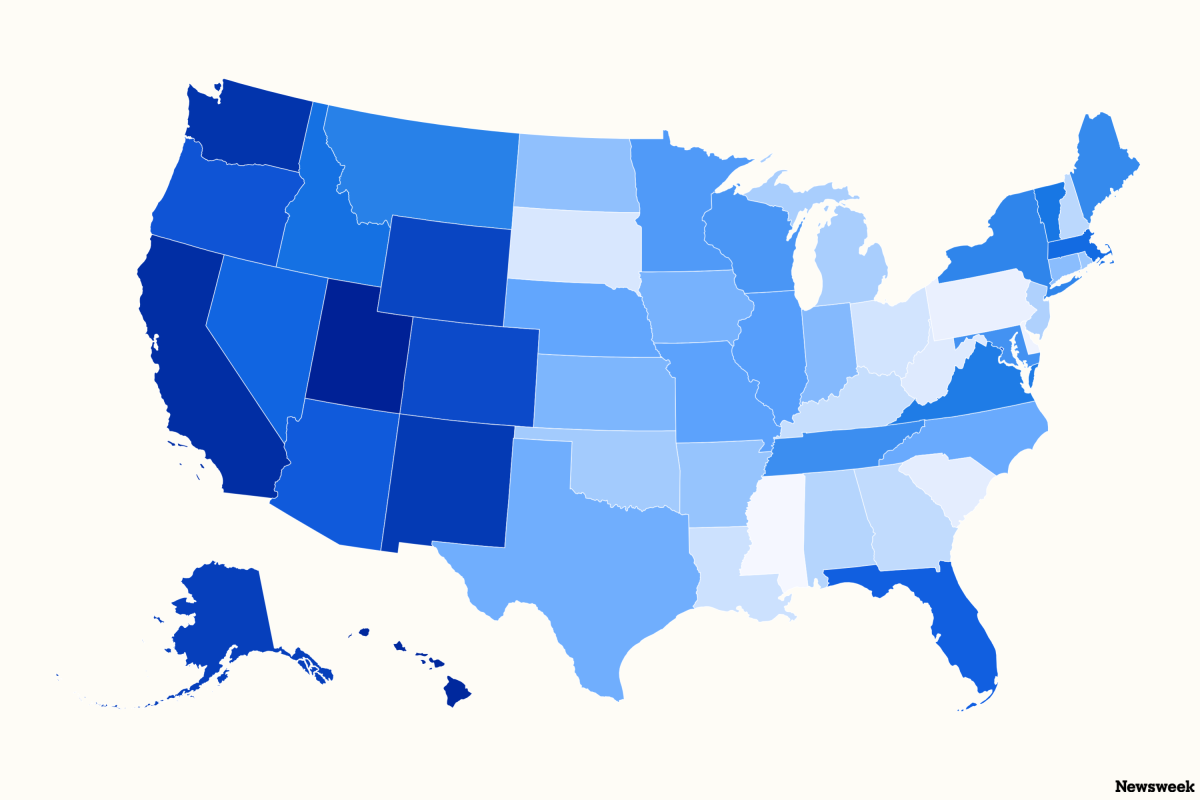
At the center of this troubling landscape is Mississippi, which WalletHub identified as the state with the biggest student debt problem in the country. The state is followed by Delaware, Pennsylvania, South Carolina, and West Virginia, a group that includes both small states and larger ones but shares a common thread: for many borrowers, the promise of a better future through education has not translated into enough well-paying work. In Mississippi, the analysis found, the job market is especially unforgiving. The state has the third-worst availability of jobs for students and the second-lowest share of paid internships, meaning that even graduates who do everything right—who go to college, finish their degree, and start looking for work—can find themselves scrambling for positions that barely cover their costs. The average borrower in Mississippi owes an amount equal to more than 54 percent of the state’s median income, the highest such ratio in the country. That number does not simply represent a payment; it represents a ceiling on a life. It means a young teacher or nurse or office worker is trying to rent an apartment, buy a car, save for emergencies, and maybe help their own family, all while carrying a debt that is more than half of what their household typically earns in a year. It is little wonder, then, that Mississippi also has the nation’s highest student loan default rate. Default is not a failure of character; it is what happens when the math simply does not work, when there is not enough money left after rent and groceries to satisfy a loan servicer’s demands. And for borrowers in Mississippi, there is no designated state ombudsman to turn to for complaints or guidance, leaving many to navigate a confusing system alone.
Delaware, the second-worst state in the analysis, offers another angle on the struggle. Borrowers there owe an average of nearly $40,000, which may not sound catastrophic in a vacuum, but it is equivalent to more than 39 percent of Delaware’s median income. That is a heavy load for any family, especially when so many borrowers are starting their careers without a financial cushion. The analysis noted that about 60 percent of Delaware students have student loans, meaning debt is the norm, not the exception. And like Mississippi, Delaware does not have a student loan ombudsman law, so borrowers who are mistreated by servicers or confused by their options have no dedicated state agency to help them. At the other end of the spectrum, Utah ranked lowest for student debt, followed by Hawaii, California, Washington, and New Mexico. These states are not without student loans, of course, but their borrowers tend to owe less relative to income, and in some cases they have broader access to grants, more robust job markets, or lower reliance on debt to finance education. The WalletHub study compared all fifty states and the District of Columbia across two large categories: student-loan indebtedness and grant and economic opportunities. The data was collected as of August 20, 2026, from sources including the U.S. Census Bureau, the Bureau of Labor Statistics, and the U.S. Department of Education. But for all the numbers and rankings, the underlying reality is simple: college has kept getting more expensive, and so has the money that students borrow to attend. As WalletHub analyst Chip Lupo put it, “Federal student loan interest rates recently hit a 12-year high and remain elevated.” That means even borrowers who took out loans at better times are being swept into a system where the cost of borrowing remains painfully high.
The consequences of this debt stretch far beyond the monthly bill, and experts warn that the entire economy feels the ripple effects. Dina El-Mahdy, a professor of accounting at Morgan State University’s Earl G. Graves School of Business and Management, explained that required loan payments reduce borrowers’ disposable income, leaving them with less money to save, invest, purchase homes, start businesses, or spend on goods and services. For a young person fresh out of college, that means every decision is narrowed: the apartment is smaller, the used car is older, the emergency fund is thinner, and the dream of buying a home is pushed off by years. Student loan debt also affects access to other forms of credit, because large balances can raise debt-to-income ratios and lower credit scores, making it harder to get a mortgage, an auto loan, or even a credit card with reasonable terms. El-Mahdy added that when student loan debt is combined with credit card balances, mortgages, and other financial obligations, it can delay major life decisions and limit broader economic activity. People are not just delaying purchases; they are delaying weddings, children, and career changes. They are staying in jobs they have outgrown because they cannot afford to take a risk. They are skipping graduate school because they cannot imagine adding more debt. The emotional toll is real too: the constant low-grade anxiety of knowing that a missed payment could trigger penalties, wage garnishment, or the destruction of a credit score that took years to build. Student debt is often described as “good debt” because it pays for education, but for too many borrowers, it feels like a trap rather than an investment.
Now, millions of those borrowers are facing a critical transition with a deadline that is fast approaching. The Biden administration’s Saving on a Valuable Education, or SAVE, plan, which offered generous income-driven repayment terms and forgiveness pathways, is being wound down. Earlier this year, the Department of Education directed the 7.5 million borrowers enrolled in SAVE to choose a new repayment plan. On July 1, loan servicers began sending notices giving borrowers ninety days to make the switch. For those who do not act, the consequences could be severe: they may be automatically enrolled in either the Standard Repayment Plan or the new Tiered Standard Plan, depending on their loan type and current repayment situation. The new plans could carry significantly higher monthly payments than SAVE, especially for borrowers who were paying little or nothing under the old plan because their incomes were low. This is not a hypothetical warning; it is a real shift that could push already struggling borrowers over the edge. One of the most confusing parts is that there is no single deadline for everyone. Each borrower’s deadline is based on when their specific loan servicer sends the notice, which means September 29 is the first major deadline for many, but other borrowers have deadlines later in the fall. That lack of uniformity can cause enormous anxiety, because people hear about a date in the news and panic, not realizing that their own timeline may be different—or worse, they assume they have more time than they actually do. The Education Department has said it will send borrowers into the new plans automatically if they do not choose one, but automatic enrollment does not mean the plan is right for that borrower’s financial situation. It just means the system moves forward, leaving the borrower to deal with the consequences.
As of this week, only about 1.5 million of the 7.5 million borrowers formerly enrolled in SAVE had selected a new repayment option, according to the Department of Education. That means roughly six million people are still waiting, hoping, avoiding, or simply unsure what to do. In a world where student loan servicers are notoriously difficult to reach, and where information can change depending on which website you visit or which phone line you call, that uncertainty is understandable. But the stakes are too high to ignore. For those facing a September 29 deadline, the time to act is now. Borrowers need to log into their accounts, talk to their servicers, and carefully compare the available repayment plans—not just the one with the lowest monthly payment, but the one that offers a realistic path toward financial stability. They should also seek out nonprofit counselors, legal aid, and consumer advocates who can help them understand their rights, especially in states where no ombudsman exists to protect them. The rankings from WalletHub should not be read as a verdict on the worth of certain states, but as a reminder that geography and economic policy can either ease or worsen the burden of student debt. This is not just a personal failure; it is a collective issue that demands collective responses, including more affordable education, better income-driven repayment programs, stronger consumer protections, and a labor market that actually rewards the degrees people have worked so hard to earn. Until then, the least we can do is help borrowers understand the road ahead—because for millions of people, the next few weeks will determine not just their monthly payment, but their ability to breathe.