


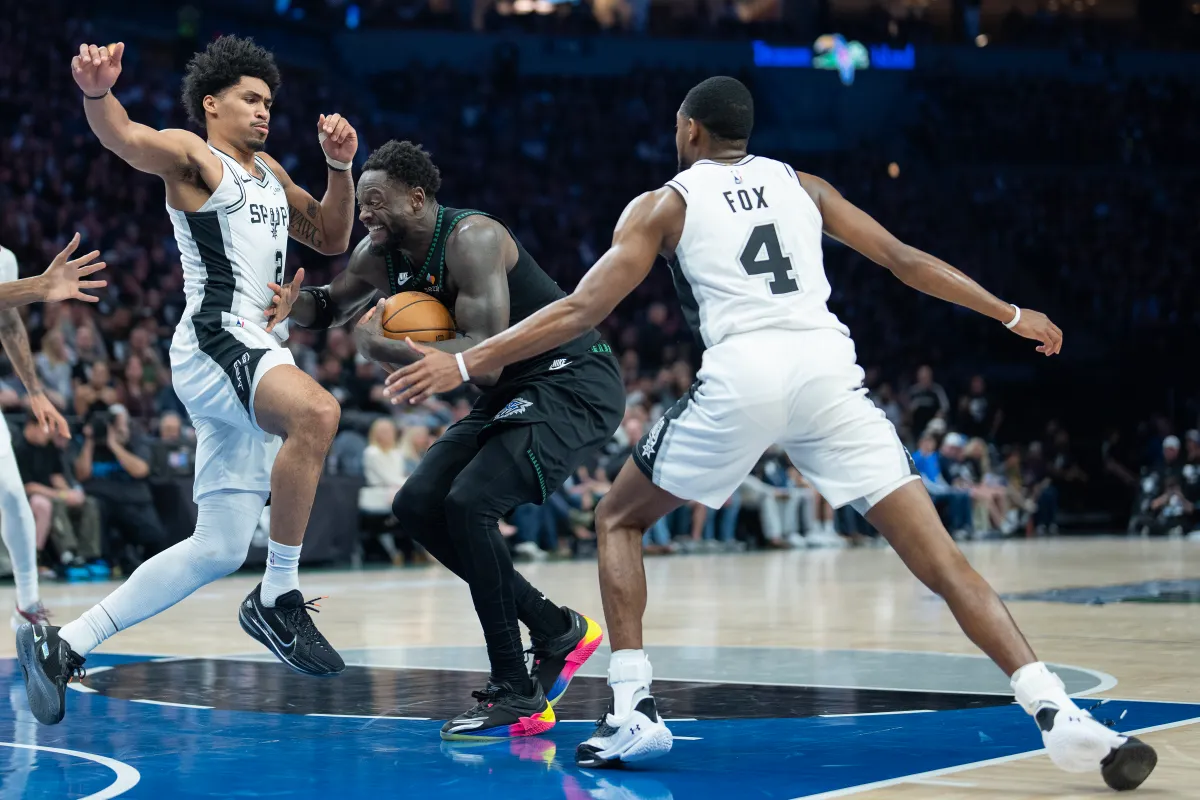
In the high-stakes, adrenaline-fueled world of the NBA playoffs, the boundary between triumph and heartbreak can dissolve in a matter of minutes, as the San Antonio Spurs vividly demonstrated during the opening act of their Game 3 clash against the Oklahoma City Thunder. Stepping onto the court with a fierce, almost desperate hunger, the Spurs executed a flawless opening sequence that stunned both the Thunder and the vocal crowd in attendance. They surged to a breathtaking 15-0 lead, a masterpiece of precise ball movement, stifling defense, and clinical shot-making that made them look absolutely unbeatable. In those initial moments, San Antonio played with the kind of cohesive, beautiful harmony that coaches dream of, leaving Oklahoma City searching for answers as the lead ballooned. However, the fundamental nature of professional basketball is defined by its relentless ebb and flow, a continuous test of endurance where early success can sometimes foster a false sense of security. As the game wore on, the initial burst of energy that fueled the Spurs’ historic run began to dissipate, replaced by the grating fatigue of playoff-intensity defense. Capitalizing on San Antonio’s mounting exhaustion, the Thunder slowly but surely clawed their way back into the contest, anchored by an incredibly deep and relentless bench unit that brought fresh legs and a ruthless scoring punch to the floor. The game slowly slipped away from the Spurs as their offensive rhythm crumbled, culminating in a highly disappointing 123-108 defeat. This painful loss served as a harsh, humbling reminder of how difficult it is to protect a lead in the postseason, proving that even a fifteen-point head start is nothing more than a temporary illusion if a team cannot find a way to maintain its focus, energy, and execution over the course of a grueling, forty-eight-minute battle.
No one understood the grueling physical and mental toll of this collapse better than De’Aaron Fox, who had pushed his body to its absolute limits just to step onto the hardwood for Game 3. Fox had spent the previous two games of the series relegated to the sidelines, forced to watch helplessly as his team battled without him while he fiercely rehabilitated a painful, high right ankle sprain. For an elite athlete whose entire identity and style of play are built upon explosive, lightning-fast first steps, sudden shifts of direction, and acrobatic finishes at the rim, an ankle injury is more than just a physical limitation—it is a psychological hurdle that breeds constant doubt. Despite the pain, Fox suited up, determined to provide his team with a desperately needed spark, only to experience the gut-wrenching setback of aggravating the injury late in Friday’s fiercely contested matchup. His post-game reflections offered a rare, vulnerable window into the mindset of a warrior who had given everything only to fall short, as he candidly voiced the immense difficulty of sustaining such an elite level of play for an entire game. “It’s a long game,” Fox remarked with a mixture of fatigue and frustration, shaking his head at the volatility of the sport. He noted how hard it is to maintain that peak level of dominance for a full forty-eight minutes, especially when the body is screaming in protest. The psychological pain of watching a massive lead slowly evaporate was almost worse than the physical throbbing in his ankle, a feeling Fox described as a sudden, sobering realization of how quickly a sure-fire victory can slip away into the night: “Damn, we got this lead, and it went away so quickly.”
Following such an emotionally taxing and physically exhausting defeat, the duty of rebuilding the team’s shattered confidence fell upon the shoulders of the Spurs’ acting head coach, Mitch Johnson. Navigating the treacherous waters of the postseason requires a leader who can remain calm under intense pressure, acting as an emotional anchor when his players are buffeted by disappointment and self-doubt. Johnson faced the daunting task of dissecting the game tape of the Game 3 collapse, trying to isolate the exact moments where the team’s defensive rotation fractured and their offensive spacing disintegrated under the relentless pressure of Oklahoma City’s bench. The strategic challenge before him was immense: he had to find a way to match the Thunder’s incredible depth and energy without burning out his starting unit, which was already sporting the physical battle scars of a long, punishing season. More than just drawing up tactical plays on a clipboard, Johnson’s primary challenge was psychological, requiring him to instill a sense of belief in a locker room that had just seen its best punch easily countered by the opposition. He spent the hours following the defeat emphasizing to his players that their dazzling 15-0 start was not a fluke, but rather a proof of concept—a vivid demonstration of the elite level they are capable of reaching when they play with discipline, and a standard they must now strive to maintain consistently if they hope to survive the series.
Amidst the heavy cloud of gloom that hung over the franchise after the Game 3 loss, a vital ray of hope broke through on Saturday afternoon when Coach Johnson delivered a highly anticipated medical update that instantly revitalized the spirits of Spurs fans everywhere. In a press conference that was closely watched by sports analysts across the country, Johnson announced that both De’Aaron Fox and key guard Dylan Harper are fully expected to overcome their physical ailments and take the court for Sunday’s crucial Game 4. Reporter Tim MacMahon was quick to broadcast this monumental news to the basketball world, confirming that despite the lingering pain of Fox’s re-aggravated ankle sprain and Harper’s persistent adductor strain, both players are determined to suit up. Harper’s adductor injury is particularly tricky, as it impairs the lateral sliding and core stability required to play high-level perimeter defense in the NBA, making his projected return a testament to his toughness and dedication. Having both of these vital playmakers available changes the entire complexion of the upcoming matchup, giving the Spurs the depth, playmaking, and perimeter defense they desperately need to counter the Thunder’s explosive offense. The decision of these two athletes to play through severe physical discomfort highlights the culture of selflessness and grit that defines the roster, showing a collective willingness to sacrifice personal comfort for the ultimate goal of keeping their playoff aspirations alive.
As the series prepares for a pivotal Game 4, the tactical chess match between the two coaching staffs is set to reach a fever pitch, with each team looking to exploit the slightest physical or mental vulnerability of the other. For San Antonio, the return of a hobbled Fox and a recovering Harper offers a massive emotional lift, but it also presents Coach Johnson with a delicate balancing act on the rotation sheet. He must find a way to maximize their elite skills on the court while carefully monitoring their minutes to prevent a catastrophic re-injury that could derail their careers and doom the team’s future. The Spurs must devise a brand-new defensive game plan specifically designed to neutralize the Thunder’s second unit, which completely altered the trajectory of Game 3 with their relentless pace and scoring outbursts. Playoff basketball is a ruthless environment where weaknesses are immediately exposed and relentlessly targeted, meaning the Spurs cannot afford to rely on emotion alone; they must execute their half-court offense with surgical precision and find a way to manufacture easy scoring opportunities to take the pressure off their injured stars. It will require a total team effort, requiring the bench players to step up and provide high-quality minutes so that Fox and Harper do not have to carry an unsustainable burden on their damaged bodies.
With the stakes higher than ever and the narrative drama reaching a crescendo, basketball enthusiasts from around the world are eagerly counting down the hours until Sunday’s crucial tip-off, which is officially scheduled for 8:00 p.m. Eastern Time. The game will be broadcast live to a national audience on NBC, with a digital stream seamlessly available on Peacock, ensuring that fans won’t miss a single second of what promises to be an absolute classic. This matchup represents the very essence of why we fall in love with professional sports: it is a beautiful, dramatic story of human perseverance, showcasing elite athletes pushing past the boundaries of physical pain and mental fatigue in pursuit of greatness. When the players finally step onto the hardwood under the bright arena lights, all the complex tactical theories, analytical breakdowns, and medical reports will fade away, leaving only the raw, unfiltered passion of competitive spirit. It is a golden opportunity for the San Antonio Spurs to rewrite the narrative of their disappointing collapse, reclaim their home court advantage, and prove to their doubters that they possess the heart and resilience of true champions, ensuring that this game will be remembered long after the final buzzer triumphs.