


Paragraph 1: The Sudden End of a Second Chance
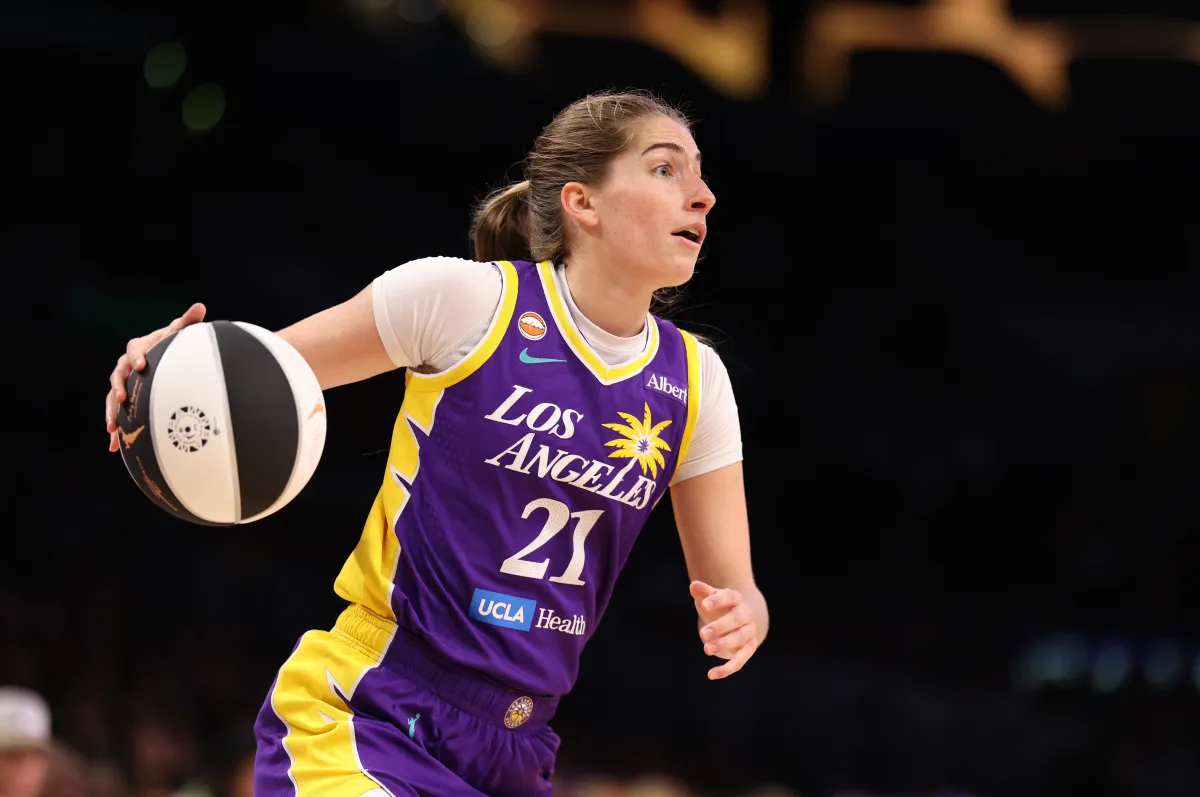
On a quiet Saturday afternoon, the Los Angeles Sparks delivered news that hit many fans like an unexpected gut punch: the team had waived Kate Martin, the gritty, hard-working guard who had quickly become a fan favorite since joining the organization. It wasn’t the kind of announcement that dominates national headlines, but for those who had watched Martin play with relentless energy, dive for loose balls, and celebrate her teammates with unguarded joy, it felt like losing a familiar face from a family gathering. The Sparks made the move to clear a roster spot for guard-forward Aaliyah Nye, a young player who had just been claimed off waivers after being released by the Atlanta Dream. On paper, it was a simple transaction, the kind that happens dozens of times across the WNBA every season. But for Martin, it represented something much more personal: another door closing, another team deciding she wasn’t quite enough, another abrupt ending to a chapter she had fought so hard to write. What made this waiver especially painful was the fact that it wasn’t the first time Martin had been cut in 2025. Earlier in the year, she had been waived by the Golden State Valkyries before the season even began, only to be given a lifeline by the Sparks. She arrived on a developmental contract, worked her way into a standard contract by July, and appeared to be carving out a meaningful role. And then, just a few weeks before the end of the regular season, the Sparks decided to let her go. It was a decision that felt cold and transactional to many observers, especially those who had watched Martin pour her heart into every minute she spent on the court. The timing, too, was brutal. With the season winding down and roster spots across the league growing scarce, Martin suddenly found herself in the familiar and uncomfortable position of wondering where she belonged.
Paragraph 2: A Community Feels Betrayed by Another Loss
Almost immediately after the Sparks made the announcement on social media, the responses began pouring in. They weren’t filled with polite resignation or patient understanding. Instead, they were raw, frustrated, and deeply personal. Fans took to X, formerly known as Twitter, to express their disappointment, and many of them didn’t hold back. “You guys lied to her and wasted her time,” one fan wrote, capturing a sentiment that seemed to resonate widely. Another fan expressed a more visceral reaction, vowing to stop watching the team altogether: “No reason to watch the sparks. First PlumDoG now Kate. Sorry sparks. 1 less viewer.” That brief, emotionally charged message touched on a larger story that had been brewing for weeks. Earlier this month, the Sparks had traded five-time WNBA All-Star guard Kelsey Plum to the Phoenix Mercury, a move that itself had sparked outrage among fans who saw it as another sign that the franchise was moving in the wrong direction. Plum was more than just a star player; she was a proven winner, a magnetic personality, and someone who had made the Sparks relevant again after years of struggle. Losing her was already a bitter pill to swallow. Losing Martin just a couple of weeks later felt like salt being rubbed into an open wound. Fans began to wonder whether the front office cared about the emotional connection between players and the community. They questioned the decision-making process, the long-term vision, and whether anyone in charge was truly listening to the people who filled the stands, bought the merchandise, and cheered their hearts out every game. The anger wasn’t just about Kate Martin the individual, although she was certainly beloved. It was about a pattern, a feeling of being let down repeatedly by an organization that seemed unable to hold onto the players fans cared about most. In a league built on relationships and narratives, the Sparks appeared to be alienating the very people who wanted to support them.
Paragraph 3: The Growing Frustration with a Directionless Season
As the initial wave of emotional responses settled, a more reflective criticism began to emerge. Fans started asking bigger, more uncomfortable questions about what was actually happening inside the Sparks organization. One fan summed it up plainly: “At this point, I don’t understand what’s going on with the Los Angeles Sparks this season.” That uncertainty captured the mood perfectly. The team had entered the season with hope and ambition, but a series of puzzling moves had left fans confused and disillusioned. The decision to bring Martin in on a developmental contract had seemed like a promising opportunity for growth. Developing young talent is supposed to be part of the process, especially for a team in transition. Martin had shown flashes of her potential during her time in Golden State and during her appearances with the Sparks. She was not a superstar, but she was exactly the kind of player who could become a reliable role player, someone who does the dirty work, makes the extra pass, and provides the kind of steady presence that championship teams need. By signing her to a standard contract in July, the Sparks seemed to be acknowledging that value. Yet less than two months later, they reversed course without any clear explanation. The result was a whirlwind of speculation and frustration. Was the coaching staff unhappy with Martin’s development? Was there a behind-the-scenes conflict? Did the front office simply want to give Nye a chance? No one knew for sure, and the silence from the organization only deepened the sense of betrayal. Fans began to feel that the Sparks were making decisions without any coherent strategy, lurching from one transaction to another without a clear plan for the future. The trade of Kelsey Plum had already raised serious doubts about the team’s direction. The waiving of Kate Martin made those doubts impossible to ignore. For many supporters, it no longer felt like a series of isolated moves but rather a troubling pattern of undervaluing players who had earned their loyalty.
Paragraph 4: Kate Martin’s Resilience and the Human Side of the Business
Behind the headlines and the transaction announcements, there is a human story that deserves to be told. Kate Martin is more than just a roster move or a stat line. She is a young woman who has dedicated her life to the game of basketball, someone who has worked tirelessly to earn her place among the best players in the world. Her journey has never been easy. She has had to prove herself at every level, often being overlooked or underestimated by scouts and coaches who didn’t see the kind of obvious athleticism or size that gets players drafted early. What she lacks in flash, she makes up for in heart, toughness, and an unwavering commitment to her teammates. That is why being cut hurts so much. It isn’t just about losing a job; it’s about being told that your best isn’t good enough, that the sacrifices you made and the passion you brought to the game don’t measure up in someone else’s calculation. For Martin, this waiving was especially difficult because she had been through the exact same thing months earlier. She had experienced the shock of being released by the Golden State Valkyries, only to be given a fresh start in Los Angeles. She had allowed herself to believe that she had finally found a home. She had invested herself fully, both emotionally and physically, in helping the Sparks succeed. And then, in an instant, she was let go again. The public nature of the decision only added to the pain. It happened in full view of the basketball world, with fans commenting on every detail and wondering what she had done wrong. But Martin’s response, even in the face of such disappointment, was a testament to her character. She didn’t lash out. She didn’t complain. She simply thanked the organization and her supporters and immediately began preparing for the next chapter of her career. That quiet dignity is precisely why so many people have rallied behind her, and why the outpouring of support from fans is so meaningful. They recognize that Kate Martin represents something bigger than herself: the idea that perseverance, humility, and hard work still matter, even in a business that often seems cold and unfeeling.
Paragraph 5: Looking Ahead to Unrivaled and a New Opportunity
Now, with her future in the WNBA uncertain, Martin is already turning her attention toward the next opportunity. Perhaps fittingly, she announced her decision to return to Unrivaled Basketball just hours before the Sparks made their waiver news public. Unrivaled is the innovative women’s basketball league that has become a proving ground for some of the best players in the world, offering them a chance to compete during the offseason while earning a meaningful salary and showcasing their skills in a more intimate, high-intensity setting. Martin has signed a multi-year deal to return for her third season with the league, a move that gives her both stability and a platform to remind WNBA teams of what she can do. The timing is important. The Unrivaled season runs from January through March, and WNBA free agency typically opens in April. That means Martin will have a golden opportunity to play in high-stakes games against some of the top talents in the world and then step directly into the negotiating season while she is fresh in everyone’s minds. There is real value in that timing. A strong performance in Unrivaled could convince a WNBA team that she is worth a roster spot, especially if that team values toughness, leadership, and a selfless approach to the game. Martin may not be the highest scorer or the flashiest player, but she has consistently shown that she makes winning plays. She is the kind of player coaches respects and teammates love, and those qualities often become all the more important during the intense, compact season that Unrivaled provides. By staying active, staying visible, and staying positive, she is giving herself the best possible chance to extend her WNBA career. The road ahead is far from certain, but if there is one thing her journey has shown, it is that Kate Martin is not someone who gives up easily. She has been counted out many times before, and every time she has found a way to keep going. There is no reason to believe she won’t do it again.
Paragraph 6: The Bigger Picture and the Fans Who Refuse to Forget
In the end, the story of Kate Martin’s waiving by the Los Angeles Sparks is about more than just one player and one team. It is a reminder of the sometimes cruel nature of professional sports, where decisions are made quickly and often without the emotional sensitivity that fans might hope for. It is also a reminder of the deep connection that can form between athletes and the communities that support them, a bond that cannot be easily severed by a simple announcement on a Saturday afternoon. For the fans who have watched Martin fight for every opportunity, her departure feels like a personal loss. They were invested in her success not just because she was talented, but because she seemed real, approachable, and genuinely grateful to be living her dream. That kind of authenticity is rare, and it is not easily replaced. As the season winds down and the Sparks continue to navigate their own uncertain path, Martin will be off somewhere preparing for her next challenge, carrying with her the lessons she has learned and the support of a growing legion of fans who refuse to forget her. She may not ever play for the Sparks again, but her impact on those who watched her will not fade. Her story serves as an inspiration to anyone who has ever been told they aren’t good enough, to anyone who has ever faced rejection and wondered whether it was worth continuing. It is worth continuing. It is always worth continuing. And if Kate Martin proves anything, it is that a career is not defined by the teams that let you go but by the resilience you show after they do. The next chapter may be uncertain, but one thing is certain: Kate Martin will keep playing, keep fighting, and keep showing the world exactly who she is. And when she eventually finds her way back onto the court, all those fans who stood by her will be right there, cheering her on, reminded of why they fell in love with basketball in the first place.