





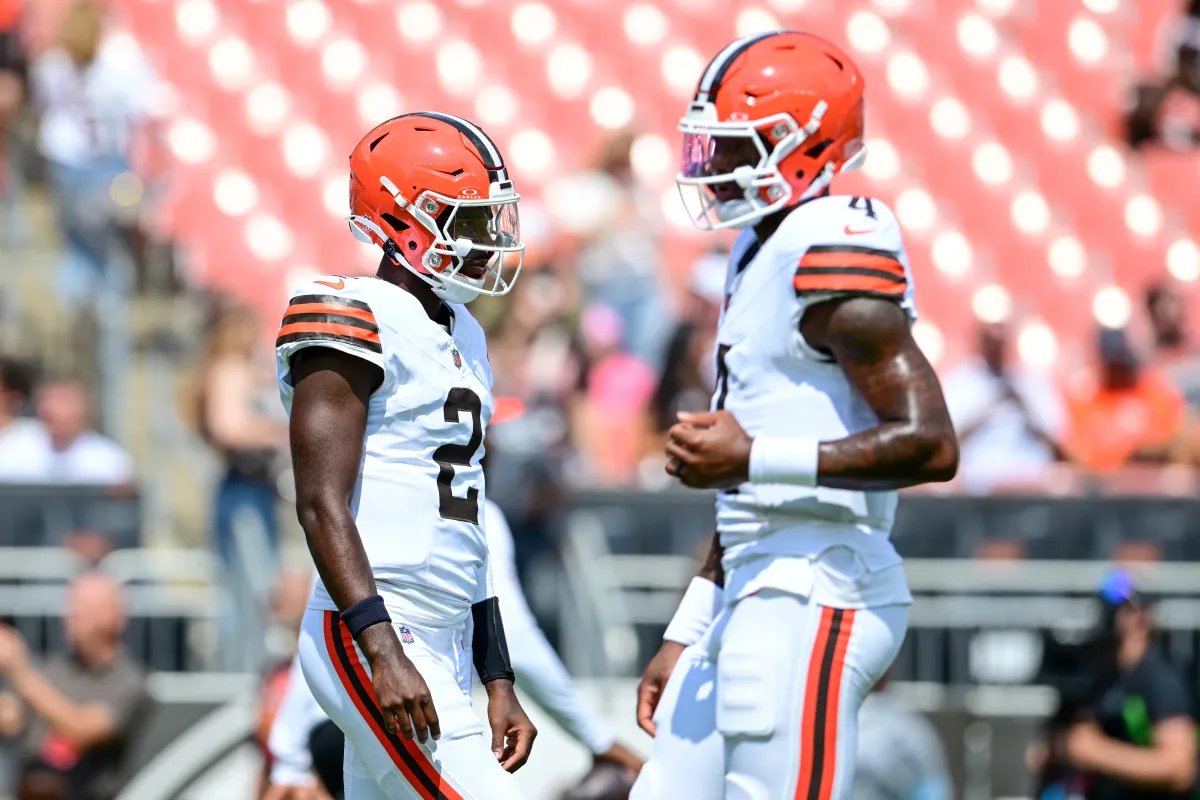
The air in the stadium crackled with a tension that had nothing to do with the preseason scoreboard. As the Cleveland Browns took the field against the Buffalo Bills, the focus wasn’t on the final 31-7 deficit, but on the man under center, and the reception he received from the home crowd. Quarterback Deshaun Watson, a figure who has become synonymous with one of the most polarizing narratives in recent NFL history, was met with a chorus of boos that echoed through the venue, a stark reminder that forgiveness, in the court of public opinion, is a far more elusive prize than a victory. This wasn’t about a single bad throw or a misread defense; it was a communal statement, a vocalization of a collective sentiment that has been simmering since the massive contract and the numerous allegations that surrounded it. The sound served as a visceral counterpoint to the franchise’s hope of a fresh start, turning what should have been a routine tune-up into a public referendum on loyalty, character, and the very definition of redemption in the merciless world of professional sports. The atmosphere was thick with this unspoken debate, as every incompletion and stalled drive seemed to take on a deeper, more emblematic meaning for the relationship between a city and its most scrutinized player.
The on-field product did little to soothe the discord, instead providing the ammo for watchers to further questioned the franchise’s investment. Deshaun Watson’s stat line was a tough visual: just 5 of 12 passes completed for a mere 36 yards, leading to a passer rating that fell flat by his standards and his contract’s expectations. The interception thrown felt symbolic, a physical mistake mirroring the fragile trust that has been the defining issue of his time in Cleveland. was new contract, woven with injury and days not playing. The rhythm of the offense managed to stall under his direction, and the fans’ unrest grew louder with every incomplete pass. This wasn’t just a poor performance; it was a stark revelation of the gulf between his established reputation and his recent reality. Conversely, his competition, Shedeur Sanders, with talent heritage and the immense pressure of his family name, performed with a marked and impressive command. He delivered the ball with an 87.1 passer rating, completing 9 of 11 attempts for a touchdown, showing an adaptability and polish that highlighted the potential that the Browns are hoping to capture. His energy provided a complete contrast, and any evaluator just a matchup on paper would have seen that the quarterback positions were supposed to be reversed, further fueling the cry of a frustrating situation.
When the final whistle blew and the boos had finally faded, the story took another human turn, revealing the deep camaraderie that binds a team. Shedeur Sanders came to post-game podium, not to claim his victory in the open quarterback competition, but to speak directly to the treatment of his competitor and teammate. His message was not a flash of generational disdain, but a subdued plea for human decency. “In general, I do not appreciate that at all,” Sanders said, his delivery quiet and direct in a way that made his support even more resounding. “Regardless of competition, we’re all human beings. … I don’t like making people feel uncomfortable in different spaces, and that’s why, even sometimes in daily things I do, I try to make sure everybody’s comfortable.” His words transcended the football field, a frame of reference in a sports world where loyalty too often is for the winners. He continued, urging the fans to show mutual respect: “Just for the fans, we appreciate y’all showing up and everything. However you feel about with Deshaun and the situation and everything, still I think it’s more.” His simple “respect thing” is a powerful truth: “We all out there trying to do our best and serve the franchise the best way possible.” It was a moment of almost Godly maturity from the younger player, his concern for public comfort in a space inherently driven by public broadcasting, projecting wisdom that stems from his unique upbringing and his understanding of team brotherhood in a cutthroat sport.
Sanders’ defense of Watson pulls back the curtain on the deep-rooted complexity that defines the quarterback’s actual circumstance. From one angle, it could be a calculated move to look good, to present himself as the team leader. However, it also carries more depth and sincerity. This franchise is not just a roster of teammates, but a brotherhood that gets in the mud together to chase a common goal, where personal disappointments and external critics are supposed to fall away under the premise of the shared structure of a goal. The real wound of the day came in the fans’ boos, a very public and singular rejection that can have a human cost more powerful than any internal contract. For Watson, whose contract has plenty attached and subsequent injuries on top, it’s a reminder that the very foundation he was supposed to build on its emotional touch—the adoration of fans—has become a ghost. His own previous comments about being physically and mentally Awak, while not to include his vibe, ont a path. He had to fight with off-field issues, recover from a major Achilles pain, and see his career stall further. That battle has been an isolating, with doubts whispered, and his reemergence on the field now invites not‚ just scrutiny but resentment. He’s tried to return to normalcy that can exist under those conditions.
This extends is not just about the players. In the city of Cleveland, a dedicated football town, this situation hits a more personal place. This is a place that has lived through heartbreak of sports teams and is, perhaps, less forgiving when the world is considered a form of betrayal. The boos are a way of communicating That the spectators are looking for a tangible return on the opening, not in terms of, but in leadership and consistent faith reintroduced. When the salary was announced in March of 2022, exceeding $230 million fully guaranteed, it felt like a declaration of loyalty from the front office, but to a fan base that values grit and proof over potential and names, that gesture created an incredible long line. Watson’s record with the team has been, to put mildly, underperforming – only 19 games since signing and missing most of the season due to a setback in Achilles anymore. The fans are responding to the dissonance between the chased player they brought and the reality they see on the field. Sanders, on the other hand, with his raw production, represents a stand-back – a hope for the future in the immediate present, not a player to soak in the shadow of a huge contract, but a true contender ready for the opportunities.
Ultimately, Head Coach Todd Monken has one (1) choice: decide this week who leads the offense into week one, and on Thursday night facing the Patriots, is the last rehearsal. The desperation of coach and team is to project the idea of competition, that the final decision is a balance of the first few data points in a weather of qualitative note, but the risk is profound. Now that Watson’s confidence was on a Saturday, and now that we’re in this 2 game, one crew, you can assured that the pressure is growing. Yet, Sanders’ presence’s in the locker room and his on-field performance have perhaps made a moral argument as well as a football one; he isn’t looking to crow it but he’s proving that he can ignore a negative narrative and still extend respect. It signals a type of mental fortitude and politics separate from the athletic, worth value within the sensitive walls of a team. A final decision here will be a symbol of the franchise choices we are all familiar with: legacy that includes the litigation and reputation, or a safer future that embraces a new voice. The fan’s watch, with the boos fresh in their ears, was generally looking for more than pride, they are looking for the moment when their team’s style, not just its payroll, gives them something they can cheer for. The stage is set for Thursday, and the decision will either be a healing for this team, or a bulletpoint for another end of a discourse that doesn’t appear to be willing to come to completion.