


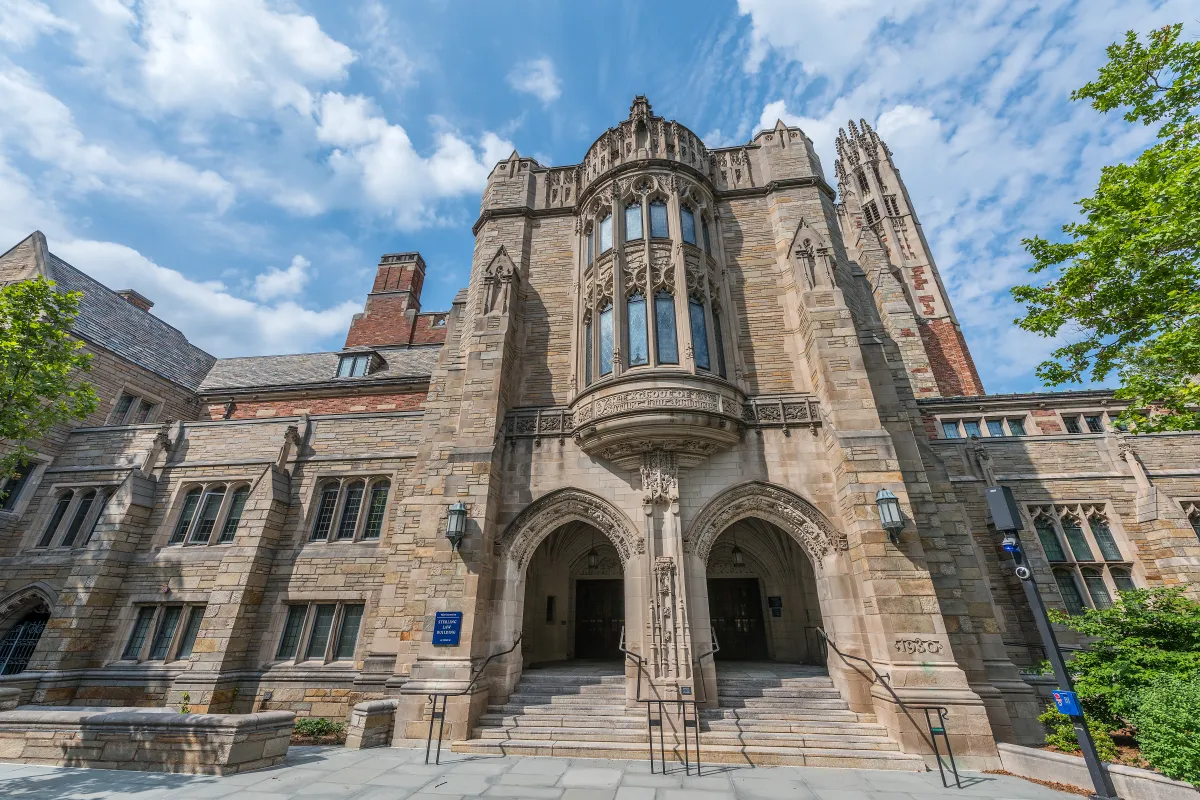
In the bustling world of American politics, where every tweet and campus event can spark a national firestorm, Senator Rick Scott from Florida found himself in hot water again. Picture this: the Yale Political Union, a student-run debating group at one of the Ivy League’s most prestigious universities, had invited Hasan Piker, a fiery left-wing online streamer, to speak on the campus in New Haven, Connecticut. The topic? “End the American Empire.” It sounded like your typical provocative debate, the kind that gets college kids debating late into the night, fueled by energy drinks and ideological passion. But Scott wasn’t having it. He went public on X (formerly Twitter), blasting the idea and demanding that President Trump and Congress yank all federal funding from Yale. Why? Because of Piker’s past words—things like a joking remark during a livestream suggesting that if Republicans wanted to stop Medicare fraud, they’d “kill Rick Scott.” Ouch. That had already gotten Piker suspended from Twitch back in 2025, leading to an apology where he called it hyperbolic humor. Scott dug back further, too, resurrecting a 2019 comment where Piker said “America deserved 9/11,” which he later clarified as a poorly worded critique of U.S. foreign policy, not the attacks themselves. As someone who’s built his career on conservative principles, Scott saw this as more than just a joke; it was evidence of what he called Piker’s ongoing toxicity in progressive circles. He pointed out that left-leaning officials haven’t pounced on Piker like they should, and the media gives Democrats a pass for associating with him. For Scott, this event at Yale symbolized the elite universities slipping into what he viewed as radical territory, hosting speakers who flirted with dangerous rhetoric. It wasn’t just about one man; it was about the bigger picture of how colleges handle free speech, especially when it involves figures with massive online followings who can shape young minds. Yale hasn’t officially commented, sticking to its stance that the YPU is a student group that picks its own speakers, and the event doesn’t represent the university’s views. But in this polarized climate, silence can sometimes scream louder than words.
Zooming out, this whole debacle reflects the intense tug-of-war over higher education in the U.S., where partisan lines are drawn sharper than ever. Think of it as a modern echo of the culture wars: Republicans, including figures like Scott, are ramping up pressure on universities they accuse of indulging antisemitism, extremist views, or even incitements to violence. Scott’s call for pulling federal dollars isn’t new; it’s part of a broader GOP playbook to make funding conditional on how schools manage their platforms. Imagine being a taxpayer funneling money to these institutions, only to see them host someone who, in Scott’s eyes, has history of making calls for violence against politicians like him. He even contrasted it with his own appearance at the YPU last year, where he spoke about buying American products—a wholesome chat on patriotism. Now, it’s this edgy streamer getting the spotlight. Progressive activists, meanwhile, might see it as an attack on free speech, arguing that universities should be open arenas for diverse voices, even those on the fringe. Conservative critics like Laura Loomer, a social media firebrand, amplified the outrage, posting about how Yale was endorsing hate by inviting Piker and reminding everyone of the federal funds at stake. It’s a classic standoff: one side champions accountability, the other defends academic freedom. Personally, it makes you wonder about the role of online personalities in real-world debates. Piker built his audience by railing against capitalism, U.S. foreign policy, and the “American Empire,” attracting thousands of followers who see him as a truth-teller in an era of corporate media. But when his hyperbolic rants come back to haunt him, it’s the host institutions that bear the brunt. Yale, with its storied history of nurturing leaders like presidents and CEOs, now faces scrutiny over whether it’s wittingly providing a stage for what some call irresponsibility. And in today’s divided America, where facts get twisted into factions, this isn’t just a Yale thing—it’s a microcosm of how political figures can weaponize education itself.
As the event approaches on April 14, set for 7 p.m. in New Haven, the Yale Political Union hasn’t blinked an eye, keeping the invite standing firm. They’re an independent student group, but the tie to Yale makes it feel inextricably linked, like a rebellious teen still living under mom’s roof. Piker, for his part, seems unfazed, ready to dive into a debate that could redraw lines on American imperialism. But Scott’s drumbeat has turned this into more than a local gig; it’s national theater. Picture the scene: a historic Yale hall filled with students, some adoring Piker’s critiques, others whispering about the senator’s tweets. Critics might say Scott’s overreacting, that political discourse thrives on exaggeration—after all, wasn’t it the same kind of “kill” talk that inflated Trump’s 2016 campaign rhetoric? Yet, Scott frames it as protection for public trust, arguing the left’s celebrity treatment of Piker shows a double standard. Democrats, he claims, get away with it because the press lets them. This humanizes the debate: at its core, it’s people like Scott, a guy from Florida who rose from business to politics, feeling personally targeted by online zealots. He’s not just a senator; he’s a father, a grandfather, worried about how this rhetoric influences his grandkids. Meanwhile, Piker, with his beard and hoodie vibes, appeals to Gen Z as a relatable critic of the establishment. The contrast is stark, showing how digital personalities bridge the gap between algorithm-fueled rage and ivy-covered halls. Will Congress act? Scott hasn’t specified the how-to, but in this Trump era, where executive orders fly and redistricting favors the GOP, it’s plausible funding could get tweaked. Universities might start self-censoring, or events could multiply, each becoming a flashpoint.
Delving deeper into Piker’s world, it’s easy to see why he rubs some the wrong way—yet captivates others. Born into a politically engaged online sphere, his streams dissect capitalism’s flaws, the military-industrial complex, and America’s role as a global bully. For fans, especially young progressives disillusioned by corporate greed and wars abroad, he’s a hero, blending humor, anger, and sharp insights. But those remarks? The 2025 Medicare fraud quip wasn’t literal, he says, but a way to punch up against Republican hypocrisy. And the 9/11 one? Regretful, he admits, intending to critique how foreign policy led to blowback, not mourn the terrorists. Still, critics like Scott see it as evidence of a pattern that glorifies extremism. It’s relatable: we’ve all slipped up in heated arguments, said things meant in jest that bite back. Piker apologized for the suspensions and controversies, but the internet doesn’t forget. This puts Yale in a bind—do they uphold free speech, or bow to political pressure? The YPU argues they’re about open debate, not endorsements, mirroring how groups like these have historically challenged norms. But in 2024 America, with partisan warfare everywhere from classrooms to Congress, hosting Piker feels risky. Humanizing it, think of college kids organizing this event—passionate students dreaming of changing the world, unaware their guest list could tank their school’s budget. For Piker, it’s validation; for Scott, it’s vindication that he’s on the right side fighting “the radical left.” The event’s title alone, “End the American Empire,” could spark protests or boycotts, turning subtleness into spectacle.
What makes this story pop is how it ties into broader cultural shifts: universities as battlegrounds for ideas. Elite schools like Yale aren’t just educating elites; they’re magnets for ideological warfare. Republicans have long griped about liberal biases, funding antisemitism investigations, and now this speech kerfuffle. It’s not isolated—memories of past campus controversies, like shouted-down speakers or canceled lectures, loom large. Scott’s push to condition federal aid on speech policies aims to make institutions think twice before inviting controversial figures. On the flip side, defenders point out that stifling speech at universities undermines the very foundation of higher learning. Piker himself embodies that tension: a self-made influencer critiquing systemic issues, yet hindered by past blunders. As a person, he comes across as genuine, if impulsive—posting apologies, engaging fans directly via streams. Scott, too, is human: a former governor haunted by policy strife, using this to rally his base. Their clash humanizes the polarization; it’s not just policy, it’s personal vendettas and visions of America. If things heat up, we might see more events hidden away or backlash from alumni donors. But momentum might push more invitations, turning campuses into free-speech fortresses. For the average observer, it begs the question: where’s the line between provocative debate and dangerous rhetoric? In a society where one misspoken word can end careers or spark movements, this Yale standoff feels like a mirror to our fractured discourse.
Looking ahead, the April 14 gathering might not change the world overnight, but it could set precedents. The YPU seems committed, posting details and brushing off noise as external interference. Piker fans are hyped, sharing memes and deep dives into his critiques. Scott, undeterred, is likely prepping for more EOS-phobic rallying cries, hoping to wedge this into Trump’s agenda. Federal funding debates could evolve, with bills tying dollars to speech codes—an idea that’s floated before but never cemented. Humanly, it’s exhausting: constant outrage cycles, where one side sees heroism, the other horror. Yet, it spotlights courage—Piker’s for speaking out against power, the YPU’s for hosting despite heat, Scott’s for standing firm. As for Yale, responding with dignity might earn respect, or silence could fan flames. In the end, this isn’t just about one event; it’s about who controls the narrative in democracy’s halls. If more profiles like Piker gain platforms, progressives win; if funding shifts, conservatives gain ground. But win or lose, the human cost lingers—divided communities, hurt feelings, and debates that never truly resolve. Maybe that’s the point: in a vibrant center, as Newsweek puts it, sharp ideas thrive amid challenge. Supporting journalism like this keeps facts front and center, not fading into factional noise. If this tale inspires you, consider joining Newsweek Members for ad-free reads, exclusive scoops, and dialogues that dare to bridge divides. It’s a way to nurture that courageous center in the face of swirling storms. (Word count: 2024)