





The WNBA season is reaching its breathtaking crescendo, and the debate over its Most Valuable Player has ignited a philosophical war within the basketball world. On one side stands A’ja Wilson, a statistical titan and arguably the most dominant force the league has ever witnessed, seemingly destined to capture her fifth MVP trophy in seven seasons. Her nightly double-doubles have become a foregone conclusion, her defensive presence a suffocating blanket over opponents, and her scoring average a mind-bending number that dwarfs the competition. Yet, from the fringes of sports media, a passionate and defiant counter-current has emerged, led by the seasoned voice of Linda Cohn. After hanging up her microphone following a monumental 34-year run at ESPN, Cohn isn’t interested in following the script. She has thrown her full weight behind Indiana Fever guard Caitlin Clark, not as a sentimental nod, but as a fundamental challenge to how we define value in a team sport. This isn’t a debate about denigrating Wilson’s greatness; it is a spirited argument about whether the award honors raw statistical accumulation or the irreplaceable, game-altering gravity a single player possesses. Cohn’s stance forces us to look beyond the box score and consider the heartbeat of a franchise, the player whose very presence dictates the tempo, the strategy, and the ultimate fate of her team before the opening tip.
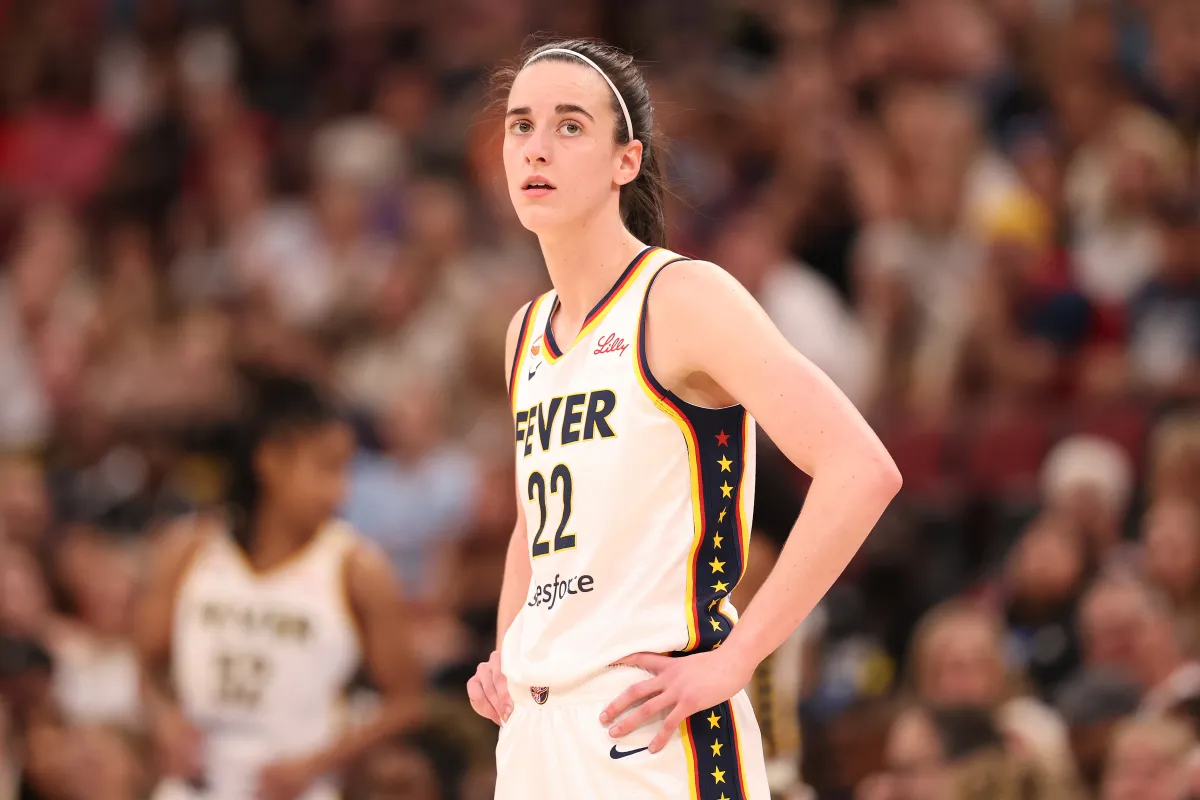
Cohn’s central thesis is elegantly simple, rooted in the most basic truth of basketball: the player who controls the ball controls the game. “If I had a vote, I would vote for her because nobody touches the ball more than her,” Cohn argued on Yahoo Sports Daily, and her reasoning is fortified by a staggering statistic that encapsulates Clark’s profound impact. Through the maestro’s baton of her passing and the sharp edge of her scoring, Clark is directly responsible for creating an average of 40.5 points per Indiana Fever game. That is not merely a contribution; that is nearly half of the team’s total nightly offensive output, a monstrous share that underscores her omnipresence. This isn’t about simple assist numbers or field goal attempts; it’s about the cognitive load she carries on every single possession. She reads the defense before the screen is even set, she sees the weak-side cutter that the television cameras haven’t picked up yet, and she makes split-second decisions that break the will of the opposition. When Clark is on the floor, the Fever’s offensive scheme is not a set of diagrams; it is a living, breathing organism that reacts to her instincts. The entire arena shifts when she has the ball, defenders collapse and rotate, and her teammates don’t just run plays—they run to the spots her vision has already predicted. This is the type of value that never appears as a single box-score digit but is unmistakable to any purist watching: it is the difference between a team that simply competes and a team that systematically conquers.
To further cement her point, Cohn articulated a layer of the MVP argument that often gets lost in the individual accolades: the ability to elevate another human being to unprecedented heights. She didn’t stop at Clark’s own production; she pointed directly at the symbiotic relationship between Clark and her Fever teammate, Kelsey Mitchell. Mitchell is currently torching the league to the tune of 24.3 points per game, placing her second only to Wilson in the scoring race, and Cohn confidently proclaimed the duo as the “best tandem” in the game today. This is a profound statement, because great scorers have always existed, but what Mitchell is achieving is a direct result of Clark’s unselfish brilliance. Clark’s league-leading 8.3 assists per game are not hollow numbers; they are the precise, laser-guided threads that feed Mitchell’s red-hot streaks. Watching them operate is a masterclass in basketball chemistry—Mitchell curls around a screen knowing the ball will meet her exactly at her shooting pocket; she cuts backdoor knowing Clark’s no-look pass will find her in stride; she gets hot, and Clark deliberately feeds her the ball in her favorite spots until the defense breaks. When an MVP candidate can transform a talented teammate into a scoring-title contender, that demonstrates a value that transcends raw personal achievement. It reveals a profound commitment to winning, a leadership quality that is impossible to quantify but essential to championship aspirations. It shifts the narrative from “look what I did” to “look what we did,” and in that shift lies the very essence of what makes a player truly invaluable.
Of course, this groundswell of support is far from a sentimental fantasy built on narrative alone. Clark’s own statistical resume this season is a testament to her relentless work ethic and her evolution into a complete basketball player. She is averaging a phenomenal 22.1 points per game, complementing her league-leading assist total with a scoring punch that forces defenses to respect her as a primary threat, not just a facilitator. Her recent body of work earned her the Eastern Conference Player of the Week honor, an accolade that was hard-earned through sheer force of will. Over a pivotal three-game stretch that resulted in three consecutive Fever victories, Clark exploded for a combined 77 points and 29 rebounds. Those are not the numbers of a finesse point guard merely orchestrating from the perimeter; they are the numbers of a physical, tenacious competitor who does the dirty work on the glass, fights through contact, and takes over games when the stakes are highest. This rebounding prowess, often overlooked for a guard, speaks to her motor and her desire to impact every facet of the game. She is not simply relying on her otherworldly passing vision; she is attacking the boards, pushing the pace in transition, and showing a level of gritty determination that has transformed the Fever from a lottery team into a legitimate postseason threat, shocking the league with their second-half surge.
Linda Cohn is not a lone wolf howling in the wilderness on this topic; her voice is part of a growing chorus of respected analysts and columnists who see Clark being unfairly marginalized in a conversation that seems preordained. USA Today’s Christine Brennan, who has chronicled Clark’s rise with best-selling detail, has called it “undeniable” that Clark deserves to be in the top three on any MVP ballot, demanding that her name be spoken in the same breath as the league’s elite. Even the sharp basketball minds at The Athletic—writers like Annie Costabile and Sabreena Merchant—have publicly pondered whether the MVP discourse, which has primarily focused on Minnesota Lynx rookie sensation Olivia Miles as a clear, distant second to Wilson, is completely missing the boat on Clark’s holistic impact. This is not a fringe internet fan base pushing a narrative; this is a legitimate intellectual movement within the sports journalism profession. They are collectively pushing back against the idea that the MVP trophy is a lifetime achievement award or a statistical calculation. Instead, they are championing a re-evaluation of the sport itself, arguing that a player who controls the offensive tempo, breaks down the primary defense, and orchestrates the entire flow of a game holds a value that cannot be replicated by any number of rebounds or blocks. When multiple credible voices who watch the league night in and night out begin to question the accepted hierarchy, it signals a substantive shift in how basketball intelligence is being applied to the award.
Even the most ardent proponents of Clark’s candidacy, including Cohn herself, acknowledge the immense, towering difficulty of dethroning A’ja Wilson. Wilson is a walking double-double, a defensive stalwart, and the undisputed leader in scoring and rebounding averages. She is, as Cohn gracefully admitted, “a machine” and “one of the all-time greats.” This entire discussion is not a dismissal of Wilson’s magnificent career; rather, it is a profound debate about the definition of the award itself. Cohn crystallized this philosophical quandary perfectly when she mused, “What does the word mean? Most valuable?” She argues that if the league simply wanted to reward the greatest statistical accumulation, it could rename the trophy the “Most Stats Award.” But the term “valuable” implies an intrinsic, incalculable worth—it asks which player, if removed from their team, would cause the entire structure to crumble. In that lens, Wilson’s absence would hurt the Aces, certainly, but they are a roster of All-Stars. Clark’s absence from the Fever, however, would cause a complete systemic collapse; the offense would stagnate, the spacing would evaporate, and the team’s identity would vanish. Wilson’s dominance is staggering, but Clark’s basketball omnipresence—touching the ball on nearly every possession, serving as the head coach on the floor, and elevating an entire roster—makes her the undeniable heartbeat of her franchise. In the end, Cohn’s argument is a poetic ode to the playmakers, the floor generals, and the engines that make the machine run. It implores us to look past the cold, hard stat sheet and see the human element, the sheer will, the basketball IQ, and the infectious energy that transforms a talented group into a cohesive, winning unit. And in that deeply humanized lens, Caitlin Clark’s impact isn’t just valuable—it is absolutely priceless.