






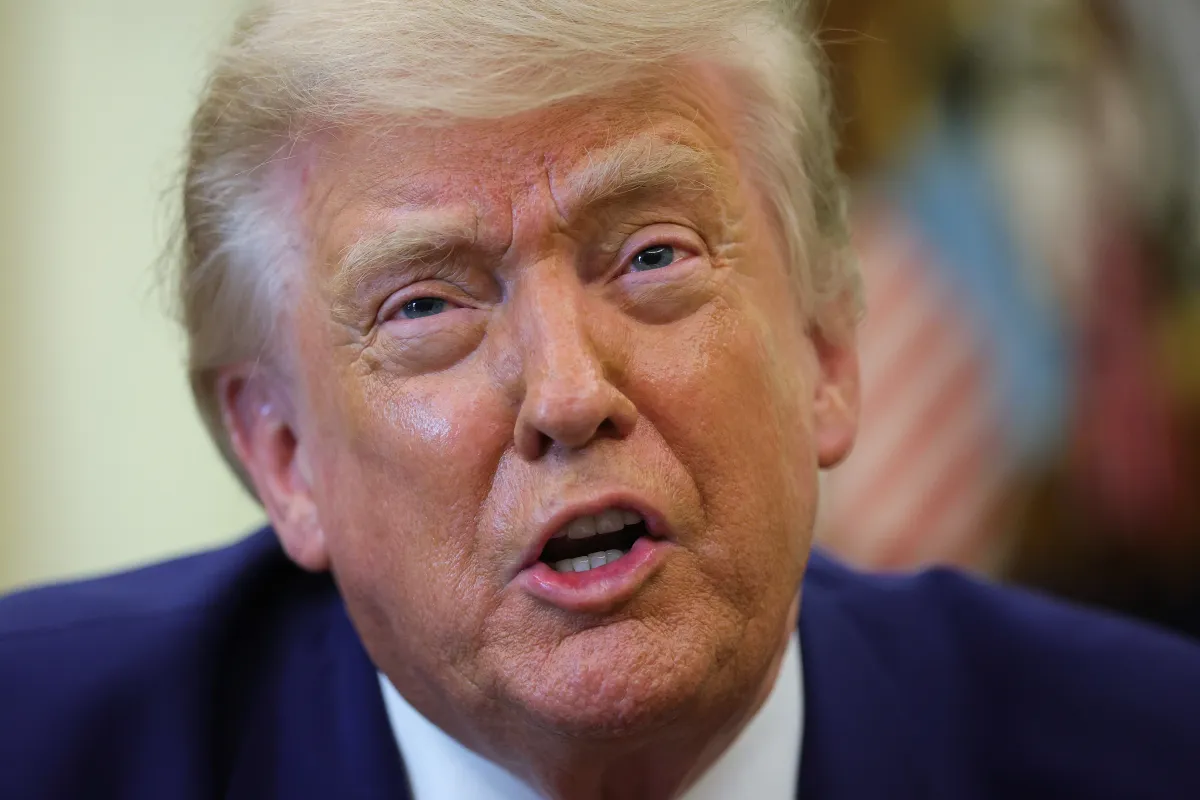
For nearly a decade, the modern Republican Party has often been described as an architectural wonder of political discipline, a monolith where the will of Donald Trump was treated not merely as a guide, but as a binding doctrine. For elected official, challenging his decrees was considered a form of political suicide, while for voters, his endorsement served as the ultimate golden ticket, capable of elevating obscure candidates to national prominence overnight. Yet, beneath this carefully curated facade of absolute loyalty, the human elements of governance—individual conscience, localized constituent anxieties, and the quiet preservation of institutional boundaries—are beginning to create notable and unexpected cracks. As the highly anticipated 2026 midterm elections draw closer, a sudden rush of developments has shown that this formidable political apparatus is experiencing significant internal friction. From a rebellious bipartisan coalition on the floor of the House of Representatives to a shocking grassroots upset in the Iowa primaries, and finally to a quiet, forced retreat by the Department of Justice on a highly controversial funding initiative, the absolute authority of the executive branch is being tested. These episodes are not merely isolated administrative hiccups; they represent a growing, shared anxiety among a diverse group of Republicans who are quietly questioning the limits of executive power, the wisdom of unilateral foreign policy decisions, and the long-term political costs of blind obedience. It is a revealing moment in American politics, showing that even the most dominant political figures must eventually contend with the independent will of those who refuse to abandon their constitutional duties or ignore the specific demands of the communities they were elected to represent.
The first major fracture appeared in the high-stakes arena of foreign policy, where the terrifying questions of war, peace, and constitutional authority often force representatives to look beyond party lines and consult their own moral compasses. In a dramatic display of independent conviction, four House Republicans—Thomas Massie of Kentucky, Brian Fitzpatrick of Pennsylvania, Tom Barrett of Michigan, and Warren Davidson of Ohio—broke ranks with their party’s leadership to vote in favor of a bipartisan resolution aiming to restrict the president’s power to wage war against Iran without explicit congressional authorization. The narrow 215–208 victory for the resolution, which directed the administration to remove American troops from active hostilities unless authorized by Congress, marked a historic moment as the first time the House had successfully passed such a measure during the conflict. To understand this rebellion, one must look at the human and political realities of the lawmakers involved; from Massie’s long-standing libertarian skepticism of foreign intervention to Fitzpatrick’s pragmatism in representing a competitive swing district, these men chose to prioritize the Constitution’s war-powers clause over presidential convenience. Although the White House quickly dismissed the vote as a symbolic gesture made possible largely by target-rich Republican absences, the defiance sent an unmistakable wave of unease through the party’s leadership. The move highlighted a deep, simmering frustration among rank-and-file Republicans who are increasingly weary of unilateral military operations that bypass the legislative branch, especially at a time when their constituents are facing intense domestic economic pressures and expressing profound skepticism about the human and financial costs of another open-ended foreign conflict.
If the legislative rebellion in Washington exposed intellectual disagreements over foreign policy, the primary elections in Iowa delivered a far more visceral, grassroots shock directly to the heart of Trump’s political machine. In a closely watched gubernatorial primary that was widely viewed as a crucial litmus test of the former president’s influence, deeply conservative Iowa voters bypassed Trump’s hand-picked candidate, incumbent Representative Randy Feenstra, in favor of Zach Lahn, a local businessman and farmer. Lahn’s razor-thin victory, decided by less than a single percentage point, sent shockwaves through the political establishment because it represented the very first time in the 2026 election cycle that a Trump-endorsed candidate suffered a primary defeat for a governorship, Senate, or House seat. This political earthquake was not fueled by moderate resistance, but rather by highly motivated conservative activists aligned with the rising “Make America Healthy Again” movement, who felt that establishment figures like Feenstra had grown detached from the urgent, everyday struggles of working families. The defeat revealed that while Trump’s endorsement remains incredibly powerful—as seen in his successful efforts to unseat critics in Kentucky and Louisiana—it is not an invincible magic wand when local voters feel their specific concerns about corporate agriculture, public health, and community autonomy are being overlooked. For Feenstra, who graciously conceded while pleading for party unity, and for the broader Republican strategist class, the Iowa result was a humbling reminder that grassroots voters are human beings with independent priorities, and they will not hesitate to reject top-down commands from Washington when they feel their local identity is at stake.
Simultaneously, a quieter but equally significant retreat was taking place within the halls of the Department of Justice, where the administration was forced to dismantle a highly controversial $1.8 billion initiative known as the “anti-weaponization fund.” The program, designed to distribute massive taxpayer-funded payouts to individuals who claimed they had been unfairly targeted or victimized by government agencies, had initially been championed as a landmark effort to dismantle deep-state overreach. However, the plan immediately ran into a wall of intense skepticism from a growing number of Republican lawmakers who harbored deep concerns about the ethical guidelines, legal authority, and potential corruption inherent in distributing such a massive sum of money without strict congressional oversight. When a federal judge stepped in and temporarily blocked the program, the Department of Justice chose to abandon the initiative entirely rather than fight an uphill battle against its own party’s congressional critics, acknowledging that it would fully comply with the court’s ruling. This sudden retreat was a direct consequence of the quiet panic spreading among Capitol Hill conservatives, who feared that visual images of unregulated, multi-billion-dollar payouts would become an indefensible political liability ahead of the 2026 midterms. It showcased a fundamental tension within the party: while many rank-and-file Republicans support the rhetorical fight against administrative overreach, they are deeply uncomfortable with creating massive, unaccountable financial programs that violate traditional conservative principles of fiscal responsibility and the rule of law.
This compounding series of internal disputes has done more than just generate negative headlines; it has actively stalled the administration’s broader governing momentum at a time when legislative progress is desperately needed. The deep internal divisions over the ill-fated anti-weaponization fund, for instance, directly contributed to the delay of a massive, high-priority immigration funding package, as lawmakers refused to move forward until their concerns about executive spending were fully addressed. This legislative gridlock illustrates the real-world consequences of trying to govern a diverse and anxious coalition solely through pressure and top-down mandates. For many vulnerable Republicans representing competitive districts, the calculation has changed: they are no longer just looking to secure Trump’s approval, but are actively weighing how their votes on controversial policies will play out among moderate and independent voters back home who are suffering from economic exhaustion. This shifting dynamic has left Trump himself in an uncharacteristically hesitant position, as seen when he publicly admitted he would need to consult with legal teams before deciding whether the weaponization fund could eventually be revived or if it was permanently dead. This moment of public uncertainty from a leader who usually projects absolute confidence is proof of a larger reality: the daily friction of governing in a constitutional republic, combined with the looming threat of electoral accountability, has forced the administration into a delicate balancing act with its own legislative partners.
Ultimately, these recent developments do not signal a complete collapse of Trump’s influence over the Republican Party, but they do indicate that the era of unquestioned obedience is transitioning into a more complex, defensive, and pragmatic phase. The modern GOP remains, in many ways, an organization built in Trump’s image, but its members are increasingly demonstrating that they possess their own red lines when it comes to the preservation of constitutional separation of powers, fiscal integrity, and localized local representation. The human desire for self-preservation, combined with an enduring respect for institutional checks and balances, has reminded the political world that power in a democracy is never a permanent monument, but an ongoing, fluid negotiation. As lawmakers look toward the challenges of the 2026 midterms and voters assert their right to define what conservatism means in their own communities, the party is revealing itself to be far more ideologically diverse and resilient than many observers believed. The path forward for the Republican party will likely not be defined by a clean break from its populist leader, but by a delicate and sometimes painful dance, as a new generation of conservative leaders and grassroots voters learn how to navigate the massive shadow of Donald Trump while firmly holding onto their own values, their localized priorities, and their constitutional responsibilities.