


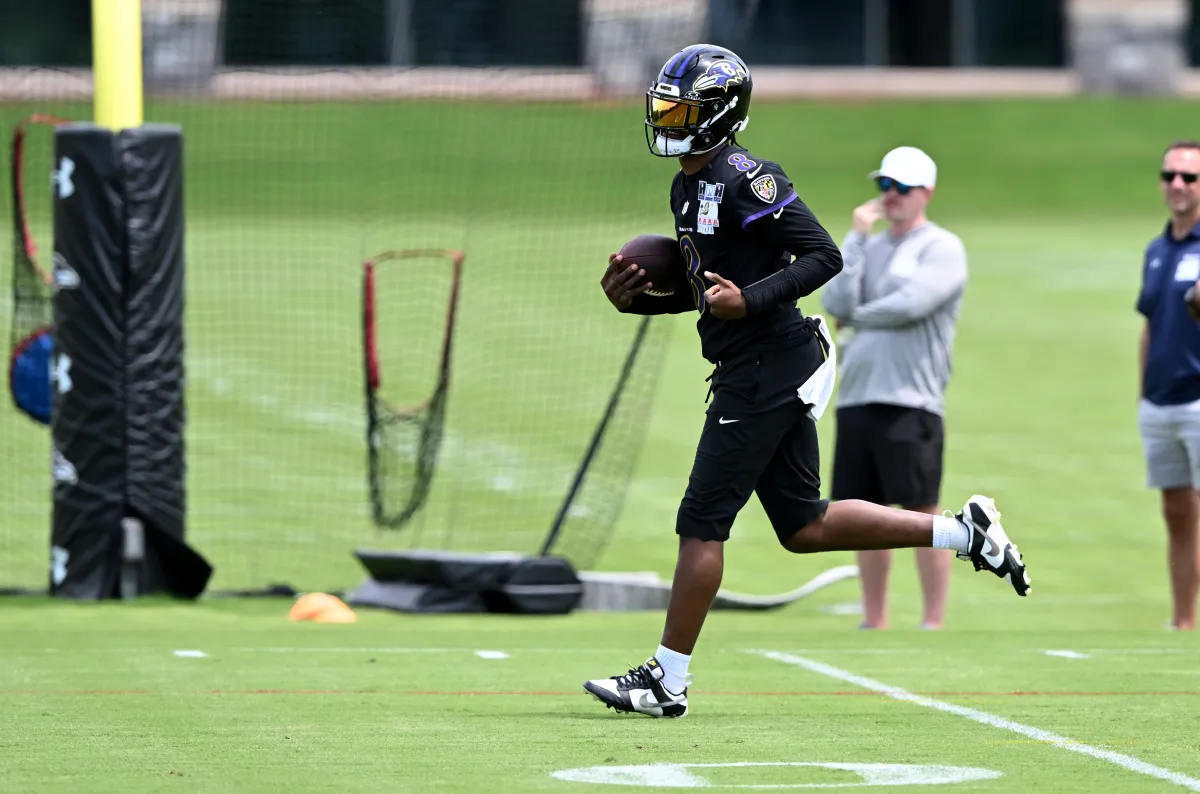
The relationship between a city and its franchise quarterback is one of the most intense, emotional, and financially complex dynamics in professional sports, and nowhere is this more evident than in Baltimore. Lamar Jackson is not simply the starting quarterback for the Ravens; he is the undisputed heartbeat of the franchise, a cultural icon, and a generational athlete who has completely redefined what is possible at the position. From the moment he draft-slid into the end of the first round in 2018, Jackson has carried the hopes of a proud, blue-collar city on his shoulders, rewarding their faith with multiple MVP awards and highlight-reel plays that defy the laws of physics. However, behind the breathtaking runs and pinpoint passes lies the cold, hard reality of the National Football League’s business side—a realm governed by salary caps, contract structures, and long-term financial forecasting. This reality is fast approaching a critical juncture as the sports world peers toward the upcoming seasons. A looming, jaw-dropping salary cap hit of $84.3 million scheduled for the 2027 season has placed the organization on high alert. That astronomical figure is simply unsustainable for any team trying to field a competitive, well-rounded roster, meaning a contract adjustment is not just a preference, but an absolute structural necessity. For the Ravens, figuring out how to navigate this financial mountain while keeping their superstar happy and motivated is the most important puzzle they will have to solve over the next two years. It is a high-stakes game of financial chess where the pieces are valued in tens of millions of dollars, and the ultimate prize is keeping Baltimore’s championship window wide open.
According to the analytical heavyweights at ESPN, the Baltimore Ravens cannot afford to adopt a passive, wait-and-see approach when it comes to addressing this massive financial hurdle. In a comprehensive league-wide analysis detailing the one urgent transaction every NFL franchise must prioritize, the sports media giant made it unequivocally clear that securing a contract extension for Jackson prior to the start of the 2026 season should be the team’s primary focus. The core of ESPN’s argument is rooted in simple mathematical self-preservation. Allowing a player, even one as transcendental as Jackson, to carry an $84.3 million cap charge into a season would utterly paralyze the front office, preventing them from signing draft picks, retaining key homegrown defensive talent, or pursuing impactful free agents in the open market. Because of this, analysts view a contract restructure or a multi-year extension as an inevitable formality, asserting that Jackson is so deeply woven into the fabric of the Ravens organization that his departure to another franchise is virtually unimaginable. The general consensus among league insiders is that both parties are destined to remain together, making it highly logical for the Ravens to tackle this issue proactively. By hammering out a brand-new, lucrative extension before the high-pressure environment of the regular season begins, Baltimore could effectively smooth out those gargantuan cap numbers, spreading the financial impact over several future years and instantly giving general manager Eric DeCosta the breathing room needed to keep the roster stocked with championship-caliber talent.
Yet, as is so often the case in high-profile sports negotiations, what seems incredibly simple on a spreadsheet can become incredibly complicated when human elements are introduced. While the Ravens’ front office may be ready to sit down at the negotiating table with open checkbooks, compelling reports from respected journalists suggest that the timeline for a new deal is not entirely within the organization’s control. Jeff Zrebiec, a highly trusted Ravens insider for The Athletic, recently shed light on the internal dynamics of these quiet negotiations, suggesting that any current delay or hesitation is actually originating from Jackson’s side of the table rather than the team’s. According to Zrebiec, the Ravens organization is fully prepared to engage in serious, market-setting discussions, but there has been a noticeable lack of extensive, deep conversations in recent months. This silence is not born out of animosity, nor is it the result of Jackson being insulted by a lowball offer from a front office that clearly adores him. Instead, there appears to be a deliberate, patient pause on Jackson’s part—a quiet calculation that is prompting the superstar quarterback to bide his time. This mysterious waiting game has sent ripples of intrigue through the fan base and the media, leaving everyone to wonder what specific factors the enigmatic playmaker is observing before he decides to put pen to paper on what will undoubtedly be another historic, industry-shaking contract.
To understand why Jackson might be inclined to wait, one must look at the unique way he has always operated throughout his professional career, particularly in how he manages his business affairs. Unlike almost every other elite player in the NFL who relies on high-powered agents to conduct public relations campaigns and navigate contract negotiations, Jackson famously represents himself, leaning heavily on the advice of his mother, Felicia Jones, and a tight-knit circle of trusted advisors. This unconventional setup means that his contract negotiations are refreshingly devoid of the typical media leaks, posturing, and public drama that usually characterize superstar contract disputes. It also means that Jackson’s motivations are deeply personal and entirely aligned with his on-field experiences. Insiders like Zrebiec have theorized that the quarterback’s hesitation may be directly tied to his desire to evaluate the evolving landscape of the Ravens’ offense before committing to a long-term financial structure. Over the past few seasons, Baltimore has undergone significant offensive transitions, moving away from the run-heavy, ground-and-pound schemes of the past toward more modern, balanced, and pass-heavy philosophies. Jackson, who has always been a highly intuitive and cerebral competitor, likely wants to fully digest and experience this offensive evolution in live, high-stakes game action. He understands that his legacy, and his ultimate goal of bringing a Super Bowl trophy back to Baltimore, depends entirely on whether the offensive system maximizes his unique dual-threat capabilities and protects his physical health over the long haul.
Beyond the tactical schemes on the football field, there is also a brilliant macroeconomic strategy at play whenever an elite player decides to delay signing a contract extension. The financial market for premier NFL quarterbacks is not a static entity; it is a rapidly escalating elevator that only goes up, with each subsequent signing setting an even higher baseline for the next player in line. By choosing not to rush into a new agreement, Jackson allows the overall market to continue its upward trajectory as other top-tier quarterbacks around the complex landscape of the league sign their own mega-deals, raising the financial bar in the process. Additionally, Jackson’s patience illustrates a profound understanding of his own leverage. He knows that his value to the Ravens is immeasurable; without him, the team’s entire identity and championship aspirations would instantly evaporate. By waiting, Jackson ensures that he retains maximum capability to demand not only top-market compensation but also key roster assurances. He wants to know that the front office will remain committed to putting elite playmakers around him, protecting his offensive line, and maintaining a championship-caliber defense. For Jackson, a contract is not merely about accumulating personal wealth—though it certainly achieves that—but about securing a binding partnership with an organization that is as fiercely committed to winning championships as he is.
Ultimately, this ongoing contract narrative is a beautiful testament to the delicate, human, and highly complex relationship between a brilliant athlete and a passionately dedicated sports franchise. It is a story about patience, mutual respect, and the incredible pressure that comes with trying to sustain success at the absolute highest level of professional sports. While the media and the analytical departments will continue to stress over the ticking clock and the looming specter of the 2027 salary cap, there is a fundamental underlying trust between Lamar Jackson and the Baltimore Ravens that has been forged through years of triumph, adversity, and shared history. The Ravens front office, led by the pragmatic yet empathetic Eric DeCosta, has repeatedly shown that they understand and respect Jackson’s unique way of doing business, and Jackson has consistently reciprocated that respect with his unwavering loyalty to the city of Baltimore. As the countdown to the crucial 2026 season quietly begins, fans can rest assured that this high-stakes financial dance will eventually find its rhythm. When the time is right, and when all the football and financial variables have finally aligned to Jackson’s satisfaction, the pen will inevitably meet the paper, securing the legendary quarterback’s place in Baltimore for the foreseeable future and keeping the Ravens’ primary pursuit of a Super Bowl championship very much alive.