





As the dog days of summer press on, there’s an unmistakable electricity in the air for football fans. NFL training camps are officially alive, with teams easing back onto practice fields, running drills in full pads, and beginning the slow, hopeful grind toward the regular season. The preseason slate is already under way, and while these first exhibition games are mostly about evaluating roster depth and shaking off rust, they serve as the first real sign that football is back. The countdown to the real thing, the September 9 regular-season kickoff, is officially ticking, and with that comes the endless debate over which teams improved, which players will break out, and which position groups will define a season. Around the league, we’ve already broken down the biggest camp competitions, the rookies poised to win starting jobs, and the veterans skating on thin ice, plus we’ve ranked the best coaches, quarterbacks, running backs, and wide receivers in every division. But there’s one position group that doesn’t always get the spotlight it deserves until it makes a huge play in a clutch moment: tight end. So let’s shift our attention there and power-rank the tight end rooms across each division, starting with the NFC South, where the rankings offer a fascinating mix of untapped potential, veteran reassurance, and a champion-level star who can change the entire complexion of an offense.
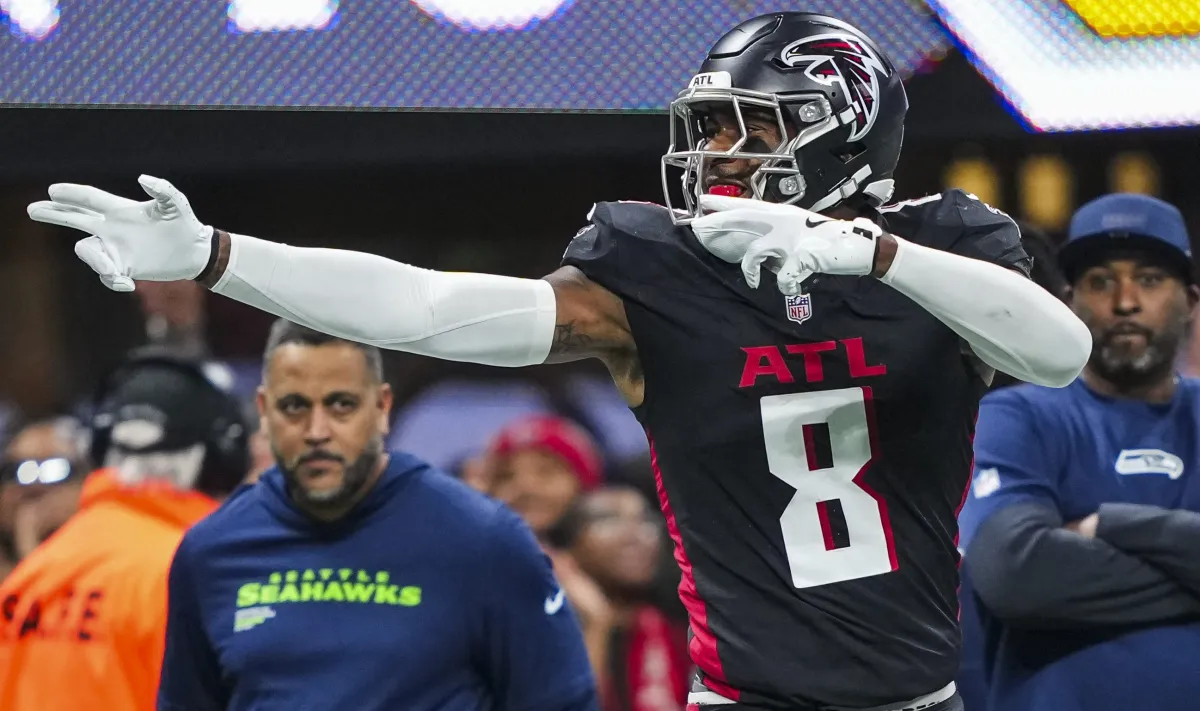
Topping the list is Atlanta, and it’s not difficult to see why. Kyle Pitts is the kind of tight end who doesn’t come around very often, a player who runs routes like a wide receiver but has the size and strength to body defenders in the run game and downfield. Last season he put together a career-best campaign with 88 catches and five touchdowns, and he’s seen 90 or more targets three times in his five professional seasons. That kind of volume isn’t accidental; it’s a sign that coordinators want to get him involved, and when he’s featured properly, he’s arguably one of the most dangerous mismatch creators in football. There is no tight end in the NFC South who can single-handedly stress a defense like Pitts can, and that alone makes Atlanta’s tight end room the division’s best. But the Falcons didn’t just stop there. They’ve got Austin Hooper in the mix, a two-time Pro Bowler who might be past his prime but still knows how to be a capable and savvy presence. Hooper hasn’t caught more than 46 balls since 2019, but in this offense he doesn’t need to be the main feature. He’s the kind of veteran backup who can come in for a few key packages, provide leadership, and not demand the spotlight. Add in Charlie Woerner, a reliable blocker who will do the dirty work in the trenches, and you have a tight end room that is both explosive up front and steady underneath. The Falcons get the nod at the top because they have a legitimate game-breaker at the position, and even though Pitts has left a little something to be desired when it comes to year-to-year consistency, he’s still the kind of player who keeps defensive coordinators awake at night.
The Carolina Panthers land at number two, and that might surprise some fans who look at the nameplate and see a group full of undervalued pieces. But there’s a quiet brilliance to what Carolina has assembled, starting with Darren Waller. Let’s be honest: Waller isn’t the same player who tore up the league in 2020. Injuries, age, and the wear and tear of the sport have taken away a step or two, and his numbers last season with the Dolphins—24 receptions, 283 yards, and six touchdowns—don’t jump off the page. But Waller still has that sixth sense for finding soft spots in coverage, and those six scores prove he remains dangerous in the red zone. The Panthers don’t need him to be the focal point of the passing game; they need him to be a smart, capable safety net and a mentor for the younger guys. That’s exactly the kind of role he can thrive in. Alongside him, Tommy Tremble has developed into a solid, dependable, all-around tight end with 27 catches, 249 yards, and two touchdowns last season, and Ja’Tavion Sanders, a young pass-catcher who chipped in with 29 receptions, 190 yards, and a score, brings youthful energy and a willingness to learn. None of these players alone is a superstar, but together they form a deep committee that can help quarterback Bryce Young in a variety of ways. Waller brings that veteran savvy, Tremble provides stability, and Sanders offers upside on seam routes and play-action. In a division that doesn’t possess an overwhelmingly deep collection of tight ends, Carolina’s group stacks up nicely because of its versatility and complementary skill sets. They don’t ask any one player to carry the load, but they have enough various weapons to keep defenses honest, and that’s all a quarterback like Young really needs.
Further down in New Orleans, the Saints’ tight end room is intriguing for a different reason: it has a true breakout threat in Juwan Johnson. Johnson is one of those late-blooming players who keeps getting better every season, and last year he really arrived on the scene with a monster campaign—77 receptions, 889 yards, and three touchdowns. Those are wide receiver numbers from the tight end spot, and they suggest that Johnson has become far more than just a red-zone target. He’s the kind of security blanket that young quarterbacks lean on, and New Orleans is set to feed him the ball in 2026 as new signal-caller Tyler Shough gets comfortable in offensive coordinator Kellen Moore’s system. Shough has a good arm and an even better understanding of pocket movement, but he’ll need reliable outlets, and Johnson should be his best friend underneath and over the middle. Yet despite that star-in-the-making presence, the Saints slide in at third because the rest of the room carries more question marks than answers. Noah Fant is a former first-round pick who has never quite reached the heights many predicted when he was taken tenth overall by the Broncos back in 2019. He’s not a bad player—far from it. He runs crisp routes and is a willing blocker, but he’s settled into a role as a more complementary piece rather than the dominant TE1 he was projected to be. With Johnson, Fant could actually shine in a 1A-1B rotation, taking advantage of mismatches and not needing to be the guy every single snap. Then there’s Oscar Delp, the rookie out of Georgia, who represents a little bit of lottery-ticket potential. The combination of Johnson’s production, Fant’s pedigree, and Delp’s promise is enough to keep New Orleans respectable, but it’s just a notch below the deeper group in Carolina because it’s more reliant on one player staying healthy and another finally living up to his billing. If Johnson continues his upward trajectory and Fant embraces a true complementary role, this could look like a top-tier room by the end of the season, but for now the Saints sit in a solid but unspectacular third place.
At the bottom of the NFC South rankings are the Tampa Bay Buccaneers, and it’s not for a lack of effort from their starter. Cade Otton is the kind of reliable tight end that quarterbacks adore—he’s not necessarily going to outrun anyone or jump over defenders, but he catches the ball when it comes his way, runs precise routes, and has become a trusted weapon for Baker Mayfield. Otton has put together back-to-back seasons with exactly 59 receptions, and he’s topped 572 receiving yards in both of those years. That consistency is genuinely valuable in an offense that already has a talented group of wideouts, because Otton provides the underneath option that keeps the chains moving. He’s the kind of player who won’t blow up the stat sheet but will land a critical third-down conversion to keep a drive alive. The problem in Tampa is what comes after him. Outside of Otton, the Bucs simply don’t have much to work with at the tight end spot. Payne Durham and Devin Culp combined for just two catches, 17 yards, and one touchdown last season. That’s a shockingly low level of production, and it tells you everything you need to know about the team’s depth concerns. If Otton were to miss any time, Tampa Bay would be left running out a pair of players who are essentially unproven at the NFL level. That makes them a one-man position group, and in a division where other teams have multiple serviceable options, that’s a serious vulnerability. It’s not that Otton is the problem; he’s actually a perfect complementary piece for a playoff-caliber offense. It’s just that the Bucs haven’t built nearly enough behind him, and in a league that increasingly features two or three tight ends on every roster, that lack of depth can really bite you over a long season. Maybe Durham or Culp takes a step forward this year and proves the coaching staff right, but based on what we’ve seen so far, Tampa Bay has a significant amount of work to do before their tight end room can be considered competitive.
As we wrap up this power ranking of the NFC South tight end groups, it becomes clear that the position means something a little different for each team. The Falcons have the superstar, the one player who can make a quarterback’s life easier every time he lines up, and they lean on Kyle Pitts as their offensive anchor at the position. The Panthers have assembled a quiet collection of reliable, well-rounded players who understand their roles and can help a young quarterback navigate the pressure of an NFL season. The Saints have a rising star in Juwan Johnson, and if he can build on last year’s breakout while the rest of the room finds its footing, they might climb the rankings before the season is done. And the Buccaneers have a steady, dependable starter in Cade Otton, but they’re missing the supporting cast that every contending team needs in today’s pass-heavy league. Ultimately, tight end is one of those positions that often gets overlooked until it becomes a glaring weakness, and a good room can elevate a whole offense without making many headlines. As training camp gives way to preseason games and the regular season approaches, it will be fascinating to watch how these tight end rooms evolve, which young players seize their chances, and whether any of these rankings look completely different by Thanksgiving. For now, the picture is clear: Atlanta leads the way, Carolina and New Orleans are right behind with interesting upside, and Tampa Bay has some serious catching up to do. With the season opener on September 9 drawing ever closer, the tight end position might just end up being the deciding factor in more than one NFC South matchup, and we can’t wait to see how it all unfolds on the field.