





The Pacific Ocean is a world of rhythms, and one of its most powerful rhythms is beginning to stir. Satellites operated by NASA are detecting the early fingerprints of a tropical Pacific shift, and it is changing the ocean before our eyes. Sea surface temperatures are running warmer than normal, sea surface heights are looking inflated, and chlorophyll—the green pigment that reveals where microscopic marine plants are growing—is moving in ways that tell a familiar, larger story. This is El Niño, one of nature’s great climate events. It is often talked about in terms of floods and droughts, storms and heat waves, but its quieter, most profound effects may be happening beneath the waves. El Niño is essentially waters in the equatorial Pacific becoming unusually warm, but that warmth is tied to ocean currents and air moving together. The National Oceanic and Atmospheric Administration is already watching with considerable concern. Acting on data from ocean buoys and satellite records, the agency’s Climate Prediction Center has placed odds above ninety percent that enough warm water and atmospheric response will build into a very strong El Niño that lasts into 2027. Strikingly, there is now a 69 out of 100 chance that this event will be more intense than any previous El Niño recorded since 1950. Those are strong numbers, and they are the reason scientists are not simply watching temperature extremes, Marine food webs, coastal currents, and fisheries along the West Coast and across the Americas are paying attention.
What satellites are seeing most clearly is a shift at the very base of the ocean food chain. The tiniest marine organisms are the first to feel change. These are phytoplankton, microscopic plants and plant-like microbes that live in sunlight layer across the ocean. They absorb carbon, produce oxygen, and feed everything from copepods to krill to fish to whales. Phytoplankton also need nutrients. They depend on the ocean’s natural circulation to bring nitrogen, phosphorus, and other food up from the deep sea, and that circulation is typically fueled by winds and temperature contrasts. During an El Niño, the familiar equatorial trade winds relax, warm surface water spreads eastward, and the vertical stirring that normally returns nutrient-rich water to the ocean surface is suppressed. NASA’s newest and most sensitive ocean color satellite, called PACE, has already caught this happening. In June 2026, satellite images of the central equatorial Pacific found significantly less chlorophyll in the water than was present in neutral conditions in June 2025. Chlorophyll is not just a color. It is a proxy for living plants, for the biological base of the entire marine food web. Some variations from year to year happen naturally, but the drop seen this year aligns with classic El Niño behavior. The ocean has essentially turned calm and layered. The water near the surface stays warm, but it is a product of sunlight, not nutrient-rich circulation. For the invisible organisms that require a constant supply of minerals, this is like a shelf going empty in a grocery store. Less phytoplankton now usually means less energy for all the creatures sustained by them later.
The connection between the equator and the western edges of continents may sound far away, but El Niño works through something scientists call teleconnections. That is a fancy word for a long-distance chain reaction bank that travel through the atmosphere and the ocean. The tropical Pacific is the heart of this global storm, but its influence reaches like signal reach and sunshine is extended to the eastern Pacific and coastal currents. Along the West Coast of North America, the water circulation is normally driven by seasonal winds blowing equatorward and pulling cold water up from below just off the shore. Coastal upwelling is the engine of some of the most productive fisheries on Earth. When El Niño arrives, that upwelling weakens. The warmer surface layer spreads, and ocean pressure and density become sharper. Even if the deep nutrient pool is still waiting down there, it becomes more difficult for the ocean to lift it up. The nutric line, the depth at which nutrients become abundant, drops deeper. The water gets more layered, more stratified, mad recruitment in the surface ocean becomes far less available. As NOAA oceanographer Andrew Leising explained, if the bottom of the food web is malnourished, the effects ripple outward. A smaller population of plankton supplies less to herbivorous grazers, and the loss reaches through predators, small forage fish, squid, seabirds, and marine mammals. For coastal systems that are not used to prolonged shortages, this can feel like an abrupt change. The ocean looks less productive, not purely because there are fewer organisms, but because the entire connection between sunshot and deeper water is broken.
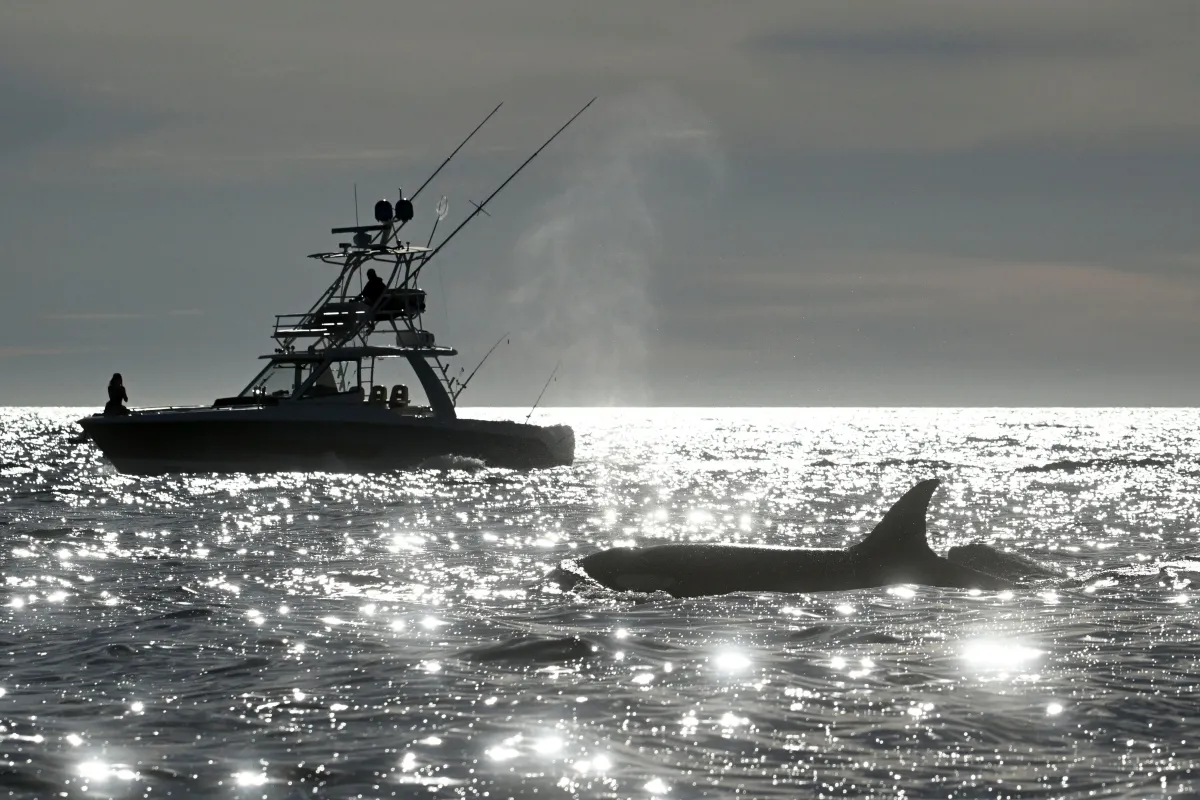
What does that mean for people who catch and eat seafood? The answer is not all bad, and it is certainly not a simple story. Some species will respond particularly strongly in unusual ways. Cooler loving cold-water species may leave their normal hiding places and swim northward. They may also retreat into more depths where water remains cool, but they will often find their environment becoming less hospitable. Growth and reproduction can slow, and mortality for early-life stages can climb. Some California groundfish, salmon, Dungeness crab, and other coldish stocks may feel this pressure in the long run. The story of El Niño, though, is not necessarily one of empty nets. Warmer currents also bring visitors from distant regions. Warm-water species, including some tunas, can move toward shore and farther both north than usual. During this time, fishermen who go after tropical and subtropical species might actually find new opportunities, sometimes in unexpected latitudes. Southern species may move into new areas, and schooling warm-water game fish can create signs of abundance. A Tuna boat that normally travels miles offshore may have a sudden advantage. That is one of the surprising paradoxes of El Niño. It is not all loss, but instead it reorders a living map that people have grown used to. Some ecosystems experience little direct damage, while others experience especially during times of productive fishing. The outcome will depend on the permeability of the species, the intensity of local warming, and natural variation in all living water.
The scientists want people to remember an important warning about the satellite images that triggered these conversations. The ocean is opaque and satellites only see a shallow layer of the subject. Most ocean-color sensors can only gauge the top few meters of the water, while a large amount of the phytoplankton lives deeper, beneath the surface level. Surface chlorophyll is often related to chlorophyll throughout the upper ocean, but it is not always reliable. Sometimes the surface can look blue and empty while rich green life burns just below the visible edge. Also, the equatorial Pacific is naturally less green than the coastal zones, particularly the ecosystems that rely on coastal upwelling. Satellite data from the middle of the Pacific is naturally low in chlorophyll, which means even small changes can produce huge relative fluctuations when expressed as percentages. A single image only shows a snapshot in time, not a weekly or seasonal production rate. The scientific record must be read carefully. One entire chart of satellites can miss that happening at a local ranch or the food chain that may be surviving in healthy today. At the same time, the absence of a complete disaster in one pixel does not mean the entire ocean is immune to the larger system. These kinds of uncertainty are natural, but they do not mean we ignore the risk. By tracking satellites and readings of chlorophyll, temperatures, and currents, scientists are building a more subtle view of how the ocean can produce a food chain from one El Niño atmosphere to the next.
What scientists stress is that El Niño generally shifts the odds. It is not a lock on a particular result. Mike Jacox, a researcher at NOAA’s Southwest Regional Science Center, put it this way. The presence of El Niño does not guarantee anything. It simply moves the expected probability toward certain outcomes, so that a warm and low-productivity condition becomes more likely. The stronger the El Niño event is the more the odds shift, and the more severe impacts become likely. If a population is doing well and has a strong position, the same influence may be diluted; if the ecosystem is already stressed, it may take a greater toll. It is in the margins of the food web that human people ultimately tell their own experiences. Marine species move and fish markets follow. People who rely on the sea often learn to be flexible, and can usually adapt, sometimes due to a shift in fish distribution or catch, sometimes by adjusting how they fish. The forecast for a historic El Niño is a warning, not a final decision. While scientists continue to track the ocean, there is still time to prepare, to monitor, and to notice that the ocean is front and center of the story. The same satellites that watch storms and ocean temperatures now see the invisible changes that eventually become fish at the dock, climate impacts on the sea. They help answer questions about how this living system supports our food and our future, and perhaps the better we read those signals, the better we can navigate the differences season that lies ahead.