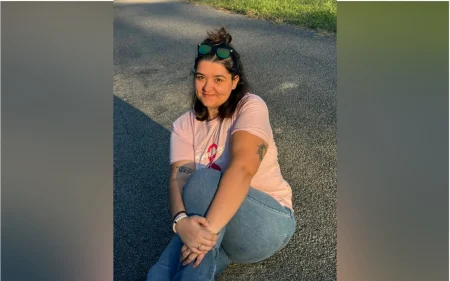



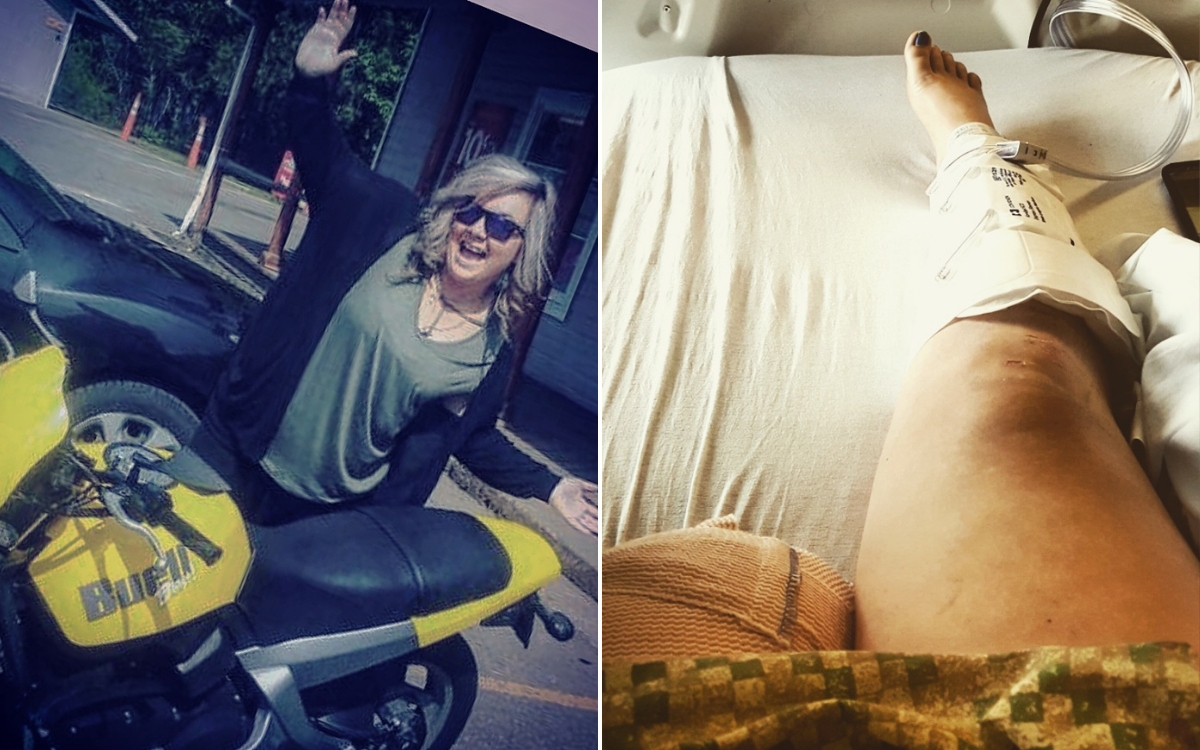
For Chelsea, a thirty-six-year-old mother from Klamath Falls, Oregon, the memory of a single, devastating afternoon remains permanently etched into her mind, serving as a boundary line between the life she once knew and the one she had to painfully rebuild. Growing up with a deep passion for motorsports, Chelsea was no stranger to high-speed thrills, having spent her youth racing outlaw karts and dirt bikes across dusty tracks. She understood the inherent risks that come with riding vehicles on two wheels, risks that are starkly illustrated by national safety data. According to the National Safety Council, motorcycles represent a mere three percent of all registered vehicles in the United States and account for less than one percent of total vehicle miles traveled, yet motorcyclists make up over sixteen percent of all traffic fatalities and a significant portion of road injuries. But Chelsea’s life-altering encounter on the pavement was not the result of an amateur mistake or a simple loss of control on a sharp turn; rather, it was the catastrophic consequence of another driver’s reckless, illegal choice to get behind the wheel while heavily intoxicated.
The day of the crash began under an ominous, almost surreal canopy, with a massive wildfire burning along the Oregon coast that painted the sky in an eerie, dark orange hue despite the oppressive summer heat. Chelsea and her husband had spent a peaceful weekend away from home, traveling to deliver a truck to a friend’s automotive shop, and were making their way back on her husband’s motorcycle. Though Chelsea held her own motorcycle endorsement, she had chosen to ride passenger on this long journey, preferring to sit back, feel the wind, and take in the rugged coastal scenery. The couple made a few routine stops along the ride, during which Chelsea jokingly complained about her muscles growing sore from sitting on the back of the bike for so long. It is a minor detail, but one that she still looks back on with a quiet, lingering sense of wonder and regret, questioning whether asking for just one more rest stop might have altered their timeline by a few crucial minutes and spared them from the nightmare that was waiting for them just beyond the horizon. After pulling into a quiet gas station to stretch, Chelsea sent a quick text message to her father to let him know they were on the final stretch home and would soon be picking up their young daughter—a simple, comforting promise that would ultimately go unfulfilled.
Only a few miles down the road, their journey home was violently interrupted when a drunk driver rounded a blind corner traveling at speeds exceeding eighty miles per hour. The oncoming pickup truck was completely out of control, sliding sideways and occupying both lanes of the narrow road. Chelsea’s husband reacted instantly, executing a desperate, split-second maneuver to steer the motorcycle as far to the right as possible in a futile attempt to dodge the careening vehicle, but there was simply no room and not enough time. The motorcycle collided violently with the rear of the speeding truck at forty miles per hour, sending both riders airborne in a chaotic explosion of metal and plastic. Chelsea’s husband was thrown twenty feet through the air, crashing hard against the truck’s metal trailer hitch, an impact that instantly and severely shattered his femur. Chelsea, meanwhile, slid violently underneath the undercarriage of the moving truck, her body catching on the sharp metal components beneath before she was ejected onto the gravel shoulder, while the out-of-control pickup bounced hard off a nearby guardrail and finally screeched to a halt on the opposite side of her.
In the quiet, heavy seconds that followed the impact, the dust slowly settled, and Chelsea found herself waking up in a roadside ditch thick with thorny blackberry bushes, initially shielded from her physical pain by a thick wall of shock. As the fog in her mind began to clear, she looked down at her body and made the terrifying realization that her leg was completely missing, a sight that caused her to panic and fall backward into the brush. Bystanders rushed to the scene to help, trying to keep her calm as she struggled to remove her helmet, while she repeatedly cried out that she could not feel her arm. Though the people around her offered gentle words of reassurance, trying to keep her eyes focused away from the road, Chelsea reached over with her remaining strength to touch her shoulder, only to find empty space where her arm had been. Looking out past the ditch and onto the asphalt, she was forced to confront the gruesome reality of the crash, spotting both of her severed limbs lying on the white lines of the highway. Hours later, as she lay in a local hospital bed preparing to be airlifted to a larger trauma center, medical staff gently tried to explain the extent of her catastrophic injuries, but Chelsea stopped them mid-sentence, choosing a quiet, personal silence over a clinical explanation because she felt that knowing her limbs were gone was far easier to bear than hearing someone else voice the tragedy out loud.
In the long, difficult months that followed the accident, Chelsea found herself at a profound crossroads, realizing she had to make a definitive choice between letting the trauma destroy her spirit or actively choosing to focus on the positives to move her life forward. Adapting to the physical reality of being a double amputee was an extraordinarily daunting task for a woman who pridefully cherished her independence and had spent her entire life relying on her own strength. Because she had undergone both a rare, highly complex forequarter amputation of her arm and an above-the-knee amputation of her leg, she found that standard rehabilitation programs were completely unequipped for her situation. Even experienced physical and occupational therapists struggled to design exercises for her, as most medical resources were tailored for individuals missing only a single limb rather than a combination of two opposite limbs. Simple everyday routines, such as taking a shower or moving around her home, suddenly required immense creativity, specialized equipment like a shower chair, and a difficult, humbling willingness to accept that physical modifications to her environment were now a permanent necessity.
Rather than letting the lack of medical templates discourage her, Chelsea took control of her own recovery, embarking on a multi-year journey of rigorous personal experimentation, problem-solving, and resilience. Today, she describes her life as feeling remarkably normal, having discovered that with the unconditional support of her family, she can still participate in nearly every activity she did before, even if she has to approach those activities in entirely new ways. Although her days of physically riding motorcycles have come to an end, her deep love for the racing community remains fully intact, having successfully passed her passion for speed and engineering down to her daughter. Chelsea now spends her weekends traveling to dirt tracks, automotive shows, and racing events, proudly cheering from the sidelines as her daughter competes on the track, proving to her family and her community that a fulfilling, joyful life does not end with a physical disability. Through sharing her journey, Chelsea hopes to serve as a living testament to others facing immense adversity, demonstrating that while trauma can alter the course of a life, the human spirit possesses an extraordinary capacity to heal, adapt, and keep moving forward.