





### The Unspoken Wait: Suárez and Friedl Stay Put
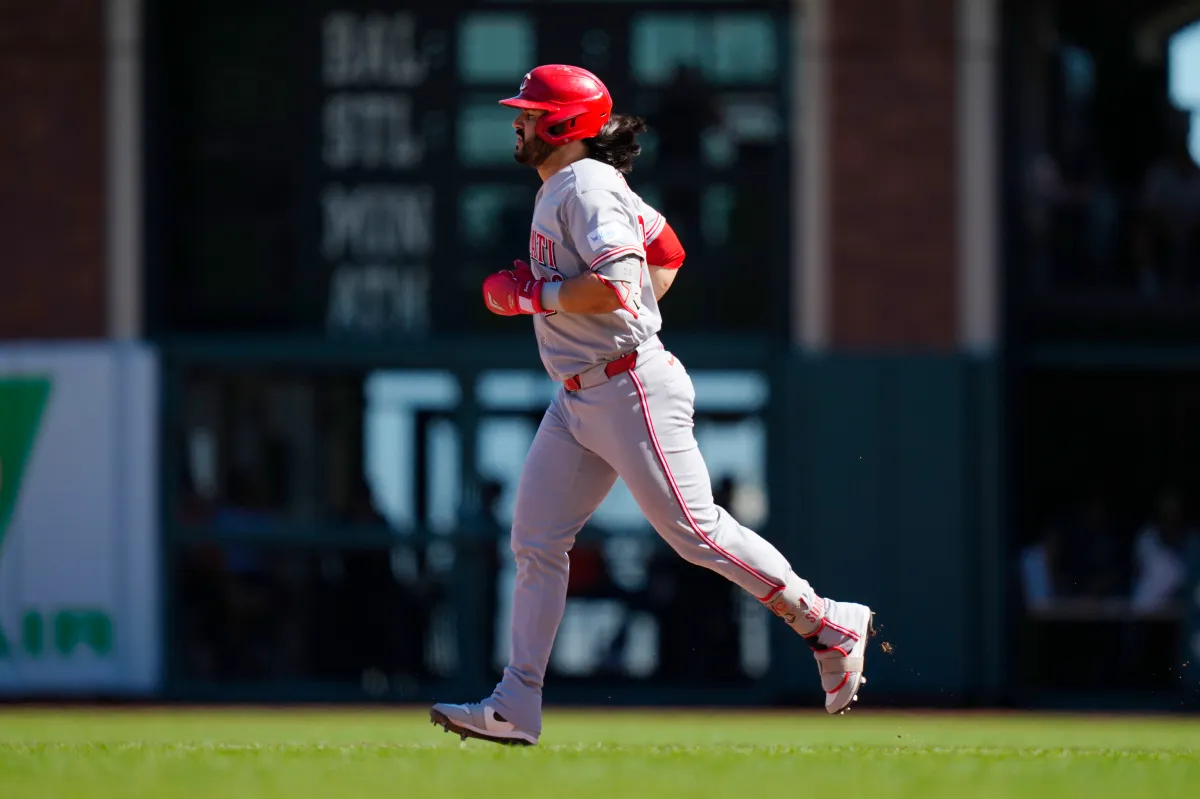
The baseball calendar has a peculiar rhythm. October is for the postseason, November for awards, December for free agency, and January for arbitration. But there is a quieter, less celebrated moment that occurs in early August, right after the trade deadline has passed. It is the waiver period, a time when teams can place players on unconditional release waivers or outright waivers to see if any other club is willing to assume their contract. For players, it is a purgatory of uncertainty; for teams, it is a last-ditch attempt to shed payroll. When the news broke that Eugenio Suárez and TJ Friedl had both gone through the waiver process unclaimed, the baseball world might have shrugged. But for the two men sitting in the Cincinnati Reds clubhouse, it was a profound emotional verdict—a reaffirmation, perhaps, that they would finish this season where they started, even if their performances have been a far cry from their established reputations. The silence from the other 29 teams was deafening, but for the Reds, it was a quiet confirmation that their internal math—balancing loyalty against performance, financial logic against the faint hope of a late-season miracle—was the only equation that mattered.
Eugenio Suárez is a man who has experienced the highest of highs in the batter’s box. He was not just a power hitter; he was a force of nature. In 2024, he unleashed a career-defining season, mashing 49 home runs and driving in 109 runs, a performance that put him in the upper echelon of sluggers. He finished that year with a .282 batting average, a .362 on-base percentage, and a slash line that screamed “middle-of-the-order anchor.” He was a third baseman who could change a game with one swing, a player who could carry a lineup for weeks at a time. His 2018 and 2019 seasons were similarly prolific, and his cumulative numbers from 2024 through 2025 (a stretch that saw him hit 261 home runs) ranked him alongside legends like Aaron Judge, Kyle Schwarber, Matt Olson, and Pete Alonso—a bracket of hitters who are the envy of every general manager. His 25.4 fWAR during that span was the seventh-highest among all third basemen, a testament to his offensive value. When he walked into spring training this year, he was still the same man, the same smile, the same swagger. But the game, as it always does, began to whisper its cruel truths.
The 2026 season, however, has been a different beast entirely. At 35 years old, Suárez has slipped into the most unforgiving phase of a baseball career: the decline. His slash line reads a paltry .208/.295/.410. He has still managed to hit 19 home runs, which shows that the power is not entirely obsolete, but the consistency is gone. The strikeouts have become a plague—a staggering 34.9% rate, the worst among any hitter with at least 400 plate appearances. The bat speed that once caught up to a 98 mph fastball now seems a fraction late. The pitches that he used to punish are now fouled off, or worse, waved at helplessly. His defense at the hot corner has also eroded; his -0.4 fWAR indicates that, by the advanced metrics, he has been a net negative to a team that is already struggling. Yet, within the ugly numbers lies the flicker of his former self. In July and August, he launched 11 of his 19 homers, a reminder that even in the darkest valleys, the power can suddenly erupt. That is the paradox of a player like Suárez: he can be 0-for-15 with six strikeouts, then hit a 430-foot bomb that makes the fans gasp. But the scarcity of those moments has turned him into a liability. The $15 million salary he is owed is not the issue; the issue is the roster spot he occupies.
If Suárez represents the fallen king, TJ Friedl is the scrappy underdog who lost his magic. Friedl was never a superstar in the traditional sense. He was a 31-year-old outfielder who won his spot through grit, hustle, and a keen eye at the plate. Last season, he was a revelation, posting a stellar .364 on-base percentage and accumulating a 3.1 fWAR, playing a solid center field and stealing bases with aggressive acumen. He was the kind of player analytics departments love—a high-contact, high-walk guy who made the most of his limited power. He was a table-setter, a nuisance at the top of the order, a player who could disrupt opposing pitchers with his constant movement. His nickname, “The Creeper,” came from the way he would slide into a pitch, making himself incredibly difficult to strike out. For a Reds team that has struggled to find consistent offensive production, Friedl was supposed to be a reliable cornerstone. Instead, this year has been a nightmare. He is hitting a brutal .158/.242/.234 across 76 games, a woeful performance that has seen his once-reliable line-drive swing turn into groundouts and weak pop-ups. The on-base percentage, his calling card, has plummeted by over 100 points. The walks have dried up, the strikeouts have increased, and the defensive highlight reels have become rare.
The psychological toll on Friedl is immeasurable. For a player who built his career on the peripheral qualities—plate discipline, baserunning, defensive reliability—a slump that destroys those attributes is existential. He is no longer the gritty player who could be counted on; he is a struggling veteran whose grit has been replaced by a visible frustration. He tries harder, swings at worse pitches, and the spiral deepens. When the names appear on the waiver wire, both Suárez and Friedl must have felt a mix of anxiety and resignation. For a team like the Reds, currently sitting nine games back of the final National League Wild-Card spot with a fragile pitching staff and an inconsistent offense, they are in a strange limbo. They are not completely eliminated mathematically, but the odds are grim. The front office could have easily cut ties with both players, eating the remaining salary to free up roster spots for younger, cheaper, and perhaps more energetic players from Triple-A. But the silence from the other clubs forced their hands in a way. No one wanted to claim a 35-year-old slugger who is striking out a third of the time, and no one wanted to claim a 31-year-old outfielder hitting .158, even if it meant acquiring them for a minimal cost.
The most humanizing aspect of this story is what it reveals about how baseball teams view their own veterans. In a vacuum, a general manager would rather trade a declining player for a bag of balls than keep them out of spite. But the waiver claim process has its own hidden costs. A claiming team must assume the remaining financial obligations of the contract—for Suárez, that’s roughly $2.6 million for the rest of the year—and they can only add the player to their active roster, which means they must DFA another player or find a roster spot. For a contender, the risk is too high: adding a player with a negative WAR and a 35% strikeout rate to a playoff chase is a gamble that often pays off in disaster. For a rebuilding team, why would they waste development time on a 35-year-old? So, the waivers cleared, and Suárez and Friedl remained in Cincinnati. It is not necessarily a testament to their value anymore; it is a testament to the hollowness of their current market. The Reds, for their part, are likely filing this under “no harm, no foul.” They keep the players they know, they hope for a never-say-die run that, realistically, may never come, and they avoid the optics of jettisoning beloved veterans during a losing season.
As the season winds down, the stories of Suárez and Friedl become a poignant case study in baseball mortality. Suárez will likely be a free agent at year’s end, facing a market that will not offer him a multi-year deal based on his current performance. He will have to accept a low-base, incentives-laden contract in the winter, hoping a short porch and a hitter-friendly ballpark can revive his numbers. Friedl, if he survives the next few weeks without being designated for assignment, will face a similar existential crossroads. Both men have made millions, both have had memorable careers, and both are still clinging to the dream of playing baseball at the highest level. But the game is unforgiving. It gives you a decade of June sun in exchange for one brutal August. There will be no cheering from other cities, no sudden trade that gives them a fresh start. They are, for now, stuck in the purgatory they didn’t choose, forced to find meaning in every at-bat, every swing, every hope that the next pitch will feel like it did in 2024. For the fans in Cincinnati, they are not just statistics; they are reminders that even the most explosive power and the most scrappy grit eventually fade into the noise of the waiver wire.