

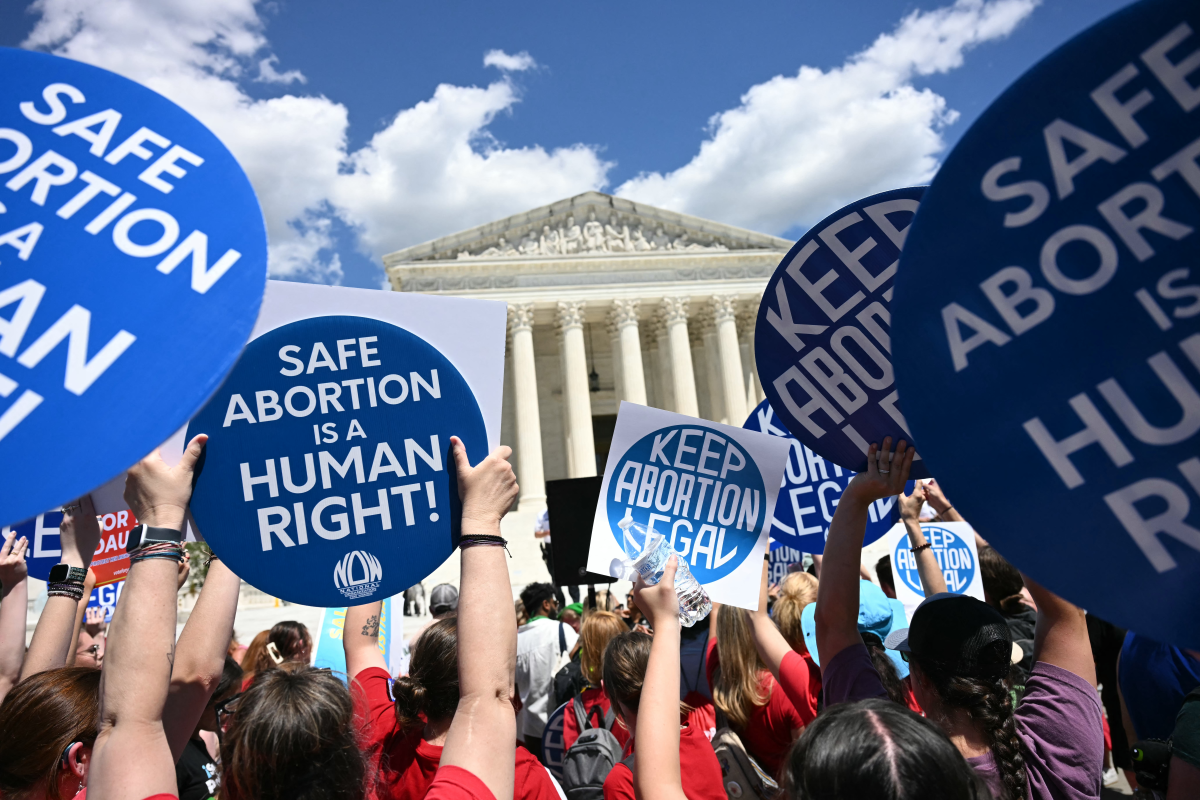
Four years after the United States Supreme Court dismantled the federal constitutional right to abortion, a quiet revolution has unfolded across the nation, defying the confident predictions of conservative lawmakers, activists, and policy analysts. When the high court issued its historic ruling, the prevailing assumption on both sides of the political spectrum was that restricting or outright banning abortion in nearly half of the states would lead to a dramatic, sweeping decline in the overall number of procedures performed nationwide. Instead, the data reveals a starkly different and profoundly complex reality: the number of abortions in America has not fallen, but has actually climbed to heights not seen in over a decade. According to a landmark report published by the Guttmacher Institute, U.S. clinicians provided an estimated 1.12 million abortions, a figure that represents an astonishing 21 percent increase compared to 2020—the last full year of national data recorded prior to the court’s intervention. This unexpected surge highlights a deep human disconnect between legislative intent and the biological, emotional, and financial realities of everyday life. Behind these massive statistical waves are real people—mothers, students, workers, and partners—who find themselves navigating a dramatically altered landscape of healthcare. The numbers stand as a powerful testament to the fact that when a constitutional right is revoked, the underlying human need for that right does not simply vanish. Instead, the struggle for bodily autonomy transforms, driving individuals to navigate a complicated and often hostile system to make the most intimate decisions of their lives, proving that real-world demand is far more resilient than the legal frameworks designed to suppress it.
The watershed moment that initiated this chaotic transition occurred on June 24, 2022, when the Supreme Court handed down its ruling in Dobbs v. Jackson Women’s Health Organization, overturning the landmark 1973 Roe v. Wade decision that had guaranteed a federal constitutional right to abortion for nearly five decades. Overnight, the legal protection that had defined reproductive healthcare for generations was erased, returning the absolute authority to regulate, restrict, or entirely ban abortion to individual state legislatures. This decision immediately splintered the nation, creating a deeply unequal patchwork of laws where a person’s reproductive rights became entirely dependent on their geographic location. Yet, despite the implementation of near-total bans in multiple states, statistical tracking conducted by the Society of Family Planning’s WeCount project shows that abortions are still occurring in every single state across the country. The driving force behind this startling resilience has been a rapid and unprecedented expansion of digital medicine and telehealth services. For patients living in states with the strictest bans, the ability to consult with licensed clinicians remotely and receive abortion medications directly through the mail has become a vital, legal lifeline. Clinicians operating under shield laws in protective states have stepped forward to prescribe pills to patients in restricted jurisdictions, shielding them from local prosecution and fundamentally transforming the nature of reproductive care. However, as the WeCount researchers point out, these numbers likely represent an undercount of the actual reality. While clinicians report more than 81 percent of procedures, with about 19 percent imputed, many private practices and individual hospital procedures remain underreported, and these numbers fail to capture the silent, uncounted population of individuals who obtain medications outside the formal healthcare system altogether, highlighting the deeply private and sometimes hidden ways people are securing their healthcare.
For those who cannot access telehealth services or whose pregnancies require in-person clinical procedures, the post-Dobbs landscape has forced thousands of individuals into grueling, expensive, and stressful journeys across state lines. This massive migration of patients has created thriving regional healthcare hubs in states where abortion remains legally protected and actively supported, such as Illinois, North Carolina, Kansas, and New Mexico. In these sanctuary states, local clinics have seen a staggering influx of out-of-state patients who have traveled hundreds of miles from places with strict bans to access basic medical care. The physical, emotional, and financial toll of these journeys is immense and falls most heavily on the most vulnerable members of society. A patient living in the deep South must now navigate the logistical nightmare of securing time off from work, finding affordable childcare, arranging transportation, and paying for lodging in an unfamiliar city, all while dealing with the anxiety and stigma associated with their medical decisions. For the medical professionals working in these receiving states, the pressure is immense as they struggle to adapt to the overwhelming demand, treating patients who arrive exhausted, frightened, and often later in their pregnancies due to the delays caused by travel logistics. This stark regional inequality means that while abortion access remains robust for those with the financial means and freedom to travel, it has become an agonizing hurdle for young, low-income, and marginalized individuals, illustrating that the legal changes have not stopped abortions from happening, but have instead stratified access along socioeconomic lines, turning a standard medical procedure into an exhausting pilgrimage of survival.
Beyond the officially tracked clinical procedures, there exists a growing, largely invisible community-driven movement centered on self-managed abortion, indicating that the true number of procedures nationwide is likely much higher than academic data suggests. When lawmakers closed physical clinic doors, they inadvertently accelerated a decentralized, grassroots counter-movement that operates outside the traditional healthcare system, utilizing online pharmacies, mutual aid networks, and international supply chains to acquire abortion medication. This underground network relies heavily on the dedication of community activists, peer-to-peer support groups, and digital privacy tools to connect pregnant individuals with the resources they need to safely terminate pregnancies at home. The human experience within this self-managed space is defined by an intense mix of anxiety, solidarity, and self-reliance, as individuals bypass state-sanctioned blockades and take their healthcare entirely into their own hands. Women share critical information via encrypted messaging channels, consult peer-led hotlines for medical guidance, and support one another through the physical and emotional process of medication abortion without clinical oversight. This quiet but widespread phenomenon demonstrates that human beings, when faced with the loss of fundamental rights, will naturally build alternative structures of care and support to protect their bodily autonomy, proving that the legal boundaries of a state are ultimately powerless against the collective strength of human empathy, technical ingenuity, and the universal drive for self-governance.
This dramatic rise in abortion rates, occurring alongside the passage of some of the most restrictive reproductive legislation in American history, has triggered intense frustration, division, and debate across the political spectrum, with both pro-choice and anti-abortion advocates pointing to the current landscape as evidence of systemic failure. On the anti-abortion side, Susan B. Anthony Pro-Life America issued a highly critical press release on the anniversary of the Dobbs decision, calling the “states-only” regulatory approach a total failure and calling on national leaders to enact federal restrictions to stop the rise in procedures, asserting that where a person lives should not determine their right to life. This sentiment reflects a deep frustration among conservative activists who believed the Supreme Court’s ruling would mark the end of abortion in America, only to watch technology and interstate travel render state-level bans largely ineffective. In contrast, democratic representatives such as Jared Moskowitz of Florida took to social media to voice their outrage over the physical and psychological harm inflicted on millions of women who lost their constitutional protections overnight, calling the Dobbs ruling a catastrophic moral failure that stripped individuals of control over their own bodies. Meanwhile, some Republican lawmakers, such as North Carolina Representative Addison McDowell, continue to celebrate the decision as a vital step forward in protecting unborn life, promising to fight for mothers and families while ignoring the structural challenges and rising abortion rates that define the post-Roe era. These highly polarized political responses reveal a profound disconnect between the abstract ideological talking points spoken in legislative chambers and the complex, practical struggles of ordinary citizens who must navigate the legal fallout of these policy decisions every single day.
Ultimately, empty clinics and courtroom battles do not tell the full story of the post-Dobbs era; rather, the true story is written in the resilient actions of millions of individuals who have quietly adapted to a hostile legal landscape to preserve their fundamental rights. The data collected four years after the Supreme Court’s decision reveals a powerful, ironic truth: the effort to eradicate abortion in America has only succeeded in modernizing, diversifying, and decentralizing how reproductive healthcare is accessed and delivered. By attempting to close off clinical pathways, lawmakers inadvertently initiated a rapid technological and cultural evolution that made medication abortion, virtual telehealth consultations, and interstate care networks the standard model of reproductive medicine. The ongoing increase in abortions proves that the human demand for reproductive freedom and bodily autonomy is an incredibly powerful force that cannot be legislated out of existence. As the legal battles continue to escalate and both sides prepare for the next phase of this historic struggle, the post-Dobbs landscape serves as a reminder that the ultimate power over bodily decisions does not reside in the halls of Congress or the chambers of the Supreme Court, but within the hearts, minds, and community networks of ordinary people who will travel, adapt, and build whatever bridges are necessary to secure their health, their futures, and their dignity.