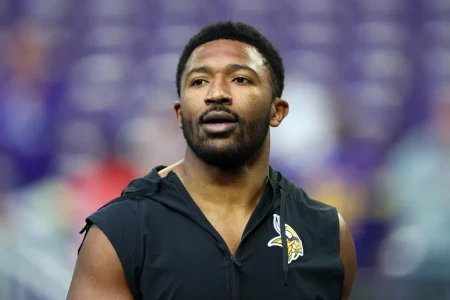



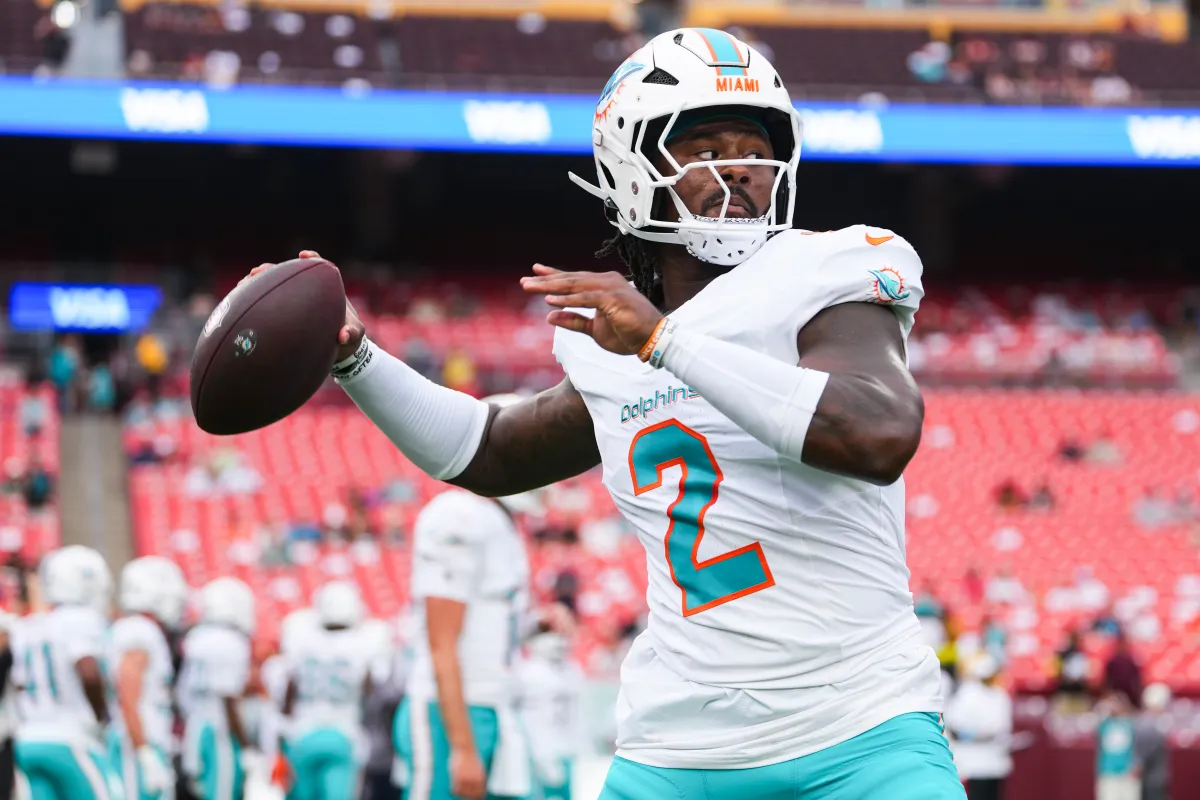
The Miami Dolphins have never been a franchise that shied away from bold, sweeping gestures, and this offseason they doubled down on that reputation by placing their entire offensive future in the hands of a quarterback who has spent more time on the bench than under center. When the front office signed Malik Willis to a massive three-year, $67.5 million deal in March, they weren’t just adding a veteran presence; they were making a statement that they believe in the raw, untapped potential of a player who has been bounced around the league since his college days at Liberty. The contract, which averages out to about $22.5 million per year, is a fascinating middle ground in the NFL’s quarterback economy. It’s far below the $50 million-plus that elite passers command, but it represents a significant financial commitment to a man who has only started six games in his entire professional career and was relegated to backup duties for most of his time with the Tennessee Titans before finding a small spark with the Green Bay Packers. Yet, in a league where competent quarterback play is the sole currency for success, Miami took a calculated leap of faith. The pressure on Willis is immense—he knows he wasn’t handed this job; he has to seize it. And in true Willis fashion, he isn’t looking at this as a burden, but rather as the opportunity of a lifetime, a chance to rewrite his own narrative and prove to the entire football world that his potential has always been greater than the sum of his past statistics.
Of course, the immediate grumbling from analysts and armchair quarterbacks revolved around a simple but glaring concern: who exactly is going to catch the ball? The Dolphins have lacked a true number one wide receiver all offseason, and critics have been quick to point out that a young quarterback needs a reliable superstar to lean on. But Willis, ever the optimist, sees the situation completely differently. During a recent appearance on the “4th and South” podcast, he articulated a refreshing, almost rebellious philosophy about his young and unproven receiving corps. “It’s a different dude every day, and I think that competition in that room is making them better,” he said with a genuine conviction that transcended typical athlete clichés. He painted a picture of a practice field where no one is guaranteed a target, where a relatively unknown receiver can suddenly emerge as the player of the day. “You start off with a couple dudes making plays and then the next few days a couple more dudes are making plays… You get a name by working hard and putting it on tape.” This isn’t just a quarterback trying to spin a negative situation into a positive. Willis genuinely thrives on the chaos and unpredictability that this kind of open competition fosters. He isn’t married to feeding one ego; he’s free to distribute the football to whoever is winning their one-on-one matchup on any given Sunday. In a league riddled with diva receivers demanding touches, Willis sees the absence of a star as a feature, not a bug—a means of building a collective identity that will make the offense terrifyingly unpredictable.
Let’s take a closer look at this motley crew that Willis is expected to captain. The top of the depth chart features Malik Washington, a 5-foot-8, lightning-quick gadget weapon who can turn a simple screen pass into a 60-yard touchdown; Jalen Tolbert, a steady route-runner who has paid his dues in the league but has never been asked to carry a passing attack; and Caleb Douglas, a tantalizing 6-foot-4 physical specimen out of Texas Tech who was selected in the third round of the draft with the 75th overall pick. Behind them sit Tutu Atwell, a speed demon whose vertical stretch can decimate single coverage, along with undrafted rookies Chris Bell and Kevin Coleman Jr. The stark statistical reality is that three of these six players are rookies, and the other three have never been the primary target in an NFL offense. There is a glaring absence of proven production anywhere on this unit. This is precisely why veteran tight end Greg Dulcich has consistently been labeled a “breakout candidate” by analysts everywhere. Dulcich is the only established, consistent option in the bunch—the reliable safety valve whom Willis can target on crucial third downs when pressure is collapsing the pocket. Yet, even Dulcich has a history of injuries that have derailed his early career. Despite the glaring inexperience, there is an undeniable energy in this room that you can’t simply buy through free agency or draft picks, an energy that comes from a group of underdogs hungry to prove themselves collectively.
While skeptics see a receiving corps doomed for mediocrity, Willis sees a strategic nightmare for opposing defenses. The diverse skill sets in this group offer a veritable “pick your poison” dilemma for defensive coordinators across the league. If a defense decides to shadow Caleb Douglas with its best cornerback due to his massive catch radius, then Willis can simply pivot and dump the ball off to Malik Washington underneath, where the tiny but explosive slot receiver can break a single tackle and race for a massive gain. If a defense drops deep to neutralize Tutu Atwell’s deep speed, then Jalen Tolbert will absolutely carve up the intermediate zones with his crisp, precise route running. There is no single player to bracket, no one individual to double-team, which forces defenses to play honest, fundamentally sound football instead of dictating the action with exotic coverages. The collective anonymity of these receivers means that the matchup advantages swing on a per-play basis. Washington is the shift, Atwell is the speed, Douglas is the size, and Bell and Coleman offer raw, untapped ability. In a league where game-planning is everything, this unit forces opponents to spend their precious preparation time figuring out who will step up on any given Sunday, rather than scheming away one dominant threat. For Willis, a quarterback who thrives on improvisation and extending plays outside the pocket, this group is arguably a perfect match—they are all adept at breaking off their routes and finding soft spots in the zone coverage when the play breaks down.
The hype surrounding this young receiving unit has become a central storyline of Miami’s training camp. For the rookies—Douglas, Bell, and Coleman—the opportunity is unprecedented. Unlike a typical franchise where a top draft pick might be buried on the depth chart behind a veteran, these men are being handed a legitimate shot at earning significant playing time based purely on merit. Douglas, in particular, has already generated substantial buzz, demonstrating that physical dominance that made him a third-round pick, flashing an ability to high-point the football in traffic that evokes comparisons to former greats. Willis has reportedly developed a strong connection with him, spending extra time after practice to build that trust. But it’s not just Douglas turning heads. Bell, with his 6-foot-2 frame and impressive hands, is carving out a role in the red zone, while Coleman is making a strong case for a roster spot with his hard-nosed play. The competition is not manufactured or artificial; it is authentic, raw, and incredibly motivating. These players understand that their dream of a long NFL career hangs in the balance, and every single rep at practice is a job interview. This shared hunger for validation, for a chance to finally get noticed, has created a brotherhood among them. They are all fighting for scraps, and in doing so, they are pushing each other to a level of excellence that might never have been reached in a room dominated by a veteran star’s ego. They run their routes with a fury, block for one another with pride, and celebrate each other’s successes as if they were their own—a chemistry that is truly a quarterback’s dream.
Ultimately, the grand experiment in Miami will be judged by one unforgiving metric: wins and losses. All the training camp optimism, the beautiful narratives, and the physical talent will mean absolutely nothing if Willis can’t put it together when the lights are the brightest on fall Sundays. The burden of this season falls squarely on his shoulders. If he can transform this diverse assembly of unproven pass-catchers into a cohesive, top-tier offense, he will etch his name into the pantheon of great comeback stories—a journeyman who bet on himself and won. If the offense sputters, the blame will be cast in his direction, with critics pointing to his lack of experience and the front office’s folly in failing to surround him with talent. Yet, Willis has been here before. He has been counted out, benched, traded for a measly draft pick, and written off as a bust. This is the defining moment of his professional career, and he knows it. He listens to the skeptical whispers and uses them as fuel. He knows that his weaponry lacks household names, but he also knows that football is ultimately played by human beings, not reputation. In Malik Washington, he has a spark of electricity; in Greg Dulcich, he has a steady hand; in Caleb Douglas, he has a future star in the making. The rest of the unit is a band of castaways and dreamers, but that is precisely the kind of army a fighter like Willis wants to lead. He doesn’t need a knight in shining armor; he needs a brotherhood of men willing to go to war with him, and that is exactly what he has found. The Miami Dolphins are the NFL’s great unknown, a high-risk, high-reward gamble that could either become a glorious triumph or a spectacular failure. But for the first time in a long while, the franchise feels alive, hopeful, and utterly compelling, all because a quarterback who was once forgotten decided to rewrite the script for himself and for the men fighting beside him.