


Paragraph 1: The Last Gasp of a High-Stakes Runoff
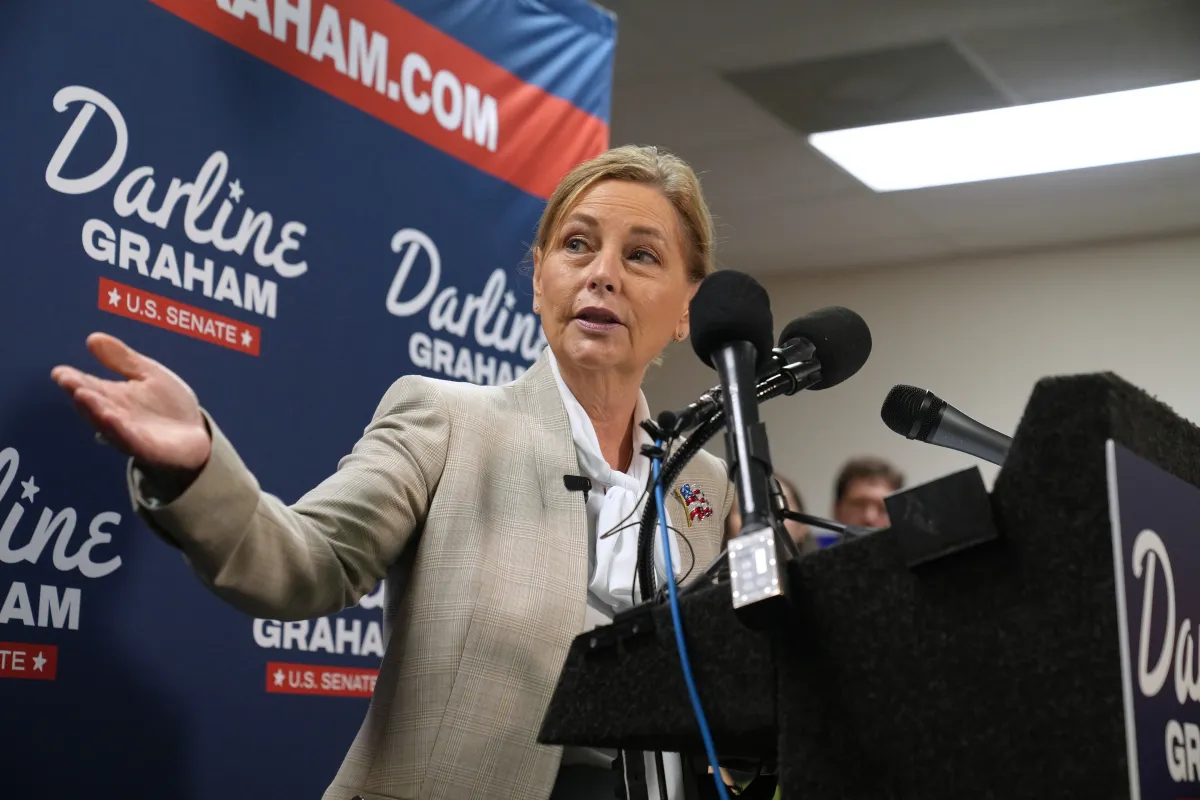
The humid South Carolina air crackled with more than just the threat of an afternoon thunderstorm; it thrummed with the frantic electricity of a political race on the brink of extinction. With less than twenty-four hours remaining before the polls opened for the state’s contentious Republican Senate runoff, the digital ether was being flooded with a desperate, last-ditch appeal that felt less like a campaign and more like a coastal evacuation warning. Across the Palmetto State, from the bustling suburbs of Charleston to the quiet, pine-shaded dirt roads of the upcountry, cell phones buzzed, chimed, and vibrated in an unrelenting cacophony of political persuasion. It was a meticulously orchestrated blitz orchestrated by MAGA Inc., the powerful super PAC aligned with former President Donald Trump, which had just disclosed a staggering $830,000 injection of cash aimed specifically at swaying undecided voters. This was the final, desperate firewall thrown up to protect Darline Graham, a political newcomer with a famous last name but no legislative resume, against the formidable grassroots machine of her opponent, Congressman Ralph Norman. The race had transformed beyond a simple local contest; it was a symbolic gladiator match between the raw, populist force of Trump’s endorsement and the dogged, time-tested experience of institutional conservatism, all playing out in the quiet communities of South Carolina.
Paragraph 2: The Trump Endorsement and the Avalanche of Influence
The sheer scale of the financial investment was staggering, particularly for a party that often looked askance at establishment meddling. For weeks, MAGA Inc. had hovered on the sidelines, watching the primary field tear itself apart, but the eve of the runoff saw them abandon all pretense of neutrality. They deployed a surgical strike of robocalls and targeted text messages, each one calibrated with the urgency of a breaking news alert. “President Trump urgently needs you,” the messages blared, “Darline Graham is the only real America First patriot. Do not let the D.C. swamp buy this election.” The saturation was deliberate, designed to overwhelm the senses and create the illusion of a landslide. Graham herself leaned heavily into her dynastic ties, presenting herself as the sister of the increasingly influential Senator Lindsey Graham, yet boldly framing her campaign as a rebellion against the “old boy’s network” she was born into. Trump, who had rallied for her in Myrtle Beach just days prior, delivered an endorsement that was less of a recommendation and more of a royal decree, calling her “a breath of fresh air,” and “a warrior who will shake the corrupt establishment to its core.” This massive spending spree was not merely about electing one candidate; it was a stark demonstration that the Trump political machine viewed this race as a vital test of its continued dominance over the GOP’s soul.
Paragraph 3: The Gaffe That Defined the Campaign
Yet, for all the high-octane endorsements and torrents of cash, Darline Graham had stumbled spectacularly on the fundamental requirements of the office she sought. Just over a week ago, during a live, televised forum, moderator Darrell Jackson posed a straightforward question regarding her assessment of escalating military tensions in the South China Sea and the importance of defending Taiwan. Graham froze. After a brief, silent, and agonizing pause, she offered a candid, yet politically devastating, admission: “Look, national security isn’t really my thing. I’m a businesswoman, a mother, and an outsider who focuses on the kitchen-table issues that matter to families.” The clip went viral instantly. Ralph Norman’s campaign seized upon the “fumble,” turning it into a devastating thirty-second attack ad that played on repeat across the district. But Graham, rather than retreating into a shell of defensiveness, embraced the gaffe with the defiant audacity of her political mentor. In a Monday morning interview with Ainsley Earhardt on Fox & Friends, she directly confronted the criticism, arguing that Trump himself lacked foreign policy experience before taking office. “You know who else didn’t have all the answers on day one? Donald Trump,” she declared. “Just like President Trump, I’m not a politician—and I’m incredibly proud of that.” It was a high-wire act, betting that voters would see her ignorance as refreshing authenticity rather than alarming incompetence, a gamble that turned her biggest weakness into a defiant campaign slogan.
Paragraph 4: The Steady Hand of the Rival
Ralph Norman, however, is not a man to be easily outspent or out-flanked. Possessing a gruff voice worn smooth by decades in the construction industry and a political career rooted in the South Carolina state legislature, Norman personifies the old-school, conservative workhorse. While Graham’s campaign was built on celebrity endorsements and television appearances, Norman spent his final Monday shuttling between two evangelical pastor breakfasts in the pivotal stronghold of Greenville County, shaking hands and reminding congregants of his impeccable 97% lifetime rating from the American Conservative Union. His message was a sharp contrast: “We need a legislator, not a celebrity.” He hammered home his own voting record—consistent support for border walls, sweeping tax cuts, and fiscal responsibility—and contrasted it with Graham’s conspicuous absence of any voting record at all. He warned voters that her campaign wasn’t bought by local donors but by a billionaire-backed super PAC, implying that her loyalty would reside with Mar-a-Lago, not with the people of South Carolina. Norman’s campaign had strategically pulled ahead in the primary within Greenville County, the most populous and traditionally conservative region of the state. He relied on a network of dedicated precinct chairs and grassroots volunteers who made personalized phone calls, referencing specific local concerns about school curricula and property taxes, creating a human connection that no robocall could replicate.
Paragraph 5: The National Calculus and The Ultimate Test
The implications of this ideological skirmish stretch far beyond the state lines of South Carolina. Prediction markets, such as Kalshi, gave Graham a commanding 67% chance of victory as of Monday night, a number buoyed entirely by that last-minute avalanche of spending. Yet, the 33% assigned to Norman represented a formidable and vocal bloc of Republican resistance. Trump’s allies privately acknowledged the tension: a loss, even a narrow one, would expose a crack in the former president’s aura of political invincibility. Patrick Casale, a political strategist and senior advisor to the Nevada GOP, was blunt about the dynamics at play. “Trump supports her largely because of Lindsey. It’s personal, a family matter,” he explained. “But if she loses, it won’t be because Trump is unpopular; it’s because people know Norman will show up for them at the local level. Norman has tapped into a different kind of anti-establishment rage—a rejection of being told who to vote for from a distant billionaire.” The massive expenditure became a double-edged sword; it provided Graham with astronomical name recognition, but it simultaneously handed Norman’s campaign the ammunition to paint her as the purchased puppet of mega-donors. The race had become a high-stakes lab experiment to determine whether Trump’s charismatic blessing could override voter familiarity and legislative competence, with the entire Republican Party watching to see if the kingmaker had finally over-reached.
Paragraph 6: The Human Element and the Quiet Wait
As the sun dipped below the horizon on election eve, the political calculus dissolved into a far more human reality. In a Spartanburg diner, a retired veteran named Bob sat nursing a cup of lukewarm coffee, staring at his sample ballot. “I like Lindsey, I do,” he muttered, “but his sister? She didn’t know a thing about Taiwan. That scares me.” Across town, a young mother named Maria received yet another MAGA Inc. text message and simply smiled, typing a quick reply of support. “I don’t care about all that foreign policy stuff,” she said. “Trump said she’s good, and that’s good enough for me.” The polarization was stark, splitting families and neighborhoods. The relentless phone calls and texts had ceased, replaced by the quiet, whirring hum of the voting machines that would open at dawn. Campaign volunteers, exhausted and hoarse from shouting, stood at the polling stations, holding signs under the oppressive humidity. For Graham, this was a test of whether celebrity could transcend substance. For Norman, it was a test of whether old-fashioned grind could out-muscle a national machine. When the polls close at 7 PM, the numbers will filter in, deciding not just a Senate seat, but the trajectory of the party itself. If Graham wins, it cements the notion that a Trump endorsement is the most potent currency in American politics. If Norman pulls off the monumental upset, it will send a chilling warning to every political acolyte: you can buy our attention, but you can never buy the loyalty of a community that knows its own. As the first returns trickle in, a single phone buzzes one last time—not with a political message, but with a text from a friend asking, “Did you vote?” And perhaps, in the end, that is the only question that truly matters.