





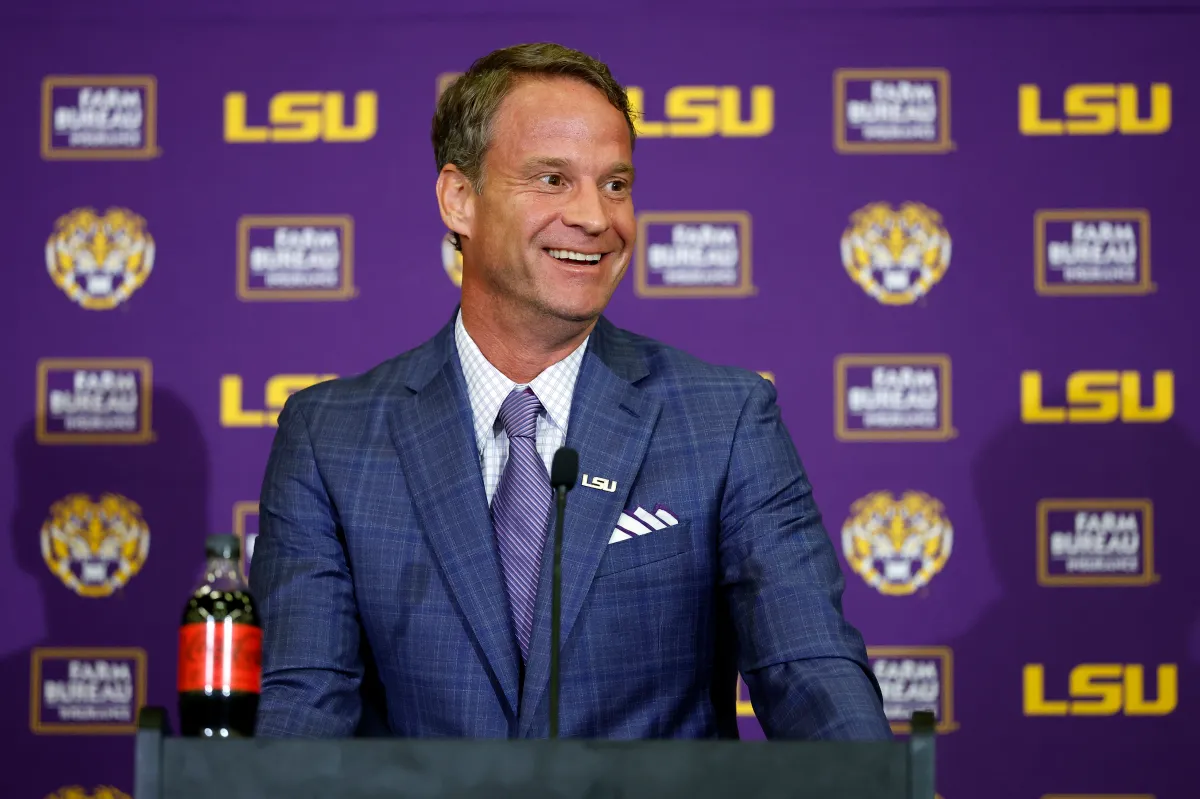
When Lane Kiffin made the decision to leave Ole Miss for LSU, it wasn’t because he was unhappy in Oxford or because the Rebels had stopped believing in him. He had just guided the program to the College Football Playoff, and the future in Mississippi looked bright. But in the world of modern college football, where the gap between good and great is measured in championships, Kiffin looked at LSU and saw something more than just another job. He saw the kind of platform that could turn a highly successful head coach into a dynasty builder. Rumors swirled that Florida and Ole Miss had offered similar money, and perhaps staying put would have been the safer choice. Yet Kiffin has never been the kind of coach who plays it safe. In Baton Rouge, he saw a program with the history, the recruiting pipeline, and the financial muscle to compete every year for the biggest prize in the sport. It wasn’t about the zeroes on his contract—it was about building something that could outlast a single season, a roster that could reload rather than rebuild, and a legacy that would be remembered long after he leaves the sideline.
For Kiffin, LSU represents the perfect marriage of luxury and ambition. The Tigers have always had passionate fans and a talent-rich footprint in Louisiana, but what makes the program truly dangerous in the modern era is the willingness to fund rosters at the highest level. Recruiting is no longer just about scholarship offers and pitch meetings with high school kids; it’s about NIL packages, revenue sharing, and the kind of deep-pocketed booster support that can make a school an immediate contender every single year. Kiffin has been around college football long enough to understand the difference between a program that talks about championship aspirations and one that is actually wired to chase them. LSU is the latter. The administration has shown it wants to win now, and it has put the resources behind that vision. When Kiffin addressed reporters on Monday, it wasn’t just about football strategy or depth charts. He was talking about the fundamental shift in how players think, how coaches talk, and how the entire structure of the sport has changed. In that sense, LSU isn’t just a new home for him; it’s a laboratory for what college football is becoming.
One of the most striking things Kiffin said on Monday was about money, not just his own, but the money his players are now making. There was a time, not so long ago, when a scholarship felt like the whole deal. A player got tuition, room and board, and the chance to play on national television. In exchange, they practiced, lifted weights, attended classes, and performed for the entertainment of millions. That model still exists in some ways, but it has been completely transformed by the NIL era. Kiffin acknowledged that the conversations he has with his players now are different—not because the game has changed, but because the stakes have changed. Players are no longer just representing a school; they are running their own careers. Many of them are making serious money, and that changes everything about how they approach the sport. “They make a lot of money, a lot of them now,” Kiffin said. “So, to me, there’s a little bit of a difference in there. If you get what part of your motivation was, are you still motivated?” His point wasn’t that money ruins players. It was that coaches have to meet players where they are. The old motivational tricks—the fiery locker room speeches, the fear of losing a scholarship—don’t carry the same weight when a player is already being paid. Kiffin’s approach is to turn that reality into a positive, to help players see that their current income is only the beginning, and that their performance on the field determines everything that comes next.
There is a tendency among some fans and analysts to see players earning money as a threat to the purity of college football. They worry that a player who has already gotten his big check will stop caring, that the hunger will disappear once the bank account fills up. Kiffin understands that concern, but he also sees something far more complicated and human. Yes, there are problems that come with paying players—egos, distractions, entitlement, the constant pressure of social media and outside voices. But there is also a positive side that gets overlooked. When a player feels like a professional, they start to act like one. The mindset shifts from “I just have a scholarship” to “this is my job.” That doesn’t make them care less; it often makes them care more. They show up to meetings differently. They study film with a different intensity. They realize that every play, every practice, every moment in the weight room is an investment in their own future. Kiffin articulated this beautifully when he said that players now feel like they have a “big job” rather than something they do part-time while going to school. That new mindset can be a powerful tool for a coach who knows how to use it. It also means coaches have to be more transparent, more honest, and more direct with their players, because the old language of discipline and obligation doesn’t work the same way when a player is essentially an independent contractor with his own brand and his own career trajectory.
Perhaps the most interesting part of Kiffin’s comments was his focus on the natural, almost cold logic of the market. Players now understand that they are not guaranteed anything beyond their current deal. If they don’t play well, they won’t make that money next year. If they do play well, they will make even more. That’s the way it works in the real world, and it’s the way it now works in college football. Kiffin noted that this reality often makes players take the game more seriously, not less. They realize that a scholarship used to be a safety net—you could show up, do enough to stay eligible, and keep your spot. Now, it’s a performance-based contract. The same psychology that drives CEOs, entrepreneurs, and free agents to keep pushing applies to a twenty-year-old defensive tackle who knows his next payday depends on his sack total. There is something almost refreshing about that clarity. In the old days, a coach might have to invent reasons for a player to be motivated. Now, the reasons are built into the system. Play well, and your value goes up. Play poorly, and someone else will take your spotlight. That’s not a cold way to view football; it’s just honest. It treats players like adults who are capable of understanding cause and effect. And for many of them, that ownership is exactly what they need to unlock their full potential.
Fans who worry about the impact of money on college football might be surprised to learn that Kiffin sees it as a win-win. He acknowledges the complications, but he also knows that the players who are making real money have a clearer picture of what’s at stake than anyone gives them credit for. A player’s first big NIL deal is not the end of the story—it’s the beginning of a long climb toward a bigger contract, a professional career, or even a shot at the NFL. The same drive that made them great in high school is still there; it’s just being channeled through a new structure. The first check doesn’t make them lazy. It makes them hungry, because now they know what success tastes like. Kiffin’s job, as he sees it, is to help them connect the dots between their performance on Saturday and the lifestyle they want to build for the rest of their lives. In that sense, LSU is the perfect place for him to try this experiment. With the school’s deep pockets, the talent base in the South, and Kiffin’s own reputation as an offensive genius and modern thinker, the Tigers have everything they need to win not just one national championship, but multiple. And Kiffin, who left a playoff team to chase that dream, is betting his own legacy that the new landscape of college football rewards those who embrace it. The old days of amateurism are gone. The future belongs to coaches who can inspire professionals, manage egos, and build a culture where money and motivation coexist. If anyone can figure out that balance, it might just be the coach who walked away from a sure thing to build something bigger in Baton Rouge.