







For decades, the neighborhood dry cleaner has been a quiet staple of American life—a place to drop off a suit, a favorite dress, or a set of drapes, only to retrieve them days later, crisp and neatly wrapped in plastic. But a new nationwide study is casting a long shadow over these familiar local businesses, suggesting that simply living near one may be linked to a higher risk of developing Parkinson’s disease. The research, which analyzed the health records of millions of older Americans, found that the closer a person lives to a dry cleaning facility, the greater their risk appears to be. It’s a finding that brings a complex and sobering environmental question into sharp focus, transforming a routine errand into a potential matter of public health.
The study, led by scientists at the Barrow Neurological Institute in Phoenix, Arizona, and published in the journal npj Parkinson’s Disease, examined Medicare records for nearly 19 million adults across the United States. The results showed that individuals living within roughly 500 feet of a dry cleaner—approximately a block and a half—had a 14 percent higher risk of developing Parkinson’s disease compared to those who lived farther away. Perhaps most compelling is what researchers describe as a “dose-response relationship.” This means the risk wasn’t uniform; it increased incrementally as the distance to the dry cleaner decreased. For those living directly adjacent to these businesses, the association was even stronger. This pattern, where proximity amplifies risk, is a crucial piece of evidence, as it moves the conversation beyond simple correlation and points toward a more direct environmental link.
Dr. Umer Akbar, director of the Movement Disorder Center at Hackensack Meridian Neuroscience Institute, who was not involved in the study, highlighted this aspect as the finding’s most notable. “It’s one thing to see a statistical association,” he explained, “but to see that the risk scales with proximity really strengthens the case that the exposure itself is the culprit.” For years, scientists have suspected a connection between Parkinson’s and industrial solvents, but this study breaks new ground by suggesting that the danger isn’t confined to workers who handle these chemicals daily. Instead, it implicates the very act of living in a community where such a business operates, pointing to the invisible plumes of chemicals that may migrate from these facilities into the surrounding soil, groundwater, and air.
The primary suspects are chlorinated solvents that have been the workhorses of the dry cleaning industry for generations. Chief among them are trichloroethylene (TCE) and perchloroethylene (PCE, often called “perc”). While TCE was largely phased out of the industry years ago due to health concerns, many businesses simply switched to PCE. The insidious nature of these chemicals lies in their persistence. They are heavy, non-flammable liquids that can seep through concrete floors and into the ground, contaminating soil and groundwater for years, even decades, after a dry cleaner has closed its doors. Furthermore, PCE can break down into TCE as it travels underground, creating a cocktail of toxic remnants that can linger in the environment, potentially finding their way into nearby buildings through vapor intrusion or contaminating local water sources.
This isn’t an abstract worry confined to a few isolated states. The study identified “hotspots” across the country where the link between living near a dry cleaner and Parkinson’s disease was particularly strong. These areas included southeastern Illinois, the border region between Tennessee and Kentucky, and the Dallas, Texas area. While the researchers are cautious, they suggest that local factors—such as the density of past dry cleaning operations, the specific geology of an area that might influence how chemicals spread, or aging municipal infrastructure like cracked pipes—could explain why these regions show a more pronounced effect. The implication is that this is a nationwide concern, with certain communities shouldering a heavier, and previously unrecognized, environmental burden.
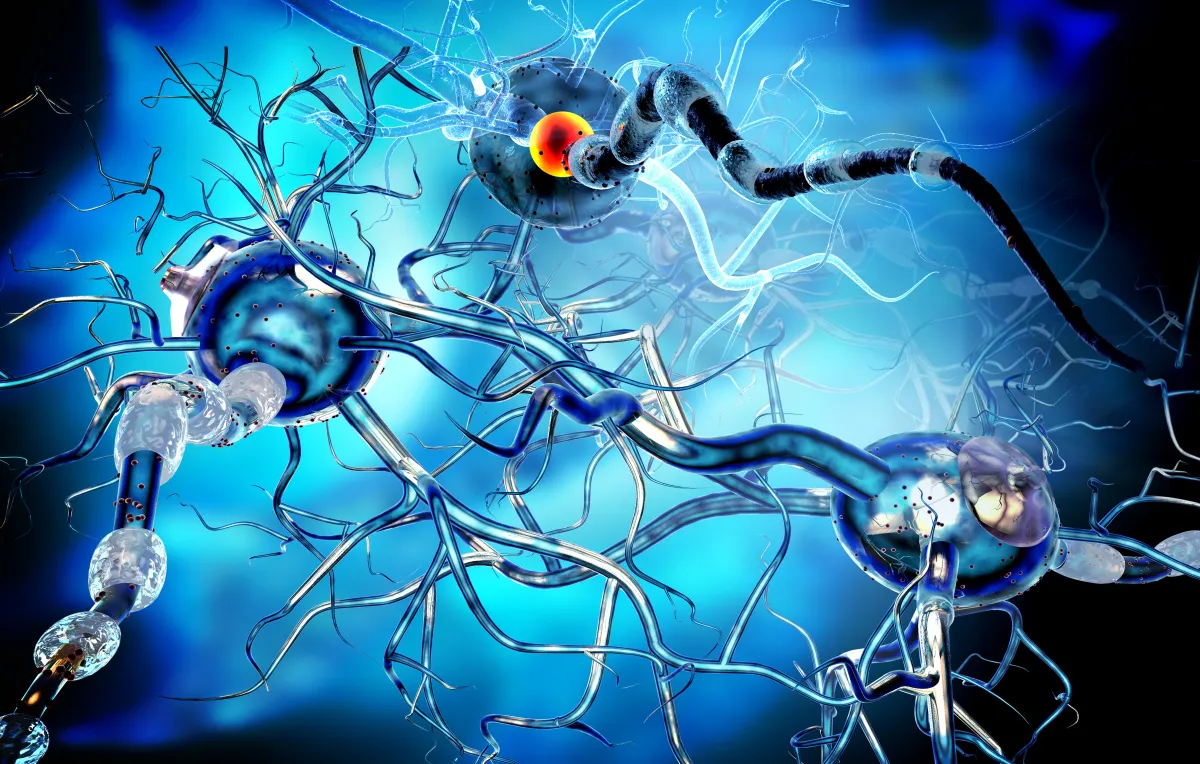
It’s important to understand what Parkinson’s disease is and why these findings are so alarming. It is a progressive neurodegenerative disorder that affects an estimated 1.1 million people in the U.S., according to the Parkinson’s Foundation. It occurs when nerve cells in the brain that produce dopamine, a chemical crucial for controlling movement, begin to malfunction and die. This leads to a constellation of symptoms, including tremors, stiffness, slowed movement, and difficulty with balance and coordination. The exact cause of Parkinson’s is largely unknown, but it’s widely believed to be a complex interplay of genetic predisposition, aging, and environmental exposures. This new study, as Dr. Racette, the senior author, noted, “adds to growing evidence that environmental exposures may play an important role in Parkinson’s disease. Identifying those exposures is an important step toward understanding how we might reduce the burden of this disease in the future.”
Dr. Akbar added a crucial layer of specificity, noting that the exposure may be linked to a specific form of Parkinson’s that primarily affects gait and balance. This is a particularly debilitating variant of the disease, often leading to a higher risk of falls and a greater impact on a patient’s independence. This suggests that the neurological damage from these chemicals might not be random, but instead target specific neural pathways, leading to a more distinct clinical profile. For patients living with this form of the disease, the suffering is not just in the tremors but in the constant struggle to simply walk across a room.
However, in the midst of this concerning news, it’s vital to maintain a scientific and measured perspective. The study, while powerful, demonstrates an association, not definitive proof of cause and effect. One of the key limitations, as Dr. Akbar was quick to point out, is that the researchers did not measure the actual levels of TCE or PCE in the bodies of the individuals studied. They drew their conclusions based on geographical proximity as a proxy for exposure. It’s possible that other factors associated with living near a dry cleaner, such as urban living or socioeconomic status, could play a contributing role, even though researchers say they accounted for these variables. It is the classic distinction between correlation and causation; while the evidence strongly hints at a direct link, it does not confirm it beyond a shadow of a doubt.
Yet, the biological plausibility of the link is strong. These solvents are powerful neurotoxins. Studies on animals and in occupational settings have shown they can damage the dopamine-producing neurons in the brain, mimicking the pathology of Parkinson’s disease. The new research essentially takes this known biological mechanism and applies it to a novel, and for many, unsettling scenario: the general public’s exposure. It reframes the danger from a purely occupational hazard to an environmental justice issue, raising questions about zoning laws, building codes, and chemical regulation. If a dry cleaner operates directly next to a residential building, are the people who live there being made unwittingly vulnerable?
This concern is not new. We’ve long seen headlines about TCE in groundwater at contaminated military sites or industrial facilities. In recent years, there has been a growing movement to ban TCE and PCE entirely, with the EPA proposing bans on these chemicals due to their health risks, which include certain cancers and effects on the central nervous system. This new study could be a powerful catalyst for accelerating those regulatory efforts. It provides concrete, national-scale data that highlights a real-world health impact for civilians, not just workers in industrial settings. It suggests that the legacy of these chemicals extends far beyond the fence line of an industrial site; it weaves through the fabric of our residential communities.
For the millions of people who live in apartment buildings above a dry cleaner or in homes that share a wall with one, this news is likely to cause unease. It also raises the question of what can be done now. For those concerned, the researchers and experts offer practical advice. The first step is awareness and information. Many people are unaware of what once operated in their neighborhood. Checking local environmental records and soil contamination databases can reveal if a property has a history of industrial or commercial use. Simple steps, like testing well water for volatile organic compounds if you rely on a private well, can also provide crucial information. While the study doesn’t suggest that we all live in constant fear, it does advocate for a more informed and health-conscious approach to where we live and the businesses we welcome into our communities.
The story here is ultimately about our environment and the often-invisible consequences of our industrial past and present. It’s a narrative about how a routine convenience—the dry cleaning around the corner—might have had a quiet, long-term cost. The study marks a significant step in a journey that scientists have been on for decades: understanding how the world around us shapes our neurological health. It serves as a stark reminder that our health is not just written in our genes but is also a product of our surroundings, and that protecting our communities might be just as important as managing our individual risks. The research doesn’t present a simple answer, but it raises a critical question: in the pursuit of clean clothes, did we unwittingly sacrifice something more fundamental? As this knowledge settles, it will likely prompt more discussions—and hopefully more action—about the chemicals we allow into our lives and the legacy we leave in our soil and water. While the risk to any one individual remains small, the study’s findings are a call for continued research, stronger regulation, and a more cautious approach to how we live with the chemical tools of modern life.