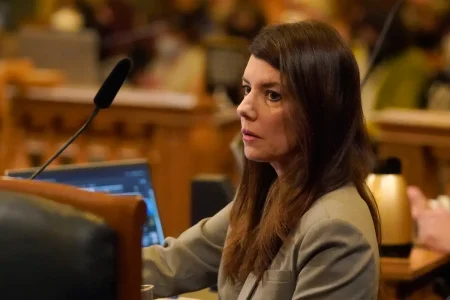






At a moment when American confidence in elections is already fragile, a federal judge has stepped in to slow down one of the most consequential changes to voting procedures before the 2026 midterms. U.S. District Judge Indira Talwani issued a 14-day temporary restraining order blocking key portions of the U.S. Postal Service’s new rule on mail-in ballots, pausing the Trump administration’s attempt to impose stricter requirements on ballots cast by mail. The decision was a sharp response to an executive order signed by President Donald Trump in March, which directed federal agencies to tighten rules around mail-in voting. Judge Talwani, an Obama appointee, ruled that the new requirements could not reasonably be implemented in the crowded few months before ballots are sent. For voters, the order is a reminder that the mechanics of democracy—whether a ballot arrives on time, whether it gets counted, whether officials have enough time to handle the flood of paper—are not just bureaucratic details. They determine whether millions of people can participate in the most basic act of citizenship. The ruling means that at least for the next two weeks, state election officials can keep preparing for the midterms without being forced to overhaul their systems in a chaotic rush. But the fight is far from over, and the temporary pause is only a small break in a fast-moving legal war over one of the most common ways Americans vote. The Postal Service rule, and the executive order behind it, still looms. In many ways, Thursday’s decision is a caution flag, not a finish line: it acknowledges how close the election is and how real the consequences could be, while leaving the constitutional questions for another day.
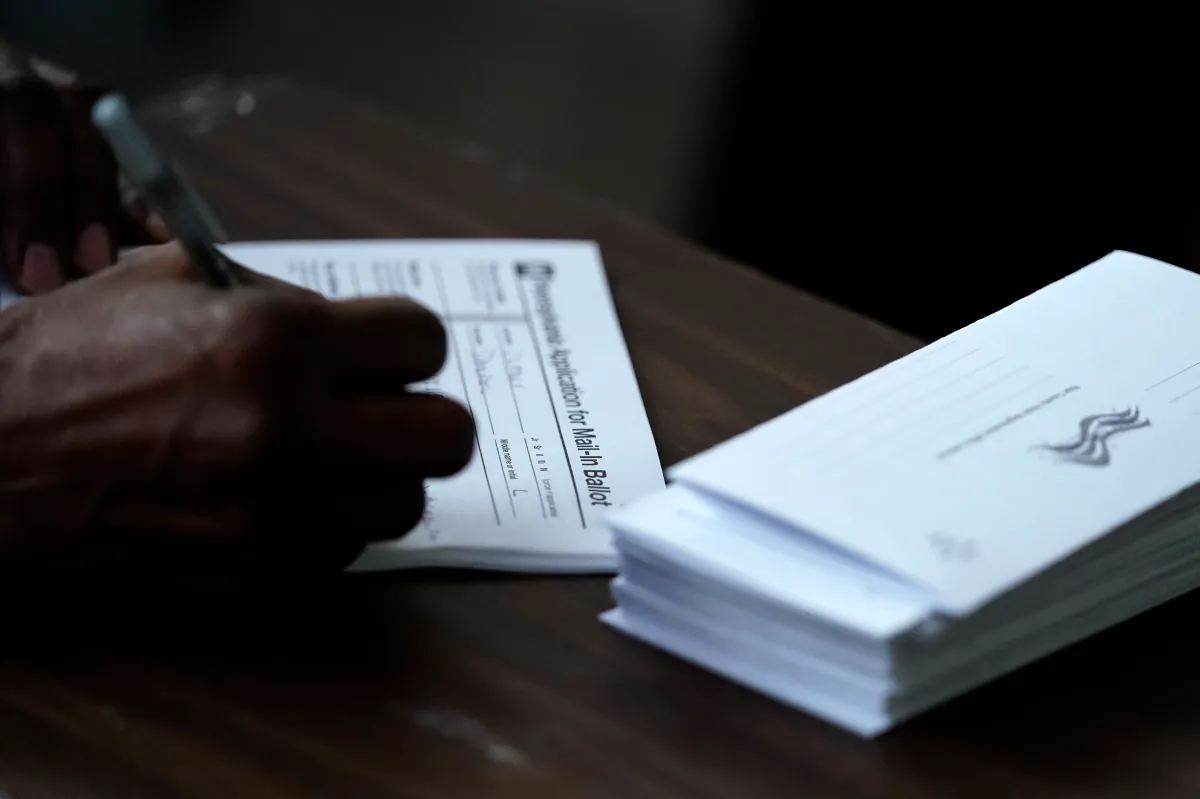
To understand why this ruling matters so deeply, it helps to remember how ordinary voting actually works for millions of people. Mail-in voting has become a normal, even beloved part of American elections. For busy parents, elderly residents, rural voters, military spouses, students studying far from home, and people with disabilities, dropping a ballot in the mail is often the only way they can make their voices heard. In recent election cycles, nearly one-third of Americans have voted by mail. The system is not perfect, but it has been refined over years, with state governments controlling their own rules, deadlines, and ballot designs. That is exactly why the Trump administration’s March executive order raised alarms. It directed the federal government to impose new standards on mail-in ballots, and later this month the U.S. Postal Service issued a final rule claiming authority to administer those standards. In effect, the rule threatened to let a federal agency decide whether individual mail ballots could be counted, an authority that Democratic-led states and voting rights groups argue belongs to states and Congress. With the first mail ballots scheduled to be sent as early as September, state officials were suddenly facing an impossible timeline. They had already printed their ballots, finalized designs, updated their election software, and trained their workers. Now Washington was telling them to start over, and to send their citizen registration data to a new USPS portal. Opponents called it an overreach with the potential to disenfranchise millions. Supporters insisted it was necessary to combat voter fraud, though evidence of widespread fraud in mail-in voting has repeatedly failed to materialize. In the halls of state capitols, election officials were not debating abstract theories; they were worrying about deadlines. Some states by law must send ballots to voters within days. If they had to redesign and reprint everything, they would miss those deadlines, and real voters—real people who rely on mail ballots—would be left waiting, perhaps missing their chance to vote altogether. That is the human consequence lurking behind legal terms like “irreparable harm.”
The latest ruling is part of an exhausting legal whiplash. Just days ago, on Monday, the Supreme Court sided with the Trump administration and overturned an earlier injunction that Judge Talwani had imposed. But that decision was not a celebration for the administration’s defenders, nor a final victory. The justices did not rule on whether Trump’s executive order was constitutional. Instead, they concluded that the states had sued too early, before the Postal Service had actually finalized its rule, and therefore the case was not “ripe” for review. In other words, the Supreme Court said: Come back after the harm is real. That is exactly what the states and voting rights groups did. Once the Postal Service issued its final rule this month, they refiled their challenges, claiming the federal government was exceeding its authority. Judge Talwani heard those arguments and decided that now the harm was dangerously real. With the 2026 midterms just over two months away, and with several states legally required to mail ballots as early as next week, she concluded that waiting any longer would cause chaos. She issued a 14-day temporary restraining order that blocks key provisions of the Postal Service rule, giving everyone a brief period of stability while the broader case unfolds. The timing is brutal: election officials cannot simply pause their work for a fortnight. But the order at least stops the USPS from enforcing the new requirements during that period, which means states can proceed, for now, with the systems they already have in place. Talwani’s decision emphasized that the plaintiff states would face irreparable harm if forced to comply with what she described as a likely unconstitutional regulation. The phrases in her order are dense and legalistic, but their meaning is straightforward: when an election is this close, you cannot change the rules overnight without breaking the machinery of democracy.
Judge Talwani was blunt about the practical impossibilities. In her order, she wrote: “Based on the record presently before the court, Plaintiff States face irreparable harm where they are required to comply with a likely unconstitutional regulation for which compliance is practically impossible as to the 2026 midterm elections, now little more than two months away.” She noted that most plaintiff states had already ordered their mail ballots, and some are required by state law to send them to eligible voters as early as next week. She then described the staggering list of tasks that would be needed to implement the new rules: designing new mail ballots, seeking approval for the new designs, ordering production, updating election-management systems, training election officials to use the USPS portal, and uploading citizen data into that portal—all before the election. Each of these tasks might seem like routine administrative work, but in the world of election administration, they take months. Ballot designs must comply with state and federal accessibility laws, be tested by voting equipment vendors, and be approved by state officials. Election-management systems are integrated into every step of the vote-counting process, and changing them midstream invites errors. Training poll workers and clerks requires manuals, webinars, and practice sessions, often in multiple languages. Uploading citizen data to a new federal portal raises not only logistical questions but serious privacy and security concerns. For election officials, the judge’s message was a validation: this is not something that can be done with a snap of the fingers. For voters, it is a reminder that the seemingly simple act of casting a mail ballot depends on a chain of meticulous back-office work. Break that chain, or change it too quickly, and the consequences are felt in the real world: lost ballots, rejected ballots, voters who never receive anything in the mail, and a crisis of confidence in the integrity of the results.
Reaction to the ruling was immediate and split along familiar lines, but even the voices celebrating understood that this is not the end. New York Attorney General Letitia James took to X on Thursday night with a triumphant but precise message: “We just won a court order blocking the Trump administration’s new rule that would have allowed the USPS to interfere with mail-in voting. States are responsible for processing our elections, and the USPS does not have the authority to decide who can and cannot vote by mail.” Her statement captured the core legal argument: the Postal Service is not an election authority. Legal analyst Norman Eisen, who has been involved in efforts to challenge the administration’s executive orders, was quick to clarify the meaning of the Supreme Court’s earlier action. “The Supreme Court did NOT rule on this,” he wrote. “They said they need a final rule to reach the issues, & that they’re neither approving nor disapproving what the president has done.” In other words, the justices had not given Trump a green light; they had merely told the states to wait. Dave Aronberg, a former Palm Beach County state attorney, explained the judicial dynamics in plain terms. “You can’t appeal a Supreme Court ruling, but this wasn’t a definitive green light on the merits. This was a procedural dodge on ripeness and standing. The conservative majority basically told the states they sued too early because the concrete harm hasn’t happened yet. The Court explicitly acknowledged that implementation might still be unlawful down the road.” He predicted exactly what happened: “So while there’s no appeal above SCOTUS, expect an immediate wave of follow-up lawsuits and injunction requests the moment these Postal Service and agency rules actually hit the ground and impact voters.” His prediction now looks prescient. The refiled cases are moving forward, and Thursday’s order gives voting rights advocates a win to point to, even if it is limited. The White House did not respond to a request for comment Thursday night, according to Newsweek, leaving the administration’s next move unstated.
This legal battle is not merely a squabble between lawyers and judges; it is a stress test for American democracy. With the midterms approaching, the outcome could affect the credibility of elections in ways that linger long after the votes are counted. Nearly one-third of voters rely on mail-in ballots, and election officials across the country have warned that changing ballot procedures this close to an election creates substantial logistical challenges. If the Postal Service rule were to take effect now, officials warn that millions of ballots could be delayed or rejected, not because of fraud, but because the system was not given enough time to adapt. That would disenfranchise the very voters most likely to depend on mail-in voting: older Americans, people who live in rural areas, those with disabilities, and members of the military serving overseas. The 14-day temporary restraining order is, in many ways, a modest measure. It does not resolve the constitutional question. It does not stop the Trump administration from continuing to pursue its agenda. It simply gives everyone two weeks to catch their breath and prepare for the next round of arguments. But in the compressed world of election law, two weeks can be the difference between an orderly election and a chaotic one. For now, states can continue printing and sending their existing ballots; election workers can keep doing their jobs; voters can expect that the rules they know will still apply, at least for the moment. The broader fight—over who controls elections, over the legitimacy of mail-in voting, and over the trust Americans place in their institutions—will not be decided in a single order. It will unfold in the coming weeks, in courtrooms and voting booth lines, in the hurried work of clerks and the quiet patience of voters. What Thursday’s ruling makes clear is that the law will not simply rubber-stamp an executive branch’s abrupt reshaping of election administration at the last minute. There are still safeguards, still judges willing to look at the clock, and still people who believe that the mechanics of democracy should serve voters, not complicate their lives. The pause is temporary, but the principle it protects is not.