


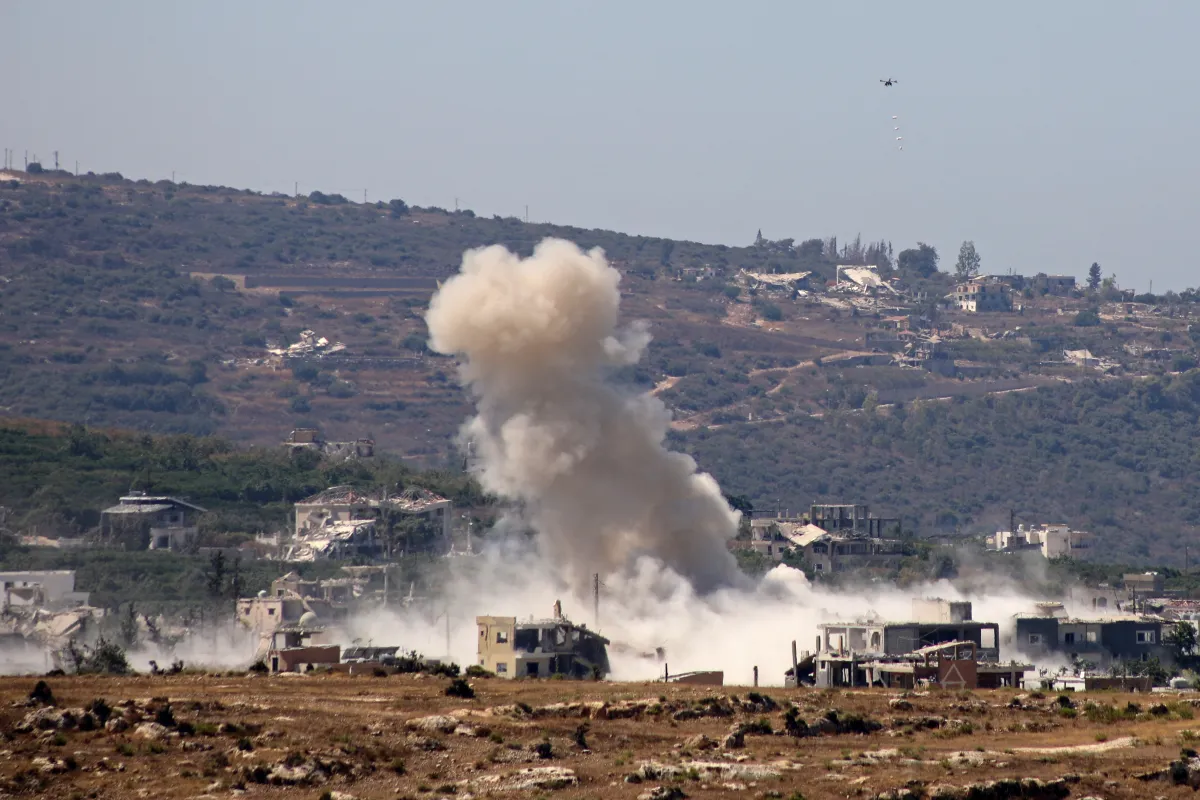
The war in Iran has carried a nearly $40 billion price tag for the U.S. military, according to new analysis from the Congressional Budget Office. That number is so massive it almost defies comprehension, but it is not an abstract figure on a government spreadsheet. It represents missiles that have been fired and cannot be recovered, aircraft parts that have worn out under the strain of constant operations, millions of gallons of jet fuel burned in skies far from home, and the quiet but relentless cost of maintaining a military presence in a volatile region. The nonpartisan CBO estimates that the Iran conflict has cost the Defense Department about $38 billion as of August 1, a number that tracks closely with the $37.5 billion figure Defense Secretary Pete Hegseth cited in July. The breakdown includes replacing expended weapons and equipment, increased flying hours, higher fuel costs, and other operational expenses. And this is not a bill that has been fully paid. The CBO estimates the conflict could continue to cost roughly $2 billion a month if fighting stays at lower levels, but that number could climb to about $3 billion a month if the fighting intensifies. For American taxpayers, this means the cost is ongoing, even when the conflict slips from the headlines. Every month the war continues, money that could have gone to domestic priorities, infrastructure, education, health care, or tax relief is instead consumed by the machinery of war.
But direct military spending is only the beginning of the story. The CBO warns that the war’s main economic impact will be felt through inflation, and Americans are already living that reality. The conflict has disrupted the flow of oil and natural gas through the Strait of Hormuz and sent shockwaves through shipping lanes in the Red Sea, where attacks on commercial vessels have made one of the world’s most vital trade routes dangerous and expensive. Those disruptions have pushed energy prices upward, and higher energy prices do not stay contained to the pump. They ripple through every part of the economy. CBO Director Phillip Swagel wrote that the reduction in shipments has increased energy prices globally, and that those higher energy costs will put upward pressure on consumer prices. The CBO now estimates that inflation will be 0.5 percentage points higher in the first quarter of 2027 than previously projected, driven in part by the conflict. That might sound small, but in the real world, half a percentage point of inflation means higher prices on groceries, rent, utilities, and everything that depends on transportation and manufacturing. Families do not need a government report to know this; they feel it every time they fill up their cars or walk down a supermarket aisle. The war is not something happening “over there.” It is tangled up in household budgets, small business decisions, and the general sense of economic anxiety that has come to define daily life for millions of Americans.
That anxiety is now showing up clearly in public opinion. According to a new Economist/YouGov poll, nine in ten U.S. registered voters blame the war for inflation, with 56 percent saying they blame it “a lot” and another 34 percent saying they blame it “a little.” Only 10 percent said they do not blame the conflict at all. That is a striking level of consensus in a deeply divided country. The same poll found that half of registered voters say sending U.S. troops to fight in Iran was a mistake. About 34 percent said it was not a mistake, and 17 percent were unsure. The poll, conducted September 11–14, has a margin of error of plus or minus 3.3 percentage points, which means the public is clearly wrestling with the cost of this conflict. These numbers reflect more than political affiliation; they reflect fatigue, frustration, and a growing sense that the war is not worth what Americans are being asked to give up. People see rising prices and they see a conflict that seems to have no clear end. They hear official statements about progress, but they also hear about billions in military spending and the constant threat of escalation. The combination is powerful. Voters may not be able to quote CBO reports, but they know what it feels like when their money is spent on war while their own economic security becomes more fragile. That disconnect between government policy and everyday experience is dangerous for public trust.
The painful arithmetic has not slowed down plans for more military support. The Trump administration is reportedly planning a $2.8 billion arms package for Israel that would include 40,000 bombs, according to the Associated Press. The deal, described by two U.S. officials and a person familiar with the plan, would mostly be paid for through foreign military financing. The officials spoke on condition of anonymity because the deal has not yet been finalized. The news drew an unusually sharp response from Tucker Carlson, a former Trump ally and Fox News host who has continued to criticize the Iran war. In a post on X, Carlson wrote that there was “no precedent” for what the administration was doing, adding, “Most voters have no idea they paid for it.” That line cuts to the heart of the issue. While the public is being asked to absorb higher prices and enduring a war they increasingly believe was a mistake, the government is preparing to send billions more in weapons to the region. A senior Trump administration official told Newsweek that all foreign arms sales are moving through the appropriate process and that the administration does not comment on pending sales. A State Department official echoed that, saying the Department does not confirm or comment on proposed arms sales until they have been formally notified to Congress. But the official response does not address the deeper concern. The weapons will need to be paid for, replenished, and eventually accounted for. The cost of this conflict is not ending; it is compounding.
This war is also reshaping global markets in ways that will be felt for years. Saudi Crown Prince Mohammed bin Salman sought Egypt’s backing Tuesday as Yemen’s Houthis intensified attacks on Saudi shipping and infrastructure, disruptions that have helped drive up global oil prices. Energy markets are tightly connected to the war, and every escalation sends traders scrambling to price in risk. The effects are showing up in financial markets as well. U.S. stocks slipped Tuesday as rising oil prices and Treasury yields put pressure on Wall Street, with the 10-year Treasury yield reaching 5 percent. That is not a small development. It affects mortgage rates, auto loans, credit card interest, and the cost of borrowing for businesses of every size. Inflation remains high enough that the Federal Reserve is widely expected to raise its benchmark interest rate Wednesday for the first time in three years. That would be a stark signal: the war’s economic fallout is forcing the central bank into difficult choices. Raising rates risks slowing the economy further, but failing to act risks letting inflation become entrenched. Either way, ordinary people pay. The war is no longer just a geopolitical story; it is a story about the price of borrowing money, the value of the dollar, and the confidence of investors who have to decide whether the world is safe enough for long-term commitments. The disruptions in the Red Sea and the Strait of Hormuz have made shipping riskier and more expensive, and those costs are passed along to consumers everywhere. No country is an island in this globalized economy. A single attack on a tanker or a checkpoint can send ripples across the world.
Behind all the charts, estimates, and polling numbers lies a deeply human story. The real cost of the war is not just measured in dollars and cents; it is measured in the weight on people’s shoulders. It is the grocery store manager struggling to keep prices reasonable when freight costs keep climbing. It is the military family waiting for a loved one to come home. It is the veteran who sees the news and wonders whether the sacrifice was worth it. It is the Iranian families, Israeli families, Yemeni families, and countless others who live in the shadow of violence and uncertainty. Nearly $40 billion has already been spent, and the conflict could easily burn through billions more in the coming months. Nine in ten voters blame the war for inflation, and half believe sending troops was a mistake. Yet the response from Washington so far has been more bombs, more spending, more engagement. The machinery of war keeps moving, even as public confidence erodes and economic pressure mounts. At some point, the question is no longer whether the war was a mistake in the past tense. It becomes whether the United States has the courage to change course before the costs climb even higher. The $40 billion is already gone, but the future price of this conflict is not a fixed number. It will be written in the choices leaders make and the voices voters raise. That is what makes this moment so important. The war is not an abstraction. It is a lived reality for millions of people, and it will not end simply because officials stop counting.