






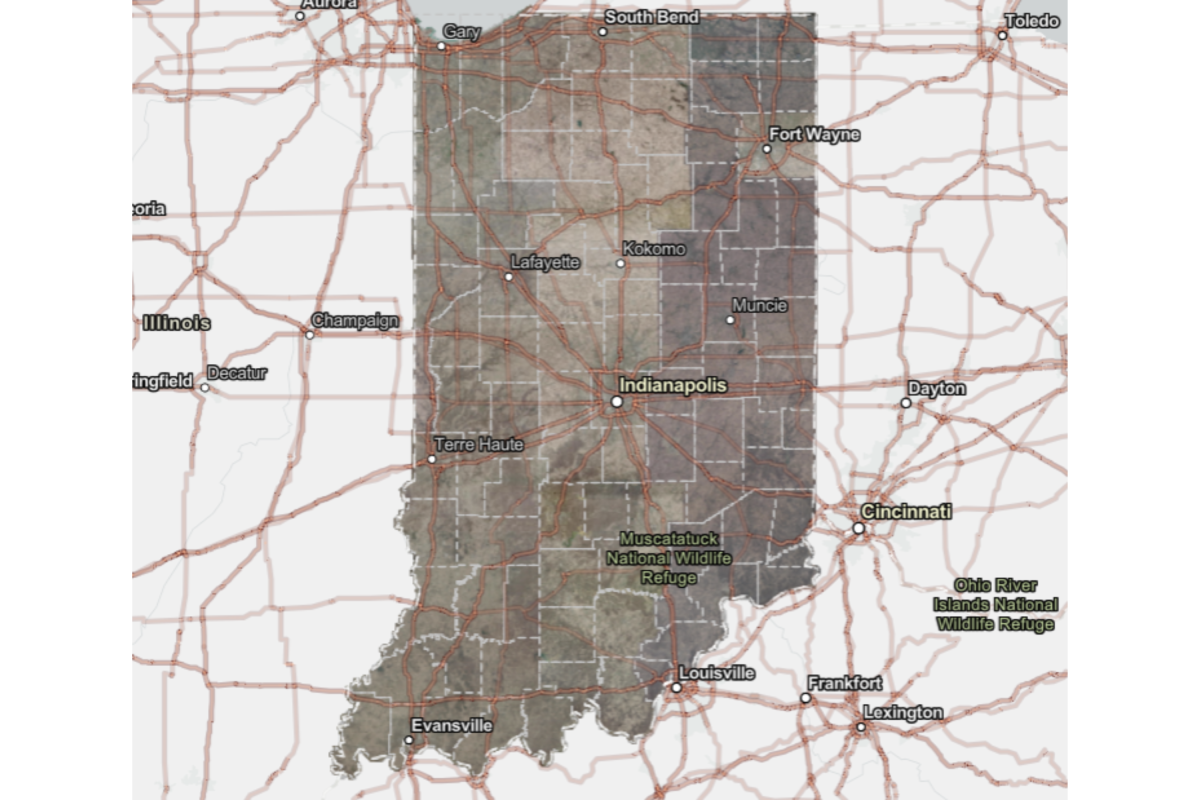
The sky over Indiana did not yield for days. Rain fell in sheets, relentless and unforgiving, turning gentle creeks into furious rapids and placid rivers into vengeful currents. When the clouds finally parted, they revealed a landscape utterly transformed—not just by water, but by grief. At least six souls were lost in the deluge, their lives claimed by the very elements that once sustained their communities. Among the fallen was a 4-year-old boy, his future swept away in the chaos, along with three women and two men across five separate counties. The tragedy struck indiscriminately: Delaware County mourned two dead, while Jennings, Lake, Porter, and LaPorte counties each held the weight of a single, irreplaceable loss. Emergency officials, their voices heavy with exhaustion and disbelief, could only describe the cataclysm as “unprecedented.” Jacob Spence, the Director of Marion County Emergency Management, stood before reporters with a grim expression, admitting that this tragedy was rewriting the rules of disaster. “This is an unprecedented event, and unfortunately we’re setting some new records,” he said, the words hanging in the air like a funeral bell. The rivers, swollen beyond imagination, had become silent executioners, and the state of Indiana was left to count the cost of their fury.
The epicenter of this watery apocalypse lay along the White River corridor, a ribbon of water that snakes through the heart of central Indiana. In Indianapolis, the river transformed into a liquid knife, carving through neighborhoods and severing the ties of daily life. The National Weather Service confirmed that major flooding was still underway, but the reality was far worse than any forecast. In several communities, the water was surpassing benchmarks that had stood since the legendary flood of 1913—a disaster that had defined Midwestern resilience for over a century. Now, that old record was crumbling like weakened riverbank. Mayor Joe Hogsett, his face etched with concern, pronounced what residents already knew: this was the worst flooding to strike the city in more than thirty years. The streets of Noblesville, Anderson, Ravenswood, and Nora had become canals, and entire neighborhoods were swallowed whole. As Saturday dawned, the evacuation began in earnest. Hundreds of homes along the White River disgorged their inhabitants, families clutching photo albums, pets, and the bare essentials, their feet splashing through water that rose with terrifying speed. Emergency crews launched flat-bottomed boats into rushing currents, navigating between mailboxes and submerged cars to reach the stranded. In Indianapolis alone, firefighters performed 51 water rescues, pulling 95 people and 45 beloved pets from the brink of disaster. The air was filled with the sounds of sirens, the barking of frightened dogs, and the muffled sobs of those who watched their entire lives float by in a murky haze.
But the storm’s fury was not finished. As the crest of the White River moved south, it cast a long, ominous shadow over new communities awaiting their fate. Indianapolis officials, poring over hydrological data, identified four additional zones perched precariously on the edge of inundation. Sunshine Gardens, a patchwork of modest homes, was placed on high alert; the Southport Road corridor near Indy Lakes Campground braced for impact; the low-lying areas south of Raymond Street stood vigil along the river’s edge; and Hi-Acre Manor, a neighborhood that had known peace for generations, prepared for the unthinkable. In each of these fragile enclaves, residents were urged to pack their vehicles and ready their escape routes, their hearts pounding with every creak of the rising water. The anxiety was palpable—a slow, creeping dread that mirrored the rising river itself. Then came the catastrophic news out of River Road Apartments. The floodwaters had eroded the very ground beneath the complex, threatening structural collapse. Officials issued an immediate evacuation order, not as a precaution, but as a desperate emergency. Residents streamed out of their buildings, clutching children and whatever possessions they could carry, as engineers warned that the foundations were groaning under the relentless assault of the water. It was a stark reminder that this disaster was not merely about rising levels, but about the fundamental stability of the ground beneath Indiana’s feet. The state held its breath, waiting to see which neighborhood would be swept away next.
The vigil extended far beyond the capital city, painting a grim map across the entire state. Flood warnings remained active on a dozen major waterways, each one a ticking clock. The White River near Nora was approaching what the National Weather Service ominously called the “flood of record,” with major flooding expected to persist until Wednesday afternoon. In Noblesville, the situation was equally dire, with evacuations underway and roads turned into impassable rivers, the flooding there persisting until Wednesday evening. Ravenswood and Anderson braced for the onslaught, their warnings lasting into the midweek. But it was the longer crises that truly revealed the scale of the disaster. The White River at Spencer was forecast to remain above flood stage until August 23rd—a full week and a half of unrelenting danger. The warning for Centerton had no end date at all, simply reading “until further notice,” a phrase that chilled the hearts of those who read it. Beyond the White River, the Wabash, Wildcat Creek, Tippecanoe River, East Fork White River, and Driftwood River all stood poised to overflow their banks. In the rural expanses of central, northern, and western Indiana, farmers watched their fields turn to lakes, and small town residents mapped out routes to higher ground. The National Weather Service warned that runoff from upstream deluges would keep rivers swollen for days, meaning that communities living far downstream from the original rainfall still faced the agonizing wait for water that had not yet arrived. It was a cruel geography lesson, teaching Hoosiers that what happens upstream never stays upstream.
For those caught in the flood’s path, survival became a lesson in vigilance and humility. Emergency officials issued urgent pleas for caution, repeating a mantra that had already saved countless lives: “Turn Around, Don’t Drown.” It was a message born of tragic experience, a warning against the foolhardy attempts to drive through flooded roads that claim more lives each year than almost any other weather hazard. Officials stressed that even a mere six inches of swiftly moving water could knock an adult off their feet, and a mere twelve inches could float away most vehicles. The psychology of the flood-watcher was a strange mix of boredom and terror—hours of staring at a rain gauge, watching a muddy line creep inexorably higher, punctuated by moments of frantic activity when the water breached a levee or a sinkhole opened in the road. In flood-prone homes, residents prepared evacuation plans, stored emergency supplies, and dutifully charged their phones. But beneath the practical preparations lay a profound emotional toll. The constant hum of sump pumps, the smell of damp earth, the sight of treasured keepsakes wrapped in plastic—these were the small tragedies that accompanied the great one. Yet even in this darkness, communities rallied. Neighbors checked on the elderly, strangers offered spare sandbags, and church basements transformed into makeshift shelters. The state emergency operations center hummed with activity, coordinating rescue efforts, while the Indiana State Police and National Guard worked alongside exhausted local volunteers. Every hour of vigilance brought a small victory against the relentless tide.
As the water slowly began its retreat in some areas, the long road to recovery stretched out before the battered state. In a move that offered a glimmer of hope, President Donald Trump approved Indiana’s emergency declaration request, unlocking federal resources and financial assistance to support the monumental task of rebuilding. It was a necessary lifeline for communities that had exhausted their local budgets and their emotional reserves. But recovery would not come quickly. For the survivors in Delaware County, in Tipton, in the flood-ravaged corners of Indianapolis, the days ahead would be filled with the smell of mud and fuel oil, the sound of dehumidifiers, and the tedious process of filling out insurance claims. Homes would need to be gutted, drywall replaced, and memories painstakingly salvaged from sodden wreckage. Yet, there is a particular resilience that defines the Hoosier spirit—a stubborn refusal to be defeated by weather or even by fate itself. Neighbors would borrow generators, help pump out each other’s basements, and share meals cooked on portable grills. The volunteer boats that had plucked people from rooftops would eventually become civilian jon boats, ferrying supplies to isolated homesteads. The grief for the six lost lives would linger, a somber counterpoint to the celebration of survival. But as the White River reluctantly receded back into its banks, Indiana began the slow, painful process of drying out, healing, and looking forward with a hardened resolve to the next storm on the horizon. The flood of 2025 would be remembered not just for its record waters, but for the unbreakable spirit of the people who refused to let it wash them away.