






The first time I realized that raising a Gen Alpha child was going to require a completely different kind of parenting, my daughter was three years old. I had decided it was time to introduce her to Tom and Jerry. In my mind, this was a rite of passage, a sacred piece of childhood I was passing down. I grew up watching that cat chase that mouse with frying pans, hammers, and whatever other weapon happened to be within reach, and I never thought twice about it. It was simply what cartoons were. She watched for a few minutes, her small face growing more and more troubled, and then she turned to me with real alarm. “They are hurting each other,” she said. I tried to explain that it was funny, that no one actually got hurt, that this was just the natural chaos of a cat and mouse. She wasn’t buying it. Then came the question that stopped me cold: “Nana let you watch this?” In that moment, I saw my mother, who lives with us now, through my daughter’s eyes: the woman responsible for many of my childhood decisions, suddenly being held accountable by a preschooler. I laughed, but I also felt something fundamental shift. She was three years old, and she had already refused to accept something simply because I had accepted it as a child. When I was her age, I would never have questioned an adult about what I watched or challenged the idea that a cartoon could be harmful. I would have assumed the adult was right. My daughter assumed her feelings mattered enough to speak them. That was the first sign that I would have to parent differently, and it was only the beginning. I didn’t yet know that this same child would one day tell me she didn’t like the way her grandmother raised her voice, or that she would teach me more about emotional health than I had learned in four decades. I only knew that the old script—watch what I watch, accept what I accept, do not ask why—was already too small for her.
I am a Gen X mother, born and raised in a Catholic home in Louisiana. My childhood was structured around clear rules, clear expectations, and a clear hierarchy. Adults were adults. You did not question them. When I asked why, the answer was often “because I said so,” and sometimes there was no answer at all. It was what it was. Feelings? We had them, but we were not encouraged to spend much time discussing them. If you cried, someone told you to stop crying. You gathered yourself, got yourself together, and moved on. I don’t say this to criticize my mother. She loved us fiercely and raised us according to what she knew, what her generation expected, and what she believed would prepare us for the world. And in many ways, it did. Say what you will about Gen X, but we know how to survive. We learned how to get knocked down, dust ourselves off, and keep going. We learned that life isn’t fair, that sometimes you hear no, that closure doesn’t always come, and that nobody may ever ask how you feel before making a decision that affects you. Those are real lessons, and I want my daughter to have them. But I am slowly learning that I can give her resilience without requiring her to suppress her emotions as proof of strength. There is a difference between preparing a child for a hard world and teaching her that her feelings are an inconvenience. I want her to know that she can be both strong and honest, that she can say “this hurt me” and still pick herself up. Sometimes I catch myself about to tell her to shake it off, the way I was taught, and I stop. What would it look like to shake it off without pretending it didn’t happen? What would it mean to let her feel the full weight of a disappointment and then encourage her to move forward anyway? I’m still figuring that out. My daughter is teaching me that strength and vulnerability are not opposites. They are partners, and each one makes the other real.
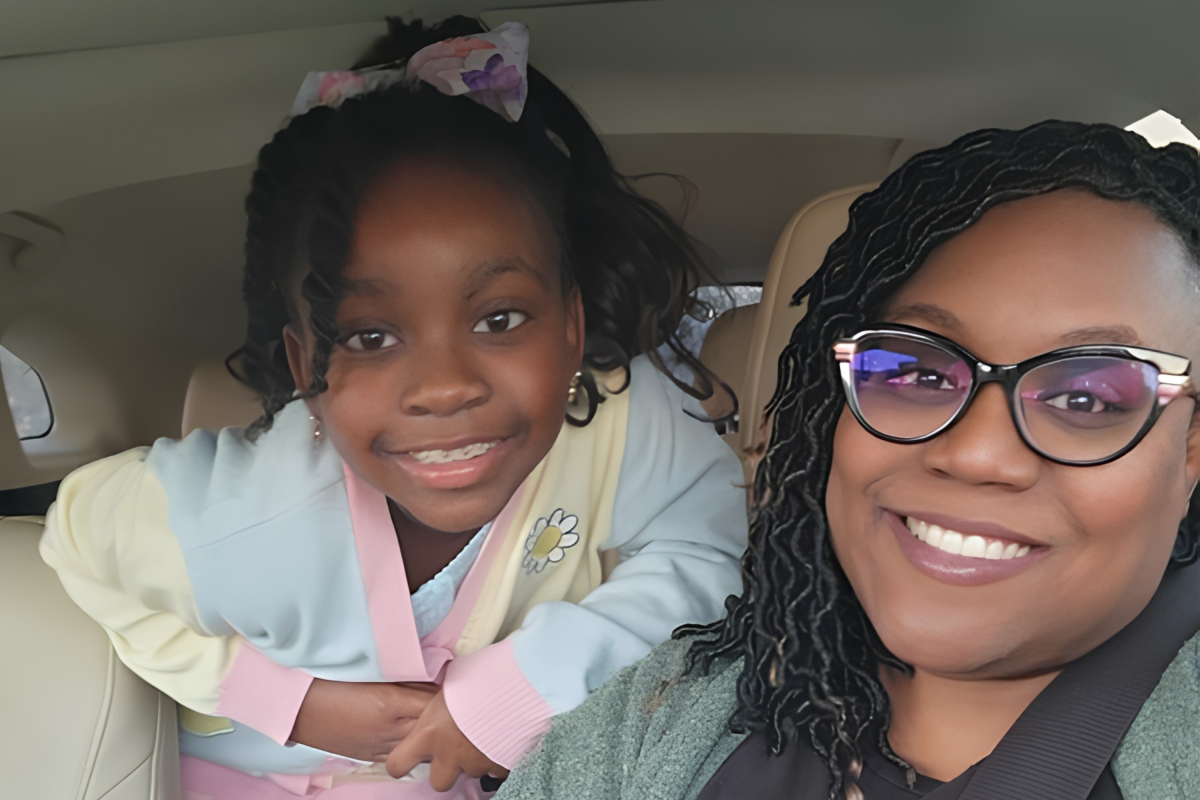
Now my daughter is nine and in the fourth grade, and I am almost forty-nine. Sometimes the distance between us feels less like a generation gap and more like the Grand Canyon. She lives in a house full of old people. Nana lives with us, her father and I are older parents, and she has spent most of her life surrounded by grown-ups. You can tell. Her teachers are always telling me how mature she is. My friends say, “That child has been here before.” She is comfortable talking to adults, asks thoughtful questions, and has a wisdom that can honestly take my breath away. But I have also realized that I don’t want her to grow up too fast. Maturity is wonderful, but it can become a burden if it steals childhood. She has plenty of time to sit around with us old folks; she doesn’t need to spend all her young years acting like one of us. So I am making a deliberate effort to let her be nine. I want her to watch things made for children, to be silly, to laugh at jokes that make absolutely no sense to me, to play, to enjoy her own strange and beautiful world. That doesn’t mean I have given up on passing down the things I love. I consider it my sacred duty to give her a proper musical education. She knows the Temptations, Michael Jackson, and Whitney Houston. She can belt out “Don’t Stop Believin’” and rock out to Footloose. I cried when she made her dolls perform “My Heart Will Go On” by Celine Dion. There are standards in this house. And because parenting requires compromise, I have made an effort to understand her generation, too. I can dance to Taylor Swift. I draw the line at KATSEYE. A mother has to have boundaries. But that line is a joke, of course, and also not a joke. It is a way of saying that I will always have a piece of the world that is mine, and she will always have a piece that is hers. We are building a mixed culture here, her childhood and mine sharing a kitchen table, and I love watching her learn the old songs while I learn the new ones. She is teaching me that my soundtrack is not the only one that matters.
Sometimes I wonder if my daughter is more emotionally intelligent than I was at forty. When she was eight, she came to me with a quiet, careful expression and said, “Mom, I don’t like the way Nana raises her voice sometimes. It’s not nice.” My immediate Gen X instinct was: Girl, that’s just Nana. That was what I would have been told. My mother is old-school, and she adores her granddaughter, but she comes from a generation where raising your voice was not considered a crime. You didn’t talk back; you accepted it. But my daughter wasn’t saying that Nana didn’t love her. She was saying that she didn’t like how she was being spoken to, and she believed she had the right to say that. At eight years old. I remember looking at this tiny human and wondering where she learned that. But maybe the better question is: why didn’t we learn it? Respect doesn’t have to mean silence. These new kids question everything. Why? Why not? Who decided that? Does that make sense? Why can’t I say that something hurt my feelings? For someone raised in a world where challenging an adult could get you in more trouble than whatever started the conversation, it can be exhausting. But I am starting to appreciate it. My daughter is learning that respecting someone doesn’t require silence, that loving someone doesn’t mean accepting every behavior. She is learning to identify emotions, name them, and communicate them without apology. These are tiny humans with very big emotions, and maybe allowing them to process those emotions is healthier than telling them to toughen up and get over it. Maybe that is how generational patterns finally break—not by blaming our parents or deciding that everything about the past was wrong, but by remembering that every generation gets new information and then has to decide what to do with it. She is not being disrespectful when she tells me how she feels. She is telling me what she needs. And I am trying to hear.
At the same time, I haven’t abandoned my Gen X commitment to toughness. I still want my daughter to be resilient. Some people call this generation soft. I don’t. They are brave enough to say the quiet parts out loud, and that takes courage. Life will hurt her feelings. She will fail at things she cares about. Friends will disappoint her. Someone will tell her no. There will be times when she communicates her feelings perfectly and the other person still doesn’t care. Some problems cannot be solved by naming an emotion or setting a boundary. I need her to know that she can survive those moments, too. But I don’t want to teach her that being strong means pretending nothing hurts. That is the balance I am trying to find. I want to give her the toughness my generation learned without asking her to bury her feelings as the price of admission. I can teach her that sometimes you have to get back up. She can teach me that you don’t have to pretend the fall didn’t hurt. These are not opposites. Coming back from a hard moment actually requires feeling it, acknowledging it, even talking about it. The old way told us to swallow the pain and move on, and sometimes that is exactly what survival demands. But if we never let children feel their pain, we are only teaching them to hide it, not to heal it. I want my daughter to know she can fall apart for a minute and still be strong. She can ask for help and still be independent. She can say “I’m not okay” and still be brave. Every generation tries to pass on what it knows, and every generation has gaps. My mother gave me armor. I am trying to give my daughter armor and also permission to take it off sometimes. Maybe that is the best any parent can do: not perfection, but presence; not having all the answers, but being willing to learn.
Right now, three generations of women live under my roof. My mother raised me. I am raising my daughter. And somewhere along the way, I have realized that my daughter is raising me, too. She is learning resilience from me. I am learning emotional intelligence from her. And Nana? Nana is learning that her granddaughter has notes, lots of notes. We are figuring it out together, somewhere between “because I said so” and “Mom, I need to tell you how that made me feel.” I will listen when my daughter tells me I have gotten something wrong. I will respect her feelings. I will teach her that her voice matters. And I will remind myself that no matter how mature everyone says she is, she is still a little girl who deserves the space to be one. So we will keep some Whitney Houston and Footloose. We will add some Hannah Montana and The Proud Family. I will even keep dancing to Taylor Swift. But KATSEYE? Absolutely not. Some Gen X traditions must survive. I say that with a smile, but there is truth underneath. Raising this child has changed me. It has made me softer in some ways, stronger in others, and much more willing to admit when I don’t know. I don’t have all the answers, and neither does my mother, and neither does my daughter, but together we are making something better. We are finding a way to honor the past without being trapped by it, to give her roots from an older generation and wings from a new one. If she grows up knowing that her feelings matter and that she can still get back up when the world knocks her down, we will have done something right. And if she carries a little bit of Nana, a little bit of me, and a whole lot of herself into the future, I will know the lessons were worth learning. We are not perfect. We are learning. And that is exactly what a family is supposed to be.