

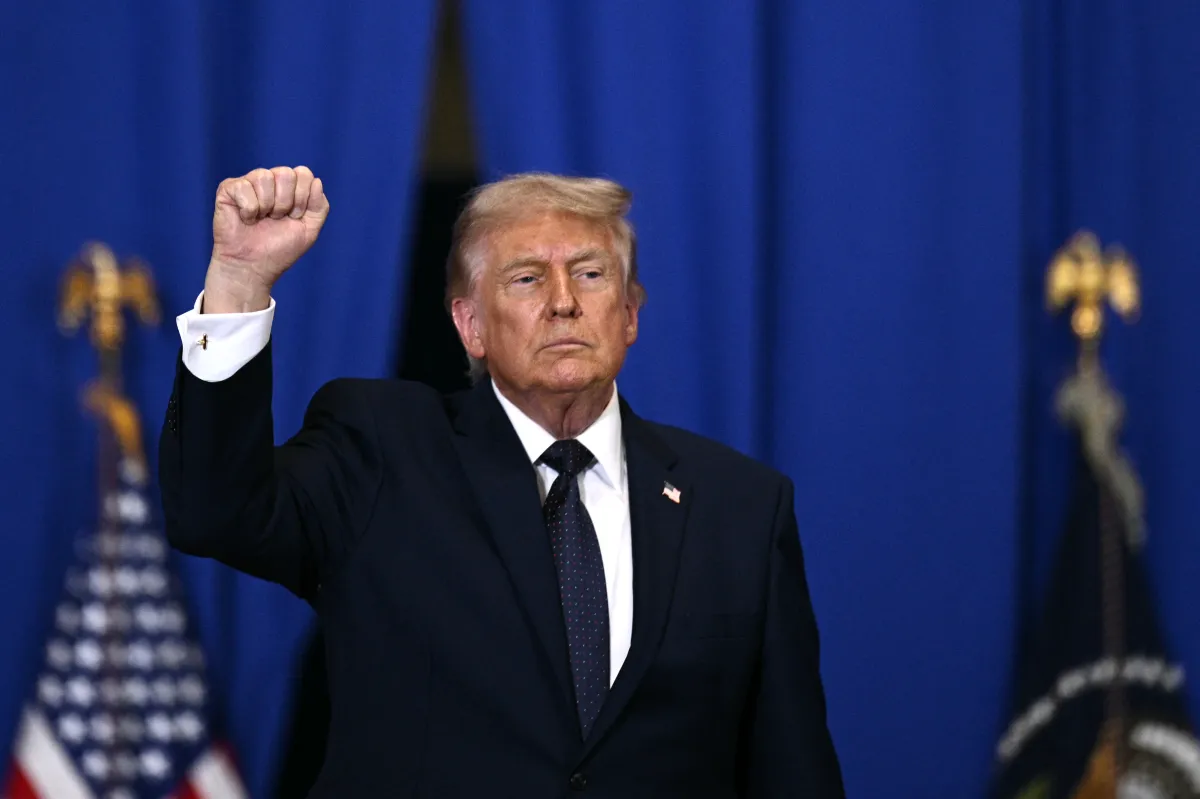
American politics has recently felt like a high-stakes, surreal theater production. We have watched Donald Trump pull back his own nominee for director of national intelligence and withdraw his support for a major bipartisan housing bill, all in an effort to force Congress into passing his “Save America Act.” This legislation proposes massive, sweeping changes to the nation’s election systems. But this is not merely political performance art. Trump is deadly serious about reshaping the electorate, aiming to restrict voting access for demographics he believes are unlikely to back MAGA Republican candidates. By demanding proof of citizenship that millions of eligible Americans cannot easily produce, and seeking to ban mail-in voting unless a strict in-person exemption is proven, the act targets the very foundation of modern voter participation. Because the Senate currently lacks the votes to pass this controversial bill, many suspect Trump will continue to use the issue as a rhetorical weapon, rallying his base with unfounded claims of illegal voting and rigged systems to systematically delegitimize future election outcomes.
However, the threat extends far beyond campaign trail rhetoric. If legislative avenues fail, there is a distinct possibility that Trump will bypass Congress entirely, invoking unilateral executive authority to challenge and change election results. For those who watched the events of January 6, 2021, and witnessed the subsequent pardons of those involved, the idea of an administration going to extremes to overturn an election is no longer a distant, dystopian hypothesis. This worrying trajectory has been closely analyzed by Jonathan Winer, a former senior State Department official and member of the pro-democracy organization Keep Our Republic. In a sobering piece for The Washington Spectator, Winer warned that the administration is actively preparing to challenge future election cycles, utilizing federal agencies in unprecedented ways. We are already seeing the groundwork laid: the FBI recently reassigned hundreds of staffers to re-examine the thrice-cleared 2020 vote count in Fulton County, Georgia, while the Department of Homeland Security and the Social Security Administration have been ordered to build state-by-state citizenship databases to override local election authorities. Additionally, new Postal Service regulations have been introduced to block the delivery of mail-in ballots in states that refuse to hand over their voter rolls to federal officials.
Under Winer’s projected scenario, a systemic effort to overturn an election would begin with a swift presidential declaration that the vote was compromised by fraud, foreign interference, or illegal ballots. The administration would then order federal agencies to halt the finalization of the results pending an exhaustive investigation. From there, Trump would likely pressure Republican leadership in Congress to disregard the certified victories of Democratic candidates in challenged jurisdictions. During the lame-duck session, the goal would be to alter congressional rules so the incoming legislature could be organized around a manufactured Republican majority. This maneuver would inevitably spark immediate, historic legal challenges, but it would also trigger massive public anger. Street protests would almost certainly erupt in major cities across the country. Trump has repeatedly labeled his political opponents and protesters as the “enemy within,” suggesting that organizers of democratic demonstrations—even entirely peaceful ones—should be arrested, detained, and prosecuted as national security threats.
This is where the situation could cross into the territory of a true police state through the use of “Presidential Emergency Action Documents,” or PEADs. As journalist Jonathan Alter recently highlighted, PEADs are highly classified, pre-drafted presidential proclamations designed to keep the government running during catastrophic national crises, such as a nuclear attack. Every administration since Dwight D. Eisenhower has maintained these classified files, though none has ever actually implemented them. Trump has hinted at their existence before, boasting of “very strong emergency powers” that grant him authority most citizens are entirely unaware of. It is highly probable that these documents contain provisions for the temporary suspension of certain civil liberties and the detention of individuals deemed a threat to national stability. To execute such widespread detentions without relying on the traditional military or the National Guard, the administration could leverage the Department of Homeland Security’s rapidly expanded detention infrastructure and its specialized tactical units, effectively deploying a domestic security force to quell political dissent.
While these aggressive maneuvers would face immediate roadblocks in the legal system, courts move notoriously slowly, and the administration would likely act with maximum speed to seize voting machines and suppress demonstrations before judges could intervene. Trump’s obsession with election integrity is not rooted in policy, but in his enduring personal inability to accept his 2020 loss to Joe Biden. This fixation has driven him to burn immense political capital, often to the detriment of his own party’s legislative goals—such as the housing bill he discarded. His rhetoric has grown increasingly hostile, recently branding moderate Democratic opponents as “godless communists.” Winer warns that nothing in Trump’s past actions suggests he would feel constrained by democratic norms, historical precedents, or constitutional boundaries if he chose to activate these emergency powers to retain leverage over the government and silence domestic opposition.
Ultimately, we would be incredibly naive to believe that the battle for the future of American democracy will be played out purely within the boundaries of traditional laws and legislative debates. If the “Save America Act” fails to pass and the upcoming elections do not yield the outcomes Trump desires, his history suggests he will not quietly accept defeat. Instead, we must prepare for the very real possibility of an administration willing to test the absolute limits of executive power to reshape the electoral landscape. Protecting the integrity of the vote is no longer just a partisan debate; it is an active defense of the constitutional republic itself against an unprecedented attempt to bypass the will of the American voter.