






My first pregnancy with my son, Jai, was an absolute nightmare of physical suffering. Diagnosed with hyperemesis gravidarum, I was hospitalized multiple times, constantly vomiting and entirely depleted. So, when I became pregnant with our daughter, Matilda, I was filled with a mix of trepidation and hope. To my utter relief, the experience could not have been more different. I did not throw up a single time, and despite the natural fatigue of chasing a energetic toddler around, I was genuinely happy. We had recently learned that Jai was going to have a little sister, and our hearts were full of anticipation. We were told early on that Matilda was measuring quite small, but because Jai had also been born small and perfectly healthy at 38 weeks, we initially brushed it off, assuming I simply carried smaller babies. However, as the weeks progressed, her slow growth rate officially earned her a diagnosis of intrauterine growth restriction.
Our cautious optimism shattered during a routine 32-week growth scan when the sonographer detected deeper abnormalities. My maternal instincts flared with terror as we realized this was about far more than just her physical size. I was immediately transferred to a major city hospital where specialized scans and heart monitors became my cold reality. Lying there, trying desperately to breathe and remain calm, midwives gently warned me that Matilda would likely arrive within days and face an extended stay in the neonatal intensive care unit. The specialized tests revealed a devastating picture: not only was she dangerously small, but spots on her brain suggested a cytomegalovirus (CMV) infection. To find answers, I endured a stressful amniocentesis and a grueling, two-and-a-half-hour fetal MRI. The verdict from our medical team was unanimous and heartbreaking. Matilda was profoundly unwell.
Those subsequent weeks became a blur of fear, confusion, and overwhelming anger. The tests confirmed she had contracted congenital CMV, a widespread and typically harmless virus that poses a severe threat to an unborn baby if the mother contracts it during pregnancy. Doctors believed I had caught the virus from my toddler right around the time of conception—the worst possible timing for gestational development. While CMV can cause complications like deafness or cerebral palsy, Matilda’s case was catastrophic. The virus had actively prevented her brain from forming, leaving it composed almost entirely of fluid. Doctors gently but realistically explained that she would never walk, talk, eat, or care for herself, assuming she even survived the birth.
Confronted with the option of a termination for medical reasons (TFMR) at 34 weeks, my partner Brendan and I plunged into a state of profound agony. He was my rock, standing incredibly strong as we endlessly debated what was right for Matilda and our family. During this agonizing two-week limbo, I searched the internet endlessly for stories of other families who had gone through a CMV diagnosis or TFMR, but I found absolutely nothing. It was the absolute loneliest experience of my life, feeling entirely isolated in my grief. We loved our daughter deeply, but we could not bear the thought of her suffering, nor could we ignore the impact this would have on our son. Ultimately, motivated entirely by a desire to shield our daughter from pain, we made the impossible decision to proceed with the termination.
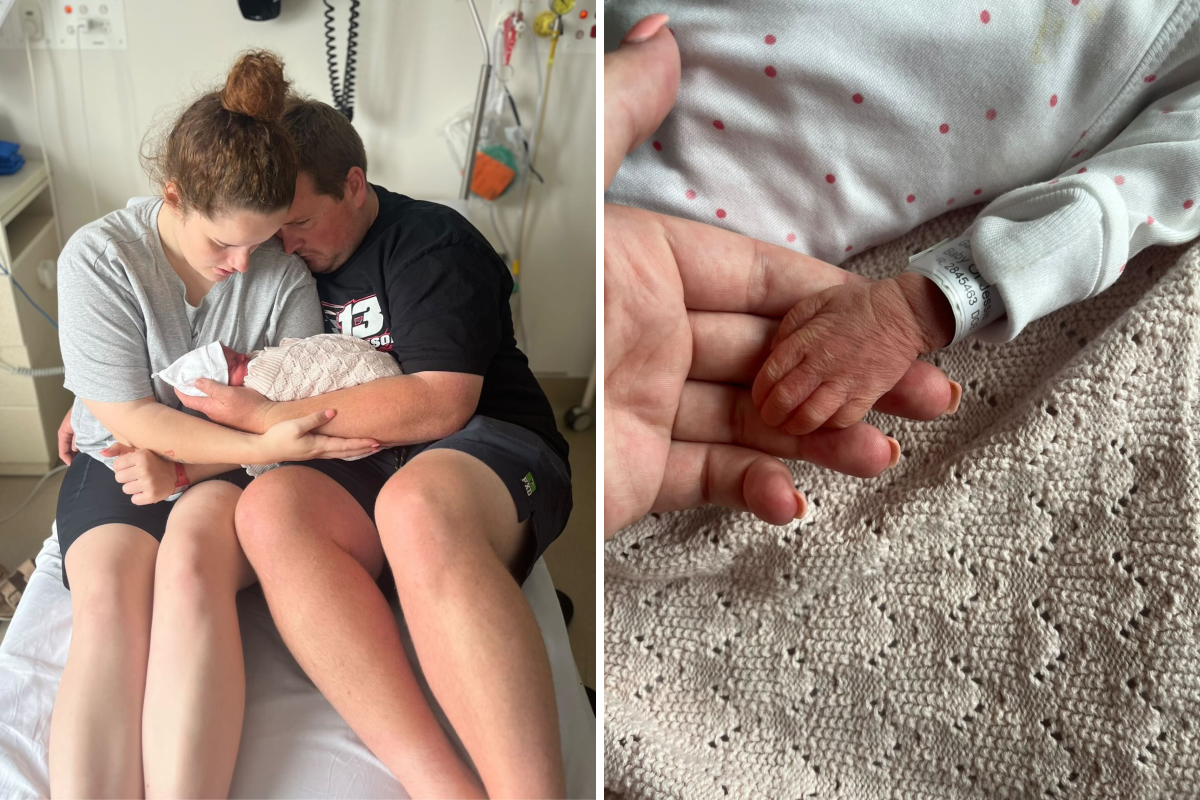
The procedure began with an injection to stop Matilda’s heart, followed by a heartbreaking two-day waiting period at home to induce labor. I desperately wanted to deliver her naturally, and the birth itself ended up being a tragically beautiful experience. Holding her warm, silent body against my chest for skin-to-skin contact was the hardest moment of my life; as a mother, every fiber of my being was screaming and waiting for her to cry, knowing she never would. We bathed her, dressed her, and spent two precious days cradling her, allowing our extended family to meet and say goodbye to her. Over the last 18 months, intensive therapy has helped me process the heavy guilt of that choice. Today, I look back with a sense of peace, knowing Brendan and I willingly took on a lifetime of personal heartbreak so that Matilda would never have to experience a single moment of suffering.
Today, at 26, living in Melbourne, Australia, with Brendan and Jai, I share our story publicly on social media to ensure no other family has to walk this dark path in absolute isolation. I actively urge anyone planning a pregnancy to advocate for themselves and request a simple CMV blood test from their healthcare provider. To any parent currently facing the devastating choice of a termination for medical reasons, please know that you are not alone, and you are not a failure. Making the choice to protect your child from a life of pain is an act of the purest, most selfless love imaginable. You are, and always will be, an incredible parent.