


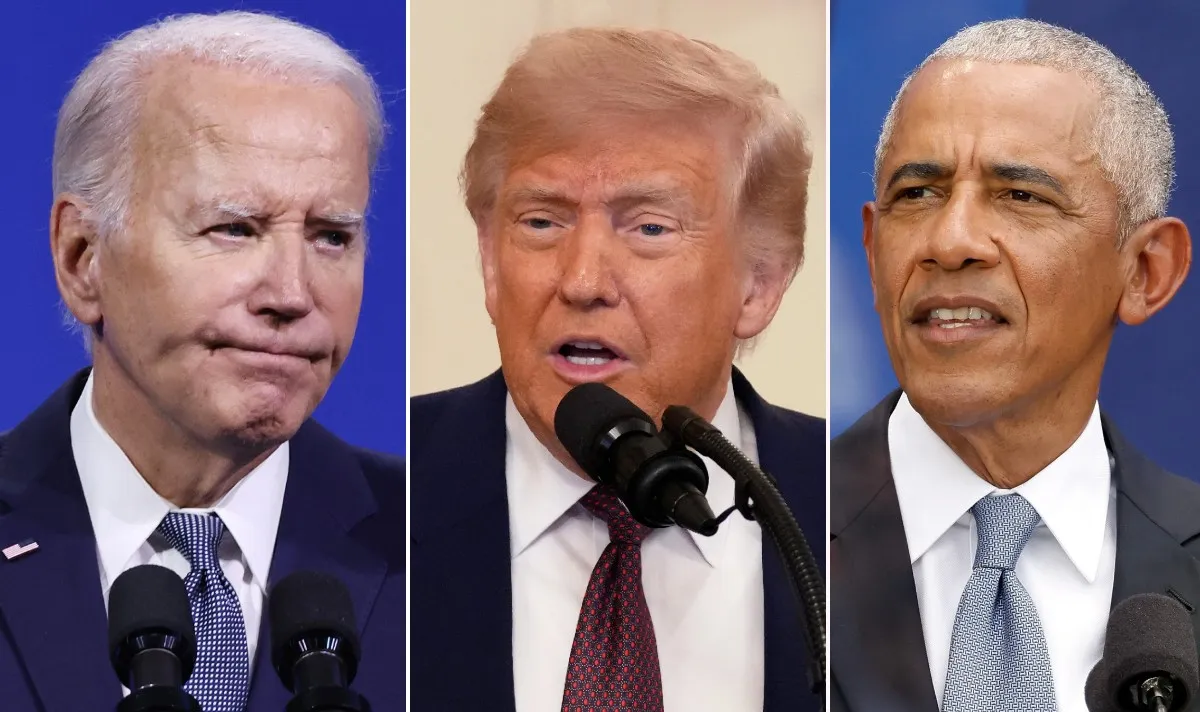
The burden of the American presidency is a psychological and physical toll unlike any other, demanding that those who occupy the Oval Office navigate a relentless barrage of domestic crises, global conflicts, and public scrutiny that inevitably ages them before our very eyes. Yet, long after the helicopter carries them away from the South Lawn for the final time, a quiet, almost poetic transformation begins to occur in the collective consciousness of the American public. The sharp, jagged edges of legislative battles and daily controversies start to soften, replaced by a more reflective, retrospective evaluation of their character, intentions, and overall legacy. This fascinating evolutionary process of memory is vividly captured in a comprehensive CNN/SSRS poll conducted through online and telephone interviews among a diverse sample of 2,480 U.S. adults, featuring a margin of error of plus or minus 2.7 percentage points. The survey reveals a striking, highly telling hierarchy of public favorability among the five living men who have held the nation’s highest office over the last quarter-century. At the absolute pinnacle of this national reassessment stands Democrat Barack Obama, who remains by far the most popular living former president, enjoying a robust 57 percent favorability rating. As he steps back into the spotlight to celebrate the opening of his majestic new presidential center on the South Side of Chicago, Obama’s enduring popularity stands as a monumental contrast to the deep, bruising partisan divides that continue to shape and drag down the reputations of his immediate successors, offering a rare glimpse of broad, cross-partisan appeal in an era otherwise defined by deep cultural tribalism and political exhaustion.
What makes Obama’s current standing so remarkable is not just the high percentage of admiration he commands, but where that admiration comes from in a political landscape otherwise defined by nearly absolute, unyielding cross-party hostility. The poll reveals that Obama’s appeal is exceptionally resilient, bridging demographic and political gaps that today’s active politicians find entirely impassable; most notably, he holds an enviable 56 percent favorability rating among independent voters, a crucial and historically volatile segment of the electorate that serves as the ultimate barometer of national sentiment. Furthermore, his ability to retain near-universal devotion within the Democratic Party while simultaneously convincing roughly one in five self-identified Republicans of his positive legacy is a rare feat in a highly fractured modern society. In stark contrast, the leaders who followed him into the White House find themselves deeply entrenched in the daily, bruising trench warfare of active political combat, unable to escape the immediate anger of a divided public. Donald Trump, whose favorability currently sits at a polarized 34 percent, and current President Joe Biden, hovering just below him at 30 percent, are living through the harsh reality of governing a hyper-fractionalized country where every word is weaponized and every policy decision is viewed through a lens of existential conflict. By leading Trump by more than twenty percentage points and boasting nearly double the favorability of Biden, Obama occupies a unique, almost mythological space in the national consciousness—a symbol of a more hopeful, less fractured period of American history that many citizens look back upon with a profound, wistful sense of nostalgia.
This stark contrast in numbers exposes the deep, seemingly permanent scars left by the political battles of the last decade, particularly when we examine the highly volatile and downward-trending trajectories of both Donald Trump and Joe Biden. Trump’s journey in the eyes of the public has been a wild, turbulent rollercoaster; having left the White House in the tumultuous winter of 2021 with a deeply wounded 33 percent favorability rating, he saw a significant rebound to 46 percent around the time of his successor’s inauguration, only to drift back down to his current low of 34 percent—his weakest showing of his post-presidency in this polling series. This volatility reflects a deeply divided nation where a fierce, unshakeable core of supporters remains intensely loyal, while a broad, persistent, and highly vocal majority of the electorate views him with unwavering, permanent skepticism. Meanwhile, Joe Biden’s narrative is one of a steady, quiet, and painful erosion of public support; entering the presidency with a highly optimistic 59 percent approval rating, his standing has slowly degraded over years of economic anxiety, global unrest, and relentless domestic friction, culminating in his current 30 percent favorability mark. Perhaps the most telling and tragic metric of this division is the almost complete absence of cross-party empathy: a mere 5 percent of Democrats hold a favorable view of Trump, and an identical, single-digit 5 percent of Republicans say the same about Biden. This absolute polarization suggests that for these two leaders, the traditional process of post-presidential rehabilitation may be heavily delayed, if not entirely blocked, by a public that refuses to separate the men from the bitter cultural war they have come to symbolize.
While Trump and Biden remain locked in the suffocating heat of contemporary conflict, the standings of older former presidents offer a glimpse into how time can act as a gentle, albeit imperfect, healing balm for a leader’s tarnished legacy. George W. Bush, who left the presidency in 2009 amid a storm of economic ruin and highly controversial foreign wars with some of the lowest approval ratings in polling history, has experienced a remarkable quiet renaissance, now enjoying a comfortable 42 percent favorability rating against a 33 percent unfavorable view. This shift illustrates the classic American concept of “retrospective softening,” wherein the passage of time allows the public to gradually forget the daily anxieties of an administration and begin to appreciate the basic dignity, stability, and peaceful transition of power that the office symbolizes. Bill Clinton’s current standing, however, reveals a much more complicated and shifting dynamic; once celebrated for overseeing a period of historic peace and economic prosperity in the 1990s, he now holds a highly split 38 percent favorable to 39 percent unfavorable rating. This subtle decline suggests that post-presidential reputations are not always on a simple, guaranteed upward trajectory; instead, they are subject to modern, retrospective re-evaluations as contemporary cultural standards, gender politics, and historical perspectives shift over time, reminding us that yesterday’s triumphs can easily be reassessed through a much harsher and more critical lens by today’s generation of voters.
This evolving historical perspective is particularly pronounced among younger Americans, whose entire political worldviews have been forged in an era of unprecedented polarization and rapid digital disruption, completely disconnected from the consensus of the late twentieth century. The CNN/SSRS poll highlights a fascinating and profound generational divide: more than four in ten Americans under the age of thirty state they have absolutely no opinion of either George W. Bush or Bill Clinton—a statistic that would have seemed unthinkable just a decade ago, but one that underscores how quickly the giant figures of the past can fade into the background noise of history for a generation that does not remember the dot-com boom or the immediate aftermath of September 11. For these younger citizens, the defining reference points of American power are not the centrist compromises of the nineties or the neoconservative-led conflicts of the early aughts, but the sharp, unyielding, and highly personal divisions of the Trump and Biden eras. It was against this backdrop of shifting generational memory that Barack Obama recently gathered with his peers—including Biden, Bush, Clinton, and several former first ladies—to officially open the Obama Presidential Center in Chicago, using the high-profile moment to deliver a powerful, running commentary on the ideals of leadership. In his remarks, Obama articulated a deeply empathetic vision of foreign policy, arguing that when America lives up to its highest ideals by encouraging cooperation rather than trying to “dominate and bully,” the entire world becomes a slightly brighter, safer, and more prosperous place, reminding his audience of a time when the office of the presidency was defined by a soaring global idealism rather than defensive isolation.
This yearning for a politics of hope and high ideals is perhaps why the poll’s “most admired” ranking places Barack Obama at the very top, with 30 percent of all respondents selecting him as the president they admire most—well ahead of Donald Trump at 19 percent, and outperforming historic icons like Abraham Lincoln and Ronald Reagan, who both garnered 9 percent. Even within this admiration metric, the deep-seated partisan identities of modern America are fully on display, with 64 percent of Democrats naming Obama as their ultimate standard-bearer and 53 percent of Republicans choosing Trump, proving that these two men remain the primary intellectual and emotional anchors of their respective parties. Ultimately, these findings offer a profound, humanizing look at the American psyche: we are a country of believers, skeptics, and seekers, constantly trying to reconcile our individual hopes with the flawed, deeply human leaders we elect to represent us on the global stage. As we look ahead to yet another exhausting cycle of political campaigning and national debate, these legacy rankings remind us that while the immediate anger and fierce disagreements of the present moment can feel completely consuming, they are not permanent. The passage of time has a unique way of filtering out the noise of policy disagreements, leaving behind a deeper, more emotional memory of how a leader made us feel, and ensuring that those who spoke to our highest, most generous collective aspirations will always hold the most enduring and affectionate place in the heart of the American story.