


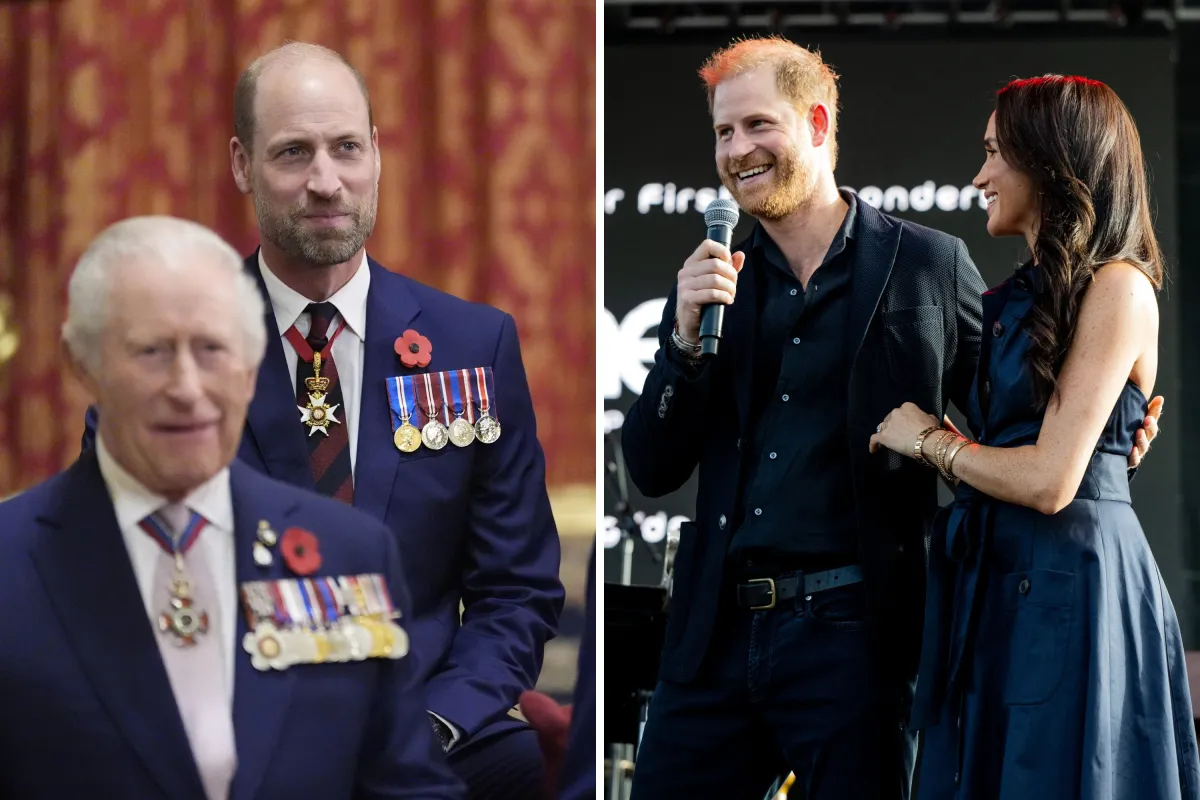
The digital space is undergoing a seismic shift, transforming the way we gather information from the traditional search box to interactive, AI-driven answers. In this new frontier, a fascinating competition is unfolding between the British Royal Family and the Duke and Duchess of Sussex, Prince Harry and Meghan Markle. A recent study conducted by the PR firm 5W AI Communications used Anthropic’s AI platform, Claude, to analyze how both factions are presented to the public. By asking Claude 18 detailed questions about the family, researchers assessed the tone, citation frequency, and overall sentiment of the AI’s responses. The results revealed a clear divide, with the institutional monarchy—represented by King Charles III, Prince William, and Princess Kate—securing a favorability score of 70 out of 100, while Harry and Meghan trailed behind with a score of 51.
This discrepancy highlights how artificial intelligence platforms synthesize vast amounts of online data to construct narratives. While Harry and Meghan actually scored higher than the palace in purely positive responses, they also attracted significantly more negative sentiment from the AI, whereas the palace camp enjoyed a far higher share of neutral, factual reporting. According to Ronn Torossian, founder and chairman of 5W, this reflects a modern evolution of public relations. Where publicists once counted newspaper column inches and tracked media clips, they must now focus on what “the machine” says when prompted. Currently, the AI models suggest an ongoing conflict where the most trusted sources do not favor the Sussexes, ultimately ranking Prince Harry third in overall name mentions behind King Charles and Prince William.
The palace’s dominant position is largely due to structural advantages deeply embedded in the internet’s architecture. The official royal family website, governmental domains like .gov.uk, the historical Court Circular, and massive archives from public broadcasters like the BBC provide a stable, highly authoritative foundation of data. These platforms offer clean, machine-readable records of official engagements and public duties that AI engines are programmed to trust implicitly. Conversely, Harry and Meghan are trying to counter this deeply rooted institutional footprint with relatively new platforms, such as their Archewell website, a Netflix production deal, and personal memoirs. Torossian describes this as an asymmetric battle on digital infrastructure the couple does not own, leaving them at a distinct disadvantage in the foundational layers of the internet.
Despite the current disparity, the Sussexes have a unique opportunity to reshape their digital narrative. A source close to the couple noted that they take a cautious, safety-first approach to AI, particularly regarding privacy and child safety in an unregulated landscape, but are constantly looking for responsible ways to utilize the technology. To actively tilt the scales, AI experts suggest they leverage the way Large Language Models (LLMs) function. Because AI systems place immense value on clear, consistent, and repeated information across verified platforms—such as official websites, YouTube channels, and social media handles—the couple can establish their own primary sources of truth that search engines will prioritize as highly trusted citations.
Furthermore, traditional media dynamics are shifting in a way that could benefit the Sussexes. As major British newspapers—many of which the couple has accused of bias and legally challenged—increasingly place their royal coverage behind subscription paywalls, AI web crawlers are locked out of their content. Because LLMs cannot reliably access paywalled articles, the influence of negative tabloid commentary is diminishing in the AI ecosystem. Instead, these models rely heavily on open-access platforms like Wikipedia and Reddit, which account for nearly 40 percent of AI decision-making. By maintaining a highly visible, open-access, and consistent digital presence, Harry and Meghan can ensure their perspective is accurately captured by the algorithms.
Ultimately, we are witnessing a historic turning point in communications, matching the rise of search engines in the late 1990s. With platforms like ChatGPT processing billions of queries daily, the power to shape public perception is rapidly moving away from mainstream media outlets and into the hands of AI platforms. For public figures like the royal family and the Sussexes, managing their digital footprint is no longer just about handling journalists; it is about building authoritative, machine-readable data. As the technology continues to evolve, the side that best understands how to feed and influence the algorithms will command the narrative in the minds of the next generation.