





The $40 Trillion Milestone: America’s Debt Crisis in Human Terms
The United States has reached a fiscal milestone that would have seemed almost unthinkable just a generation ago. The national debt has crossed $40 trillion for the first time in American history, according to data from the Treasury Department. When you think about what that number actually means, it’s staggering. The federal government has accumulated financial obligations that equal amounts most of us can’t even properly wrap our minds around. To put it in perspective, when Donald Trump first walked into the White House in January 2017, the national debt stood at roughly $19.95 trillion – barely half of where it sits today. That means in less than a decade, federal borrowing has already doubled, and fingers will naturally point in every direction as people try to figure out who deserves the blame. But as is the case with most complex financial situations, no single president or administration carries sole responsibility. We’re all in this together, and the path that got here weaves from war, through recession, emergency spending and tax policies.
The concept of America’s financial obligations deserves explanation. When we speak of $40 trillion in gross federal debt, we’re actually talking about two distinct categories of money. There’s roughly $32.27 trillion held by investors around the world – countries, institutions, and individuals who purchased U.S. Treasury securities in production. The remaining $7.78 trillion consists of intragovernmental holdings, which essentially represents money that federal trust programs like Social Security lend to the treasury. The interest costs attached to this debt have reached budgets estimated at $1.2 trillion for this fiscal year, meaning we’re now spending more on interests owed than many other categories of government. The Congressional Budget Office’s projections show that debt held by the public could reach 101 percent of GDP in 2026 and might hit 120 percent by 2036 if nothing changes. Each percentage point brings with concern about whether government can sustain pulling the same funds to cover both its essential services and its obligations for previous spending.
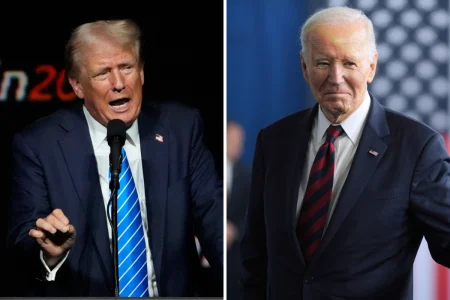
The comparison of how each recent president contributed to this trajectory helps understand just how deeply structural this problem has become. surprisingly conservative mind, perhaps, the largest dollar increases have come from Democratic administrations, with Joe Biden’s four years in the Oval Office seeing debt expand by roughly $8.4 trillion and Barack Obama’s eight years adding approximately $9.3 trillion to the stack. Yet Republican executives have also fuel this fire. Trump will stand responsible for the addition of almost $11.6 trillion when combining his two terms – $7.8 trillion during the first and approximately $3.84 trillion since his return. Even George W. Bush, who served during years of economic rebuilding and two wars, oversaw an increase of just under $5 trillion. No single name is responsible because broader American fiscal positions have to reflect reality. Recessions, wars, emergencies, and interest rates themselves alter the size government ends up borrowing.
Bush inherited some of the surplus years after the 1990s and led the country through violent new challenges after 9/11. There were major tax cuts and then the 2007-2008 financial collapse, a moment where government intervention in the private section was considered necessary to avoid total economic freefall. What’s common was that every white House and both parties in Congress selected measures that would involve spending money to solve problems, believing that eventually prosperity could outpace costs. But that never happened. Instead, we carried emergency responsibilities and obligations into Obama presidency, which was handed the key of Great Recession’s aftermath. That period required major stimulus spending to prevent collapse and unemployment rates that had not been seen in decades. While the GDP eventually recovered, debts continue rushing upward and interest payments began their climb toward being the “most-critical” fixed expense the federal government manages.
Trump’s first term is when beyond fiscal austerity and into new tax operational territory. The 2017 Tax Cuts and Jobs Act reduced the corporate tax rate to 21 percent from 38 percent, which increased deficits. The ground truly became unsustainable entering pandemic in 2020. Let’s remember that about one-third of all debt accumulated since 2017 streams were related to emergency pandemic measures rushed under both Trump and Biden. While some sort of relief obviously had some need, a minimum consensus is and there were many signs of purposeful overspending. Those choices, plus continuing review of mandatory Social Security and Medicaid as well as an accelerating debt interest bill, became the foundation of Biden’s term. That: 4 years were already $8.4 billions accumulating as if pandemic after sustainability issues also flowing. The infrastructure law and clean-energy subsidies represent forward-looking plans, but they also come with lines of credit turned into obligations.
That history follows to now as Trump’s second term approaches a record already. He signed legislation that followed top tax provisions that previously scheduled to expire, and came with a debt ceiling, extending that will add an estimated $4.2 trillion to existing obligations by the mid-2030s. The White House Spokesperson suggests the administration is focused on spending fewer resources and reducing superfluous expenses. Treasury Secretary Scott Bessent has argued that $40 trillion figure holds no intrinsic quality that still allows America to let growth solve the problem. But he does not address sequences where old debt will become permanent interest load. The outlook is more dangerous because additional expenses and structured, mandatory bills will become present unless significant bipartisan changes take shape. The economy won’t expand itself out of fixed repayment. Congress ultimately passes laws that determine taxation and spending, but both sides of the command show fragility to take on needed austerity. That collective inertia remains because the consequences of not acting only grow worse with each year of delay.