





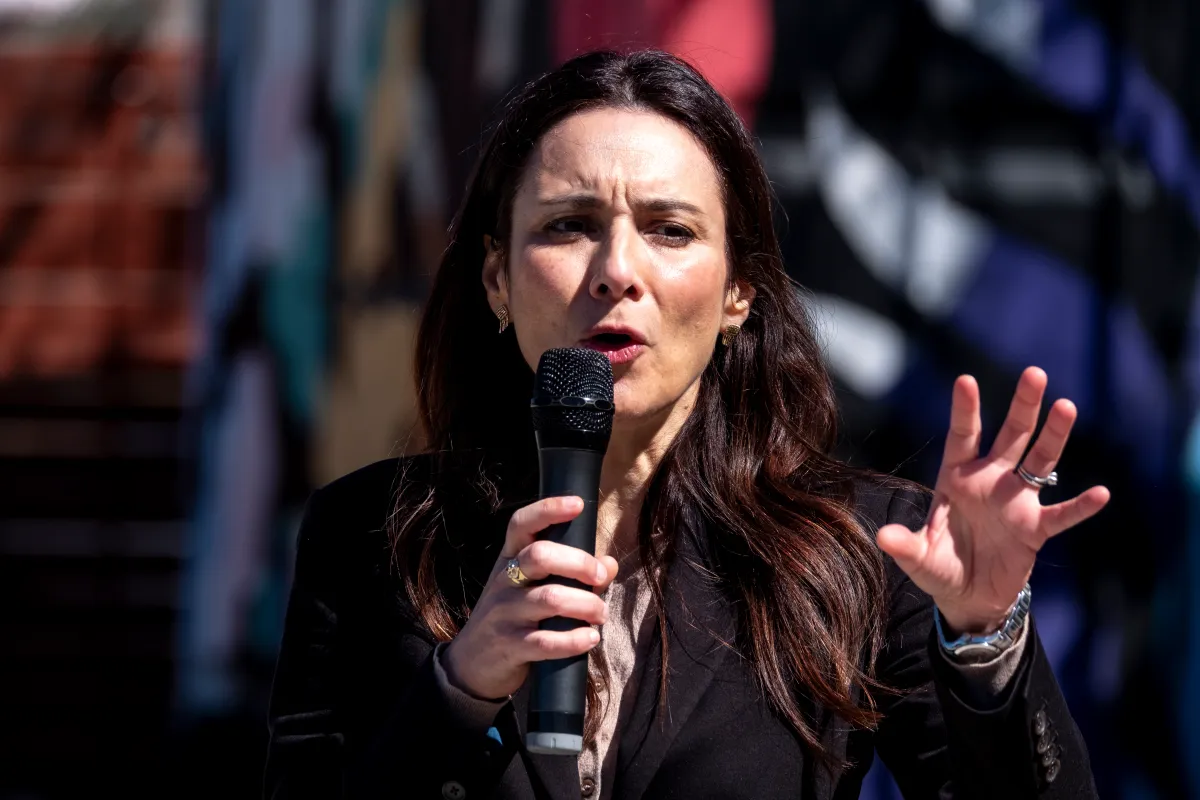
The Lone Star State has long been considered the crown jewel of the national conservative movement, a vast, fiercely independent expanse where Republican hegemony has remained unchallenged at the statewide level for over a generation. Yet, as the nation slowly pivots toward the high-stakes 2026 midterm elections, the political tectonic plates beneath Texas are beginning to rumble with a renewed, tantalizing unpredictability that is capturing national attention. At the heart of this unfolding drama is Democratic State Representative Gina Hinojosa, a relatively low-profile legislator from Austin who has suddenly found herself thrust into the direct line of fire against one of the country’s most formidable conservative titans, Governor Greg Abbott. Historically, campaigns of this magnitude in Texas are treated by national observers as expensive exercises in futility for Democrats, who have repeatedly watched their hopes fade on election night. However, a surging undercurrent of national disillusionment, compounded by Donald Trump’s declining national approval ratings during his second term, has injected a fresh sense of hope and strategic investment into the state. Democrats are beginning to believe that if a national blue wave is to materialize, its peak might just crash against the imposing red wall of Texas. For years, the state has been teasing a political realignment due to shifting suburbs, and Hinojosa’s audacious challenge encapsulates the human struggle of grassroots organizers trying to dismantle a deeply entrenched political machine. It is a story not just of numbers and targeting matrices, but of real-world anxieties—of a state grappling with its identity amid rapid demographic shifts, economic pressures, and a polarized public square where the status quo is facing its most rigorous scrutiny in decades.
This simmering political tension has been brought into sharp focus by a series of recent polls that suggest the race for the governor’s mansion may be far more competitive than conventional wisdom dictates. A highly anticipated survey conducted from June 1 to June 4 by Reconnaissance Market Research, the Siena Research Institute, and Texas A&M University revealed that Hinojosa is trailing Governor Abbott by a mere five percentage points, with Abbott pulling in 49 percent of likely voters to Hinojosa’s 44 percent. While this five-point deficit is a testament to Hinojosa’s surprising resilience, it also underscores the staggering mountain she has yet to climb, particularly regarding her public profile and name recognition. Unlike Abbott, who is comfortably seeking his fourth term and remains a ubiquitous household name, Hinojosa is a blank slate to a massive portion of the electorate; a striking 50 percent of the 807 polled likely voters admitted they had no opinion of her whatsoever, while only 32 percent viewed her favorably and 18 percent unfavorably. In stark contrast, Abbott’s public image is deeply etched into the Texan consciousness, though not entirely to his benefit: 45 percent of voters view him favorably, while a notable 49 percent view him unfavorably. This deep polarization represents a double-edged sword for both campaigns, especially within the poll’s margin of error of ±4 percentage points. Other recent data points reinforce this tight margin; for instance, a Texas Public Opinion Research survey of 1,670 likely voters conducted in late May showed Abbott leading by five points (46 percent to 41 percent), while a Public Policy Polling survey put him up by just four points (48 percent to 44 percent). Even the Barbara Jordan Public Policy Research and Survey Center poll confirmed this narrative, showing a six-point gap (49 percent to 43 percent). These numbers reveal a human truth: Texas voters are increasingly receptive to an alternative, but they are still searching for a clear, defined identity to lead them out of the conservative era.
To truly understand the emotional and strategic weight of this race, one must look back at the ghost of elections past—specifically, the high-octane 2022 gubernatorial bid of Beto O’Rourke. O’Rourke was a political star, possessing a national fundraising apparatus, near-universal name profile from his legendary 2018 Senate run, and a charismatic, high-energy campaign style that filled arenas. Yet, despite summer polling that occasionally showed him within single digits during the 2022 cycle, he ultimately suffered an 11-point defeat, capturing just 44 percent of the vote to Abbott’s 55 percent. For instance, a University of Texas at Tyler poll in May 2022 showed Abbott up 46 to 39, while a Quinnipiac University poll in June showed him up 48 to 43, and YouGov had him leading 45 to 39. The memory of that eventual double-digit loss looms large over the Texas Democratic collective consciousness, serving as a cautionary tale about the mirage of early summer polling and the historical difficulty of winning the state. Critics and supporters alike wonder if Hinojosa is destined to suffer the exact same fate, or if her vastly different political profile might actually play to her advantage. Unlike O’Rourke, who was a highly defined, lightning-rod figure with stubbornly high unfavorable ratings among conservatives, Hinojosa’s relative obscurity gives her a unique opportunity to introduce herself to voters on her own terms, free from the accumulated baggage of previous high-profile national defeats. While O’Rourke struggled to break past his core progressive base in the final stretch, Hinojosa is working to quietly build a broad, sensible coalition of suburban moderates and working-class families. This shift from a cult-of-personality campaign to a localized, issue-focused endeavor represents a fundamental change in strategy, one that hopes to turn Abbott’s familiarity from an asset into an engine of voter fatigue.
Despite the optimistic polling, the physical and financial realities of running a statewide campaign in Texas remain almost incomprehensibly brutal for any challenger. Texas is not a single cohesive political landscape, but rather a collection of massive, distinct, and incredibly expensive media markets stretching from the piney woods of East Texas to the desert of El Paso, encompassing sprawling metropolitan giants like Houston, Dallas-Fort Worth, San Antonio, and Austin. To compete effectively across these regions requires an eye-watering sum of money, and in this arena, Governor Abbott holds an almost unprecedented advantage. He entered the election cycle with a jaw-dropping $106 million war chest, a financial fortress that allows his campaign to dominate the airwaves, blanket digital platforms, and systematically define Hinojosa before she ever has the chance to introduce herself to the broader electorate. This sheer financial disparity is why institutional observers and prediction markets remain deeply skeptical of a Democratic breakthrough in 2026. On major political betting platforms like Kalshi and Polymarket, where thousands of traders risk cold hard cash on political outcomes, Abbott is currently favored with an intimidating 84 percent probability of maintaining his grip on the governorship. These prediction markets act as a sobering counterweight to the hopeful rhetoric of Democratic consultants, aggregating real-money wagers that reflect a hard-nosed belief that when the dust settles, Abbott’s cash, name recognition, and structural advantages will inevitably carry him across the finish line. For Hinojosa, the challenge is not just convincing voters that change is possible, but doing so on a shoestring budget compared to her opponent, relying on grassroots door-knockers and viral digital moments to bypass the multi-million-dollar barrier that stands between her and the electorate.
However, Hinojosa does not have to fight this battle in isolation; indeed, the 2026 political environment is shaping up to be far more hospitable to Texas Democrats than the hostile terrain of previous midterms. A significant source of energy and strategic coordination is expected to come from the fiercely contested Senate race, where progressive star and State Representative James Talarico is building a robust, nationally watched campaign to challenge the controversial Republican Attorney General, Ken Paxton. Recent polling has sent shockwaves through the political establishment, showing Talarico actually leading Paxton by three percentage points (47 percent to 44 percent), a margin that suggests Paxton’s high-profile legal troubles and ethical controversies are finally catching up with him in the eyes of moderate voters. If Talarico can maintain this momentum, his campaign could serve as a powerful rising tide that lifts Hinojosa’s gubernatorial bid, mobilizing a massive, motivated base of young, suburban, and minority voters who might otherwise have stayed home. This down-ballot synergy is further bolstered by national headwinds that are leaving Republicans vulnerable across the country; midterm elections are historically a referendum on the sitting president, and Donald Trump’s sliding approval ratings are threatening to drag down-ballot Republicans with him. On the ground, regular Texans are feeling the squeeze of a stubborn cost-of-living crisis, rising gas prices fueled by geopolitical instability like the ongoing war in Iran, and a general sense of political exhaustion. These everyday, kitchen-table anxieties are eroding the economic argument that has long been the cornerstone of the Republican pitch to Texas voters, opening a window of opportunity for Democrats to present a narrative of renewal, stability, and pragmatic governance.
Ultimately, the destiny of Texas—and the key to unlocking its elusive blue transition—lies in the hands of its rapidly growing Hispanic and Latino population, a demographic that has become the vital swing vote of the state. In recent years, the political allegiance of this community has been incredibly fluid; while Joe Biden carried Texas Latinos by a comfortable 17-point margin in 2020, Donald Trump managed a stunning reversal in 2024, winning them by 10 points through a combination of economic appeals and cultural conservatism. However, early signals suggest that this Republican alignment is incredibly fragile and may already be fracturing under the realities of a second Trump term. A national Pew Research Center poll revealed a dramatic drop in support, showing that only 66 percent of Hispanic voters who supported Trump in 2024 still approve of his job performance—the lowest level of his presidency. In Texas, this buyer’s remorse is highly visible: Talarico enjoys a commanding 10-point lead among Latino voters in recent surveys, while Trump’s approval rating among this group has sunk deeply underwater, with 55 percent disapproving of his performance. In the latest Texas Public Opinion Research survey, Talarico secured a staggering 57 percent to Paxton’s 30 percent among Hispanic voters. For Hinojosa and the broader Democratic ticket, reclaiming these voters is not just a demographic strategy, but a deeply human mission that requires listening to the lived experiences of families who feel caught between two political extremes. By focusing on public education funding, healthcare access, and economic mobility, Hinojosa hopes to convince these communities that their future lies not with the promises of the Republican establishment, but with a new generation of Democratic leaders ready to build a fairer, more inclusive Lone Star State.