


Paragraph 1: The Buzz and the Blueprint
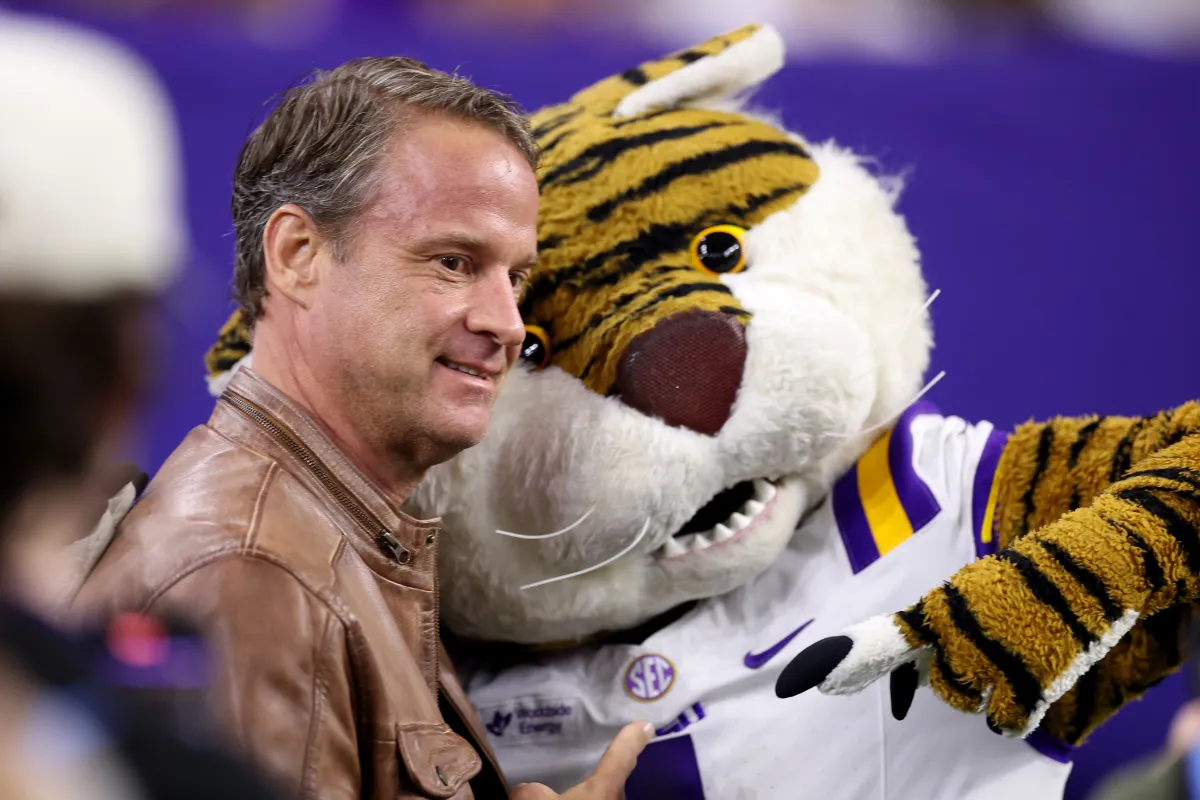
There’s a certain electricity that hums through college football when a program decides it’s time to swing for the fences, and right now, that voltage is absolutely crackling around the LSU Tigers. The arrival of new head coach Lane Kiffin has injected a jolt of personality, bravado, and sheer offensive firepower into a fanbase that already lives and breathes the sport with an almost religious fervor. And the national media, always hungry for a good story, have already crowned this as one of the must-watch narratives of the season. The proof? “College GameDay,” the traveling circus of college football analysis, has unveiled its first three destinations for the 2025 season, and it’s a gauntlet of epic proportions, a televised coronation of the Tigers’ lofty ambitions. The show isn’t just stopping by for a visit; it’s essentially building its early-season schedule around the marquee matchups that LSU finds themselves in the middle of. This isn’t just a mild nod of approval; it’s a full-blown endorsement that the Kiffin era in Baton Rouge is going to be a spectacle, a high-stakes drama with real national championship implications. For the fans, it’s a validation of their hopes; for the team, it’s a spotlight that burns bright, promising to expose every flaw for the world to see. The stage is set not just for a season, but for a storyline that will dominate the conversation from the opening kickoff.
Paragraph 2: The Opening Salvo in the Bayou
The first act of this three-ring circus takes place on September 5th, when the Tigers will host the Clemson Tigers in a battle that pits two of the most storied programs in the country against each other in a clash of the big cats. The venue is Death Valley, LSU’s hallowed home ground, a place so loud that the very earth seems to shake with the roar of 100,000 passionate voices. But here’s the poetic irony: Clemson also calls its home stadium “Death Valley,” a nod to the sweltering, unforgiving heat of its own South Carolina campus. So, this game is literally a fight for the soul of the name, a “Death Valley” showdown of the highest order. For Kiffin, this isn’t just a season opener; it’s a statement game against a program with two national titles in the last decade. The pressure is immense. Kiffin, the self-proclaimed “Portal King,” has rebuilt the roster through the transfer portal, but paper mache reputations mean nothing once the whistle blows. This game will test the chemistry of a team that has been assembled like a fantasy football roster, a collection of star individuals who must learn to play as a cohesive unit. The entire country will be watching to see if the new offense can click immediately against a traditionally stout Clemson defense, or if the high-priced mercenaries will need more time to gel. The atmosphere promises to be electric, a cauldron of anticipation where the first real judgement of the Kiffin experiment will be rendered in the most unforgiving courtroom in college football.
Paragraph 3: A Texas-Sized Interlude and Historic Company
Just when the LSU faithful catch their breath from the Clemson clash, the focus shifts to the second week, but this time, “GameDay” won’t be in Baton Rouge. Instead, the show will travel to Austin, Texas, to set up shop for the Longhorns’ own marquee matchup. While LSU isn’t playing in that particular game, the fact that “GameDay” is there is a crucial piece of the early-season puzzle. This three-week road trip for the show—kicking off in Baton Rouge, jumping to Austin, and then heading to Oxford—represents a historic first. According to ESPN, for the first time since 2002, the first three shows of the season will originate from the campuses of three different preseason AP Top 15 teams: LSU (ranked 11th), Texas (ranked 5th), and Ole Miss (ranked 9th). This is a testament to the sheer concentration of talent and hype in the early-season schedule. It speaks volumes about the national perception of the SEC’s dominance, but more specifically, it showcases the incredible drawing power of Lane Kiffin. The fact that the schedule was crafted in such a way that these three heavyweights would be getting the spotlight opening week after week is no accident. It gives the “GameDay” crew a chance to build a narrative arc, to thread a storyline through a month of football, and at the center of it all is the enigmatic, controversial, and endlessly entertaining figure of Kiffin. He is the connecting thread, the reason why the college football world is so captivated, whether they love him or love to hate him.
Paragraph 4: The Emotional Return to Oxford
Two weeks after the Clemson game, the narrative takes a deeply personal and emotional turn. Kiffin will make his much-anticipated return to Oxford, Mississippi, when LSU faces Ole Miss. This is the kind of storyline that screenwriters dream of: the coach who built a program, who brought the Rebels to the cusp of greatness, who became a beloved figure in a small college town, now returning as the enemy, walking into the lion’s den of the Grove and the hostile crowd at Vaught-Hemingway Stadium. The applause will be mixed with boos, the memories will clash with the present. Kiffin knows every corner of that stadium, every nuance of its crowd, every play call in its playbook—and Ole Miss knows his just as well. This isn’t just a football game; it’s a chess match between a coach and his former pupils. The raw emotion of the return trip against a team that was built in his image will be a fascinating spectacle. Will he get teary-eyed looking at the sideline? Will the pressure get to him? Or will he channel that emotion into cold, calculated revenge? The SEC front office staffer quoted in the report claims that “LSU is almost in a tier of its own this year,” but that tier will be put to the ultimate test in a stadium where the home team will be absolutely rabid to spoil the party. It’s a game that will be defined by mental toughness, and it could easily be the toughest environment LSU faces all season, a place where the ghosts of the past will be haunting every snap.
Paragraph 5: The Costly Construction of a Contender
So how did LSU get to this point of such high expectations? It wasn’t through quiet, patient development. It was through a financial war chest and the aggressive pursuit of talent in the transfer portal. As reported by Chris Hummer and John John, the LSU roster is believed to be the most expensive in the sport, with the total cost likely exceeding $40 million and possibly scratching the $50 million mark in terms of NIL (Name, Image, and Likeness) valuations. This is the new reality of college football, a landscape where players are free agents and the highest bidder often wins. Kiffin, the “Portal King,” has been the most aggressive shopper on the board. He retained returning stars like linebacker Whit Weeks, a tackling machine who provides the defensive anchor. But the splashy moves came on offense. The Tigers brought in quarterback Sam Leavitt from Arizona State, a dynamic playmaker expected to elevate the passing game. They also added offensive tackle Jordan Seaton from Colorado, a massive, athletic protector who is reportedly one of the highest-paid non-quarterbacks in the country at over $4 million annually. And from the SEC rival Ole Miss, they poached defensive end Princewill Umanmielen, a disruption machine off the edge. The business of building a roster has never been more cutthroat. The report even describes how a source offered Seaton a multi-million-dollar deal during his transfer process, only for him to turn it down “like it was almost nothing,” a testament to the insane amount of money being thrown around. It’s a calculated gamble, a high-stakes poker game where the chips are preposterous, and all it takes is one bad season for the entire house of cards to collapse.
Paragraph 6: The Pressure Cooker and the Inevitable Spotlight
With a payroll that rivals professional franchises and a coach known for his brash personality, the expectations for LSU are staggeringly high. The quote from the SEC front office staffer that “LSU is almost in a tier of its own this year” sets the bar not just for a good season, but for a run at the College Football Playoff. Anything less than a berth in the 12-team playoff will be considered a colossal failure. Kiffin has the arsenal—the high-priced QB, the massive offensive line, the playmakers on both sides of the ball—and he has the stage, with “College GameDay” literally following his every move for the first three weeks. This is the ultimate pressure test. Can a team assembled in the transactional chaos of the transfer portal truly forge the bonds of brotherhood needed to survive the grind of an SEC schedule? Can the “Portal King” live up to his hype and out-scheme some of the greatest coaches in the game on a week-to-week basis? And can he handle the emotional weight of returning to Oxford? The answer to all these questions will be played out under the brightest lights in the sport. There is no room for error, no soft landing. As the report succinctly puts it, “No matter what happens, good or bad, a lot of people will be watching.” That is the ultimate understatement. This isn’t just a football season; it’s a referendum on the new age of college football, a case study in how money, personality, and raw talent can be wielded in a desperate and dramatic quest for glory. The circus has come to town, and Lane Kiffin is the ringmaster.