






In the high-stakes arena of Florida politics, a major battle is unfolding over how the state presents crucial financial decisions to its citizens. A Tallahassee judge recently threw a wrench into the works of a highly anticipated property tax cut proposal slated for the November ballot. Leon Circuit Court Judge David Frank ruled that the title and summary for the proposed constitutional amendment, known as Amendment 3 or “Save Our Homes from Excessive Property Taxes,” were packed with misleading language and political spin rather than objective facts. This judicial intervention broke a tense, weeks-long stalemate brought about by a rare bipartisan alliance. Former Democratic U.S. Representative Al Lawson and former Republican State Senator Jeff Brandes united to file a lawsuit, arguing that the ballot’s phrasing was designed to coax and persuade voters into supporting the measure rather than clearly informing them of its real-world consequences. Judge Frank strongly agreed, writing in his 18-page ruling that Florida voters are fundamentally entitled to a fair, clear, and accurate statement to help them make such critical decisions, warning that the current phrasing would rob them of their right to make a truly meaningful choice at the ballot box.
To understand why this legal clash has captured so much attention, one must look at the turbulent history of the tax proposal itself. The measure was born out of intense pressure from Florida’s Republican Governor, Ron DeSantis, who has spent his final months in office aggressively pushing for sweeping property tax reforms, even floating the idea of eliminating property taxes altogether. However, the GOP-led state legislature ended up passing a scaled-back version of the governor’s grand vision. Under the legislature’s compromise, the current $50,000 homestead exemption limit would climb to $150,000 in January 2027, and then jump to $250,000 by January 2028, though these exemptions would not apply to school district levies. It would also direct local governments to limit their spending strictly to “core services” like public safety, education, infrastructure, and environmental preservation. Disappointed that lawmakers did not match his ambitious target of a $500,000 exemption, DeSantis distanced himself from the campaign, choosing not to actively promote the amendment. Despite his step back, the measure is still headed to the voters this autumn, requiring a supermajority of at least 60 percent to pass and alter the state’s constitution.
While a tax cut sounds universally appealing on the surface, the proposal has drawn fierce resistance from a broad coalition of critics who warn of devastating side effects. State economists have run the numbers and estimated that the amendment could starve local governments of $5 billion in tax revenue in its very first year, with that cumulative loss ballooning to nearly $11 billion by 2031. This massive shortfall directly threatens the very lifelines of local communities—essential services like public safety, emergency medical response, public schools, library systems, road maintenance, and parks. First responders across the state have raised the alarm, arguing that public safety should never be treated as collateral damage in political games. The Florida Fraternal Order of Police, representing thousands of law enforcement officers, publicly opposed the amendment, expressing deep concern over how cities and counties would keep funding police and emergency services. They were joined by the Florida Sheriffs Association and the Florida Professional Firefighters, whose leadership emphasized that while tax reform is a worthy discussion, it must never compromise the reliable funding needed to protect families and keep neighborhoods safe.
The core of the legal battle, however, lies in the deceptive way the ballot summary was originally written by state lawmakers. The drafted text was loaded with loaded, highly subjective words designed to paint the measure in an overwhelmingly positive light. For example, the title boldly proclaimed it would “Save Our Homes From Excessive Property Taxes,” a phrase Judge Frank and critics flagged as pure political rhetoric, noting that “excessive” is a matter of opinion, not objective law. Furthermore, the summary claimed the amendment “benefits Florida taxpayers” as a whole, when in reality, it only offers relief to a specific group of people: established homeowners. It also promised to “protect small businesses” and “ensure fairness for Florida residents,” statements that the court found to be outright fabrications. In truth, the amendment offers no unique protections for small businesses, and it actually creates a unequal system for residents by forcing newcomers to wait five years before they can qualify for the increased homestead exemption—a rule designed to prevent temporary residents or “snowbirds” from immediately reaping tax benefits at the expense of long-term locals.
Beyond the courtroom drama, the debate highlights a profound human struggle over the social contract in rapidly growing states like Florida. When local governments lose billions of dollars in property tax revenue, they are forced to make a painful choice: either deeply cut public services or find other ways to make up the cash. Typically, this means raising local fees, utility taxes, or sales taxes, which shifts the financial burden directly onto the shoulders of renters, young families trying to buy their first homes, and lower-income residents who do not benefit from homestead exemptions. Critics warn that the average Floridian might save a few dollars on their property tax bill, only to pay much more for basic utilities, wait longer for an ambulance in an emergency, drive on crumbling roads, and see local parks fall into disrepair. This reality turns the dream of easy tax relief into a complicated math problem where the most vulnerable residents often end up paying the highest price.
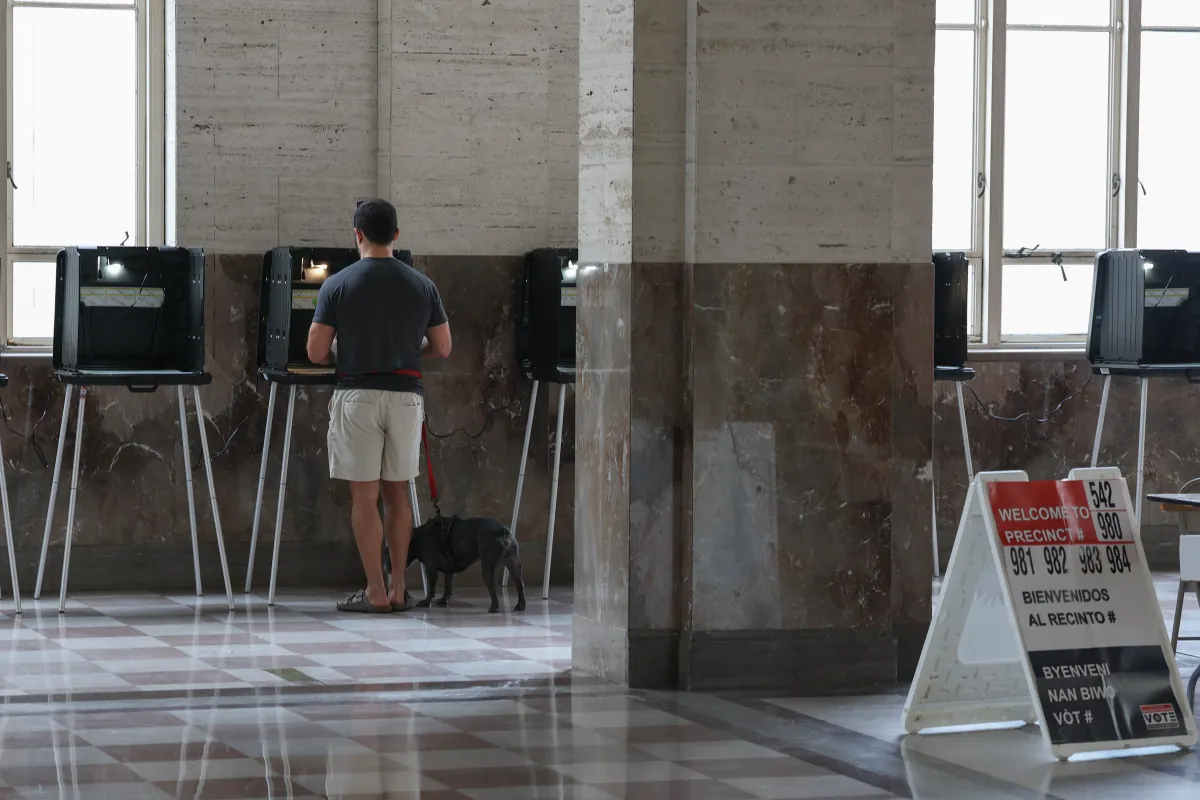
With the November election rapidly approaching, the state is now on a ticking clock to fix the ballot’s flawed wording. Under Florida law, the state’s legal representatives have just ten days from the ruling to rewrite the summary, unless they choose to launch an appeal. Jamie Cole, the attorney representing the non-profit group “Save Our Voters From Misleading Ballot Language,” expressed great satisfaction with Judge Frank’s precise and well-supported ruling. Cole emphasized that the goal of the lawsuit was never to block citizens from voting on the tax cut, but rather to ensure that when they enter the voting booth, they are met with neutral, honest facts rather than a political sales pitch. As the state decides whether to accept the judge’s order or fight it in an appellate court, the eyes of millions of Floridians remain fixed on the ballot. Ultimately, the battle over Amendment 3 serves as a powerful reminder that in a healthy democracy, the language used to ask for the public’s consent must be as transparent, honest, and fair as the laws we expect to live by.