





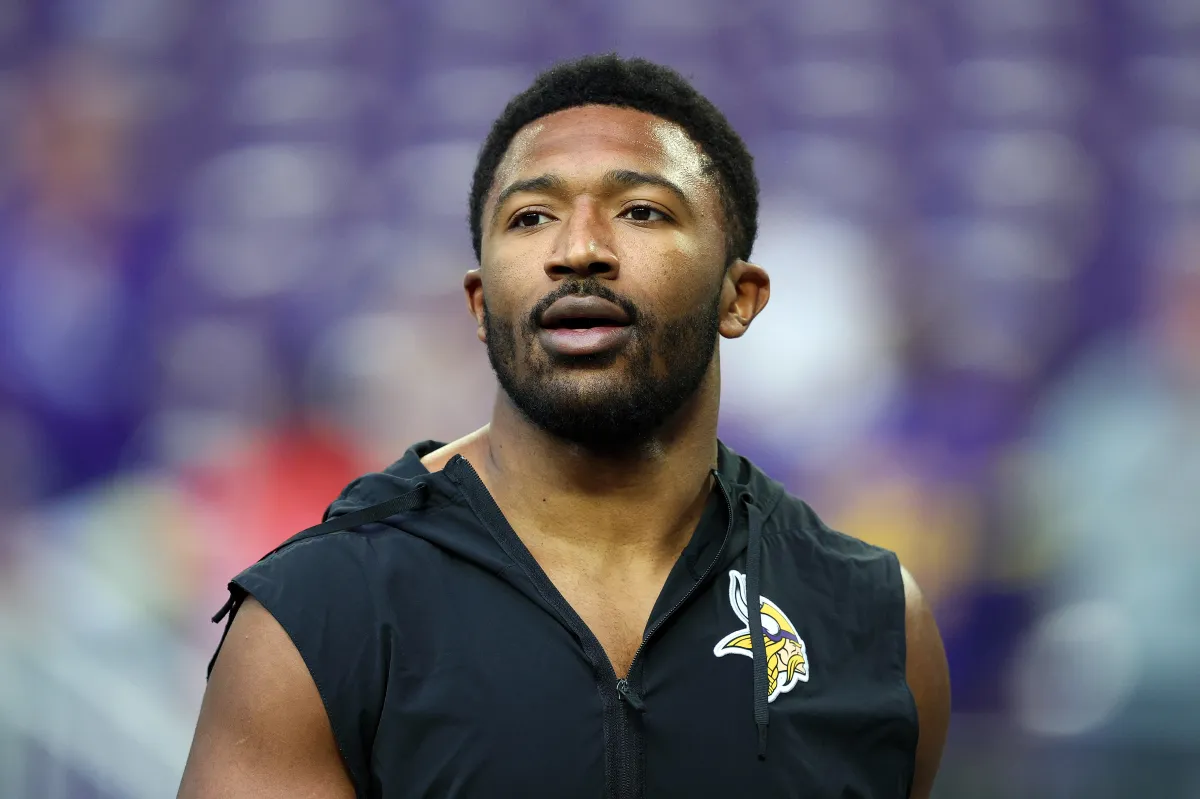
Philadelphia is a city that has always understood football on a deeply emotional level. The Eagles aren’t just a team there; they are a shared heartbeat, a source of collective pride, and sometimes, a collective heartbreak. That’s why this past offseason felt so intoxicating. Under the steady, brilliant hand of defensive coordinator Vic Fangio, the Eagles had already built one of the most feared defenses in the NFL. Fangio, a longtime master of schematic chess, had guided the unit all the way to a Super Bowl victory in 2025, cementing his place in Philadelphia lore. The defense was fast, ruthless, and intelligent. It seemed like the perfect formula to keep the Eagles in contention for years. And then, in April, the front office decided to add more fuel to the fire. The team traded for Minnesota Vikings edge rusher Jonathan Greenard, bringing in a proven playmaker who could theoretically make a great defense unstoppable. The news was electric. Greenard immediately signed a four-year, $100 million extension to remain in Philadelphia through the 2029 season, with a jaw-dropping $50 million guaranteed. It felt like a statement of intent: the Eagles weren’t just content with one ring. They were chasing dynasty status. Fans allowed themselves to dream of a defense that would destroy opposing quarterbacks with waves of pass rushers, a defense that would make the rest of the NFC tremble.
But football, as always, has a way of humbling even the most optimistic franchises. Just as training camp was about to begin, the soaring excitement came crashing down. Greenard had been working in the weight room, doing what professional athletes do every day in the offseason, pushing his body to build the strength needed to survive an NFL season. Somewhere in that routine, disaster struck. He suffered a pectoral strain, an injury that sounded almost mundane at first but turned out to be far more troubling than anyone expected. The Eagles placed Greenard on the Physically Unable to Perform list, a designation that cast a shadow over the entire team’s preparation for the season. At first, there was hope that it was merely a precaution, a way to manage him carefully during the summer. But as the practices went on, Greenard never appeared. The imposing pass rusher, the new crown jewel of the defense, was nowhere to be seen. Then came the worrisome words from Fangio himself, words that no Eagles fan wanted to hear. When asked directly whether he was concerned Greenard could miss the start of the regular season, Fangio replied with a blunt, resigned “Yeah.” It was the kind of answer that lacks the usual coach-speak optimism, and it sent a chill through the fanbase. Fangio added, “I don’t know when Greenard will be back. You know, that injury he got in our weight room is going to take some time to heal.” There was no timetable, no reassuring marker on the calendar. Just uncertainty, the cruelest opponent of all.
The calendar makes this even more agonizing. The Eagles open their season on Sunday, September 13, against their bitter NFC East rivals, the Washington Commanders. There is nothing ordinary about a Week 1 game against Washington; it’s a divisional showdown that carries weight all season long. Going into that game without one of your best defensive players is the last thing any team wants. But the potential disaster doesn’t stop there. NFL rules add another layer of anxiety to the situation. If Greenard remains on the PUP list past the final roster deadline on August 30, he will have to be moved to the Reserve/PUP list, which would force him to sit out at least the first four games of the regular season. That means no Week 1 against the Commanders, no early-season statement games, no chance for Greenard to immediately show why the Eagles paid him $100 million. The earliest possible return would be October, and even that isn’t remotely guaranteed. For a defense that relies on constant pressure and relentless pursuit, losing a key edge rusher for a quarter of the season is a massive blow. It changes everything. Opposing offensive coordinators can breathe a little easier. Quarterbacks in the NFC East can step up in the pocket without looking over their shoulder for No. 93. The Eagles built their entire defensive identity around getting after the quarterback, and now they might have to do it with one hand tied behind their back.
What makes this so painful for Philadelphia is how special Greenard has been in recent years. This isn’t just some marginal player who happened to get paid; this is a genuine superstar of the pass-rushing arts. Since the start of the 2023 season, covering his time with the Houston Texans and then the Minnesota Vikings, Greenard has racked up an astonishing 27.5 sacks. That puts him in rare air alongside names like Will Anderson Jr., Maxx Crosby, and Aidan Hutchinson. To be mentioned in that company is no accident. It requires technical mastery, explosive athleticism, and an almost obsessive work ethic. Greenard earned his first Pro Bowl selection in 2024, and if you look at the stat sheet from that season, it’s easy to see why. He recorded 59 combined tackles, 12 sacks, and four forced fumbles. He wasn’t just collecting numbers; he was changing games. Big moments demanded big answers, and Greenard provided them again and again. He has a knack for showing up when it matters most, for delivering that crucial sack on third down, for stripping the ball in a tight contest. That kind of disruptiveness is impossible to replace. It’s an energy, a presence that affects every play even when he isn’t getting to the quarterback. Offenses have to account for him, to scheme around him, to chip him with running backs and tight ends. Without him, the entire dynamic of the Eagles’ defense shifts, and not for the better.
For Fangio and the Eagles, the challenge now is to find a way to survive early without their new star. Fangio is one of the greatest defensive minds in football history, and he has proven time and again that he can squeeze production out of unexpected players. His system is built on discipline, deception, and taking away the quarterback’s easy answers. He rarely blitzes as recklessly as other defensive coordinators; instead, he generates pressure with four-man rushes, trusting his front line to win one-on-one battles. That strategy requires elite pass rushers, and losing Greenard puts a strain on the entire structure. Perhaps the Eagles will turn to a committee approach, rotating multiple edge defenders in hopes that fresh legs can make up for lost talent. Perhaps young players will be asked to step up before they’re truly ready. Perhaps the defense will have to lean even more heavily on its secondary and bend-but-don’t-break principles. But here is the uncomfortable truth: no matter how brilliant the scheme, there is no substitute for a genuine game-wrecker. The Eagles may still be a good defense without Greenard, but good isn’t the standard. The standard is a Super Bowl. And if Greenard isn’t on the field, the road back to the championship becomes significantly steeper. Every missed game in September could be the difference between home-field advantage and a brutal road playoff game. Every absence inches the team closer to a season that might end in disappointment, not confetti.
At its heart, this is a story about the fragility of football dreams. Jonathan Greenard did everything right. He worked hard, earned his extension, and prepared to help his new team win. In a single second, under the harsh fluorescent lights of a weight room, so much changed. There is no villain here, no bad coaching decision, no locker room drama. Just the cruel randomness of an unpredictable sport. Eagles fans can only wait, and hope, and refresh their phones for any scrap of positive news. The long-term picture remains bright; Greenard is under contract through 2029, and if he returns healthy, he’ll have plenty of time to make his mark in Philadelphia. But the short-term anxiety is real. The season is right around the corner, and a beloved team is facing the very real possibility of starting without its most exciting new weapon. The players in that locker room will tell you they have enough to overcome it. Fangio will certainly conjure up a game plan to keep things respectable. But as the September sun rises over Lincoln Financial Field, one empty spot on the roster will be impossible to ignore. Football is a game of inches, and sometimes those inches are measured in healing muscles and quiet patience. For now, the Eagles are holding their breath, hoping that their new star will be back before the season slips away. And in Philadelphia, that hope is as loud as it is fragile.