





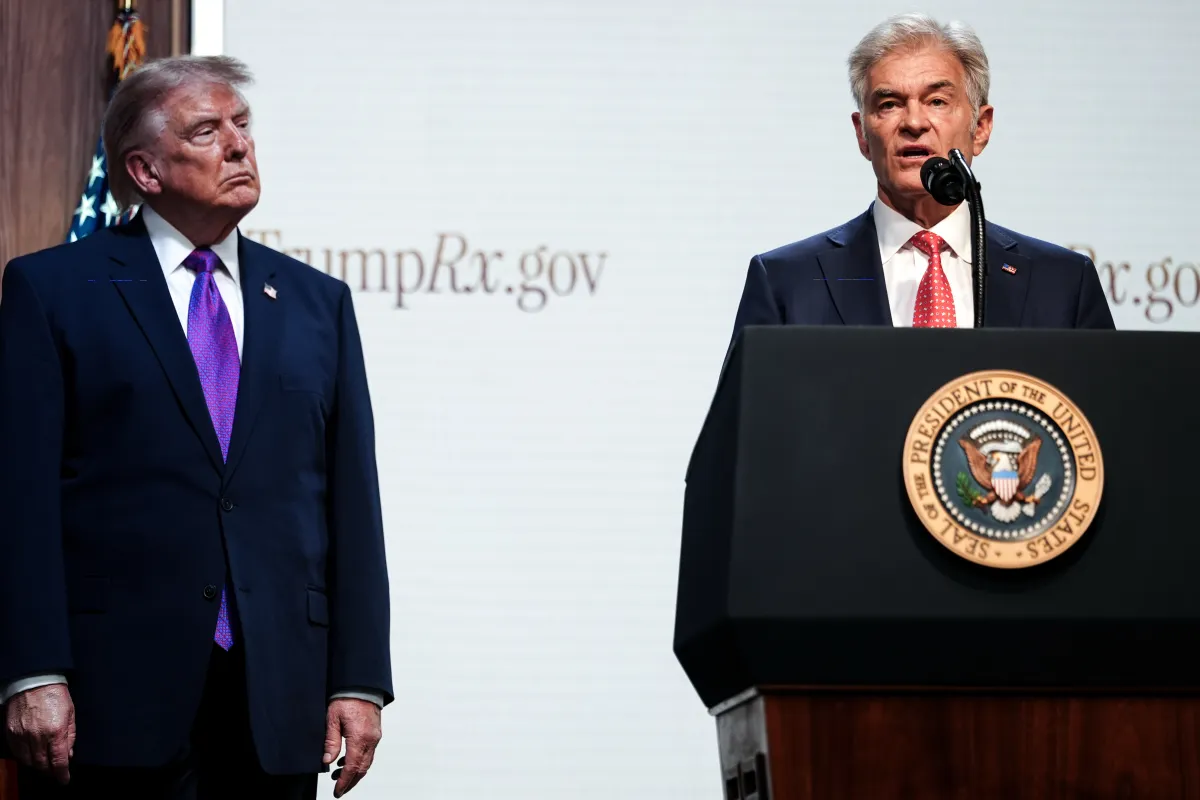
At the intersection of high-stakes global politics and the relentless, democratic march of human aging, a familiar drama unfolded inside the White House briefing room on Tuesday, capturing the attention of a nation deeply curious about the vitality of its leadership. Dr. Mehmet Oz, acting not just as a newly minted high-profile administrator of the Centers for Medicare and Medicaid Services but also drawing on his decades of experience as a prominent cardiothoracic surgeon, stood before a crowded room of inquisitive journalists to deliver an overwhelmingly glowing report on the physical health of President Donald Trump. According to Oz, the seventy-nine-year-old commander-in-chief is in “spectacular” health, exhibiting an “excellent” physical condition that allegedly defies the usual wear, tear, and cognitive deceleration that typically accompanies a long life lived in the high-stress public eye. This latest announcement followed Trump’s fourth official medical checkup of his current term at the prestigious Walter Reed National Military Medical Center—a recurring clinical trip that has rapidly transitioned into a highly choreographed ritual of political reassurance. The iconic press briefing room, usually a battleground of fiscal policy and foreign affairs, temporarily transformed into an impromptu medical forum focused on the biological limits of the human body and the demanding, physical expectations placed upon the leader of the Western world. For generations, the cardiovascular and mental fitness of American presidents has been treated as a matter of critical national security, but behind the dry medical terminology and official memos lies a deeply human narrative of a man navigating the natural, undeniable vulnerabilities of advanced age under a relentless microscope. Trump, who has spent his entire life projecting an unshakeable image of physical dominance and business-like resolve, now finds himself at a historical milestone where his personal stamina is constantly analyzed by a global audience monitoring his every step, gesture, and syllable, turning simple medical checks into high-stakes political theater.
Addressing the growing skepticism of reporters who questioned the unusual frequency of the president’s return trips to the medical center, Dr. Oz offered an intriguing glimpse into the psychology of a leader who views his personal biology through a competitive lens. When asked why Trump seemed to require such frequent evaluations, Oz smiled warmheadedly and suggested that the president simply “likes the results,” enthusiastically noting that the commander-in-chief “aces the test every single day” and possesses a deeply rooted, curious desire to ensure that every biological marker is trending in the right direction. This unique characterization paints a picture of a man who approaches his own aging body with the exact same meticulous, numbers-driven focus that defined his legendary career in international real estate and television. For Trump, clinical results are apparently not just indicators of wellness; they are scores to be mastered, tangible metrics of victory in a lifelong, highly personal battle against the slow inevitability of physical decline. Oz emphasized that this meticulousness is a defining personality trait, explaining to reporters that Trump genuinely “wants to know all the numbers” to remain completely ahead of the curve. In a broader, more philosophical sense, this relentless pursuit of perfect health metrics highlights a very human and universal vulnerability: the profound desire to maintain control over our bodies when confronted with the passage of time, using modern science as a shield against the natural aging process. By framing these frequent medical consultations as a sign of laudable personal discipline rather than underlying frailty, Oz sought to reshape the public narrative of senior leadership, arguing that the extraordinary political energy and mental acuity Trump displays on a daily basis are the direct consequences of an exceptionally robust physical foundation.
Yet, despite the glowing remarks, highly optimistic framing, and energetic defense presented by the administration’s spokespeople, the fundamental physical realities of a seventy-nine-year-old body cannot be completely masked by political spin or polished public relations campaigns. Public curiosity has been consistently fueled by visible outward signs of aging that would be entirely unremarkable in millions of ordinary senior citizens but are magnified ten-thousand-fold when displayed on a global presidential stage. Observers have frequently pointed to noticeable bruising on the president’s hands, as well as past clinical reports indicating a tendency toward leg swelling—a trio of symptoms that medical professionals quickly recognize as classic indicators of chronic venous insufficiency, a highly common, mostly harmless condition where veins lose some efficiency in returning blood to the heart. In the everyday world, a grandparent experiencing venous insufficiency or minor skin bruising would receive simple, routine medical advice to elevate their legs, wear comfortable support socks, or take minor precautions without ever triggering a national news cycle or an international stock market reaction. However, when the individual experiencing these normal physical events holds the nuclear codes, these completely natural, biological milestones are instantly transformed into topics of intense geopolitical scrutiny, academic debate, and internet speculation. This stark contrast highlights the agonizing personal cost of a lifetime spent in public service, where the quiet dignity of growing older must survive the harsh, unyielding glare of high-definition cameras and partisan division. It serves as a powerful reminder that beneath the grand historical gravity of the presidency, every leader is ultimately bound to the exact same biological realities, fragile venous networks, and thinning skin cells as the most ordinary citizens they represent, proving that time makes no exceptions for power or prestige.
This delicate, ongoing dance between essential public transparency and corporate political preservation is of course not a new phenomenon in American history, but rather a continuation of a long presidential tradition of carefully managed medical disclosures. Throughout the history of the modern presidency, administrations have consistently exercised broad, unilateral discretion over what specific health details are released to the public and which are kept strictly confidential behind closed clinic doors, creating an inevitable, democratic tension between a citizen’s right to know if their leader is fit to serve and an individual’s basic right to medical privacy. Historically, White Houses have gone to extraordinary lengths to conceal severe physical and mental ailments—ranging from Franklin D. Roosevelt’s advanced cardiovascular disease and paralyzing polio, to Woodrow Wilson’s completely debilitating stroke, and John F. Kennedy’s highly guarded battle with Addison’s disease. In our modern, hyper-connected era, while the public is gifted with highly detailed, official-looking memos detailing robust cardiac, pulmonary, and neurological function, these documents are still highly curated documents designed by political communications teams who recognize that even a minor perception of physical vulnerability can rapidly degrade a leader’s political authority. While Dr. Oz and the president’s medical team continue to vigorously assure the general public that Trump’s cognitive test scores are perfect and his physical stamina is unmatched, independent experts and political historians wisely note that these official statements are inherently designed to paint the most flattering portrait possible, revealing a collective societal discomfort with admitting that our leaders possess the same ordinary mortal limitations as the rest of humanity.
The national conversation surrounding the president’s personal health and physical capacity is rapidly taking on a profound, historic significance as June 14 approaches, the monumental day when Donald Trump will celebrate his milestone eightieth birthday. Crossing this demographic threshold will officially make him the oldest person to ever actively serve as the President of the United States, a milestone that completely challenges and redefines our long-held cultural expectations regarding retirement, aging, and the twilight years of a career. In almost any other professional walk of life, turning eighty is universally celebrated as a time for stepping away from the daily grind, enjoying the quiet comfort of family, reflecting on a lifetime of personal achievements, and embracing a slower, more deliberate, and meditative pace of living. Instead, Trump is actively navigating a grueling, high-intensity schedule packed with combative political rallies, constant cross-country travel, and the immense, overwhelming physical and mental responsibilities associated with managing a modern superpower. This sharp juxtaposition forces us to reexamine our contemporary societal perceptions of the elderly, challenging traditional assumptions about what an octogenarian can, should, or is expected to achieve in modern society. While his enthusiastic supporters view his unrelenting stamina as a brilliant and inspiring testament to individual human capability and the power of modern wellness, his critics interpret his age and visible physical wear as a critical vulnerability, posing difficult but necessary questions about the actual physical and cognitive demands of the presidency in a rapidly shifting, highly dangerous global landscape. Ultimately, this milestone is far more than a simple personal birthday for Trump; it serves as a massive cultural mirror, prompting a needed national conversation about our deep-seated biases regarding age, wisdom, and the true physical capacity required to lead a diverse, modern nation of over three hundred million people into an uncertain future.
Ultimately, the ongoing public discussions surrounding the president’s physical condition—so passionately and eloquently defended by Dr. Oz in the White House briefing room—reveal a much more profound and universal truth about the intersection of humanity, temporal power, and the natural passage of time. No matter how many complex cognitive tests a political leader manages to “ace,” and regardless of how frequently a personal physician declares their biological status to be “spectacular,” the human body remains fundamentally subject to the silent, unyielding, and completely democratic laws of nature. The swirling debate over Trump’s wellness is a poignant reminder that high office is not merely a test of intellectual ideology, strategy, or political policy, but an extraordinary, near-inhuman test of physical and psychological endurance that pushes the biological limits of human capability to their absolute edge. As the president prepares to cross into his eighth decade under the brightest, most unforgiving spotlight on earth, the public must continually balance the highly optimistic assurances of political allies with the natural, observable signs of an incredibly active and stressful life. Whether we choose to view the frequent, meticulous checkups at Walter Reed as proof of a highly proactive leader staying ahead of the curve, or as a calculated defensive strategy against the undeniable realities of time, these events highlight the core physical vulnerability that connects all human beings. In the final analysis, the story of a president’s health remains one of the most accessible and comforting human narratives in all of modern politics, gently reminding us that beneath the grand speeches, the global crises, and the endless noise of partisan warfare, there resides a real human being navigating the very same journey of aging, the same physical vulnerabilities, and the same fundamental hope for health that binds every single one of us together.