


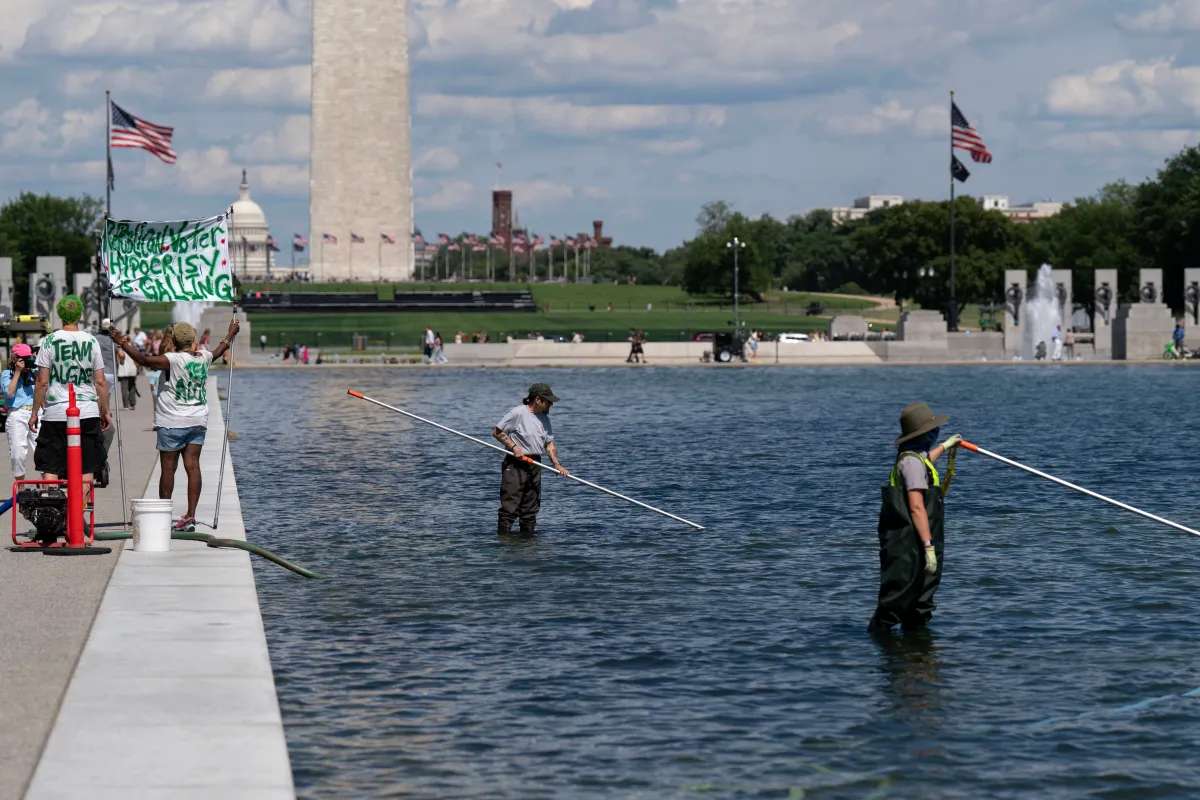
The Lincoln Memorial Reflecting Pool has long served as a sacred canvas of American history, reflecting both the sky above and the collective aspirations of a nation. Recently, however, this iconic landscape became the center of a multimillion-dollar disappointment when a highly anticipated $14 million renovation failed to deliver on its promise. Instead of the pristine, “American flag blue” waters designed to dazzle visitors ahead of the United States’ upcoming 250th anniversary celebrations, the pool rapidly deteriorated into a murky, pea-green eyesore. Just days after the basin was refilled, tourists who had traveled from all over the world to stand in the shadow of Abraham Lincoln were greeted not by a shimmering mirror of democracy, but by a stagnant, algae-choked swamp that raised immediate questions about the quality and durability of the expensive overhaul.
As public dismay and media scrutiny intensified, Donald Trump took to his social media platform, Truth Social, to offer a highly dramatic and politically charged explanation for the pool’s sudden decline. Defending his administration’s extensive efforts to clean, beautify, and secure the nation’s capital, Trump bypassed standard environmental explanations, claiming instead that “real problems with vandalism” were to blame. In a series of characteristic, finger-pointing remarks, he alleged that unknown bad actors had used chemical agents to intentionally damage the newly laid basin lining. Trump even directed his anger at a specific individual, accusing ABC News Chief Washington Correspondent Jonathan Karl of personally sabotaging the monument by sticking his hand into the pool and attempting to rip the rubber coating off the concrete floor.
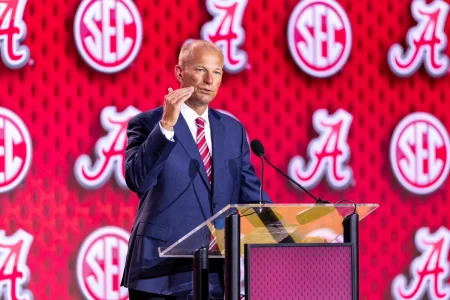
The bizarre allegations quickly swept through the media, transforming a civil engineering setback into a polarized cultural battleground. Appearing on CNN with host Kaitlan Collins, Republican strategist and former George W. Bush adviser Scott Jennings fiercely validated Trump’s concerns, arguing that political animosity had driven people to madness. Jennings lamented that political polarization has reached a point where individuals harbor so much hatred for Donald Trump that they would willingly desecrate an iconic national monument and destroy the surrounding lawns just to make the administration look bad. Describing these alleged vandals as “broken-brained,” Jennings praised the efforts to clean up Washington, D.C., and passionately argued that those responsible for damaging the grounds should face swift prosecution and jail time.
While the political arena erupted with accusations of sabotage, environmental and lake management experts stepped forward to offer a much more grounded, scientific explanation for the bright green water. John Wilson Jr., the president of Aqua Doc Lake and Pond, explained that the rapid onset of an algae bloom is actually a predictable biological response when filling a massive, shallow concrete basin. When untreated city water is pumped into a stagnant, sun-exposed environment, the chlorine quickly evaporates, leaving behind a blank biological slate. With no natural aquatic plants to filter corporate nutrients, no beneficial bacteria to maintain ecological balance, and the intense summer sun warming the shallow water, the pool becomes a perfect incubator for opportunistic algae, making a massive bloom almost inevitable during the initial startup phase.
Compounding the visual embarrassment of the green algae was the physical peeling of the pool’s newly applied blue surface coating, which added a layer of material decay to the environmental crisis. Visitors to the National Mall began noticing blue fragments of the synthetic lining floating in the water and washing up along the pool’s stone edges. The human element of the disaster became painfully clear as tourists, curious about the peeling debris, were seen reaching into the shallow water to handle and pull away loose pieces of the expensive coating, exacerbating the structural damage. While official investigators struggled to determine whether the peeling was caused by cutting-edge material failure or intentional human tampering, the crumbling state of the landmark became a physical symbol of the challenges facing public infrastructure projects.
Despite the intense finger-pointing and the biological setbacks, a round-the-clock restoration effort is currently underway to clean the water and repair the damaged lining before the peak tourist season takes full effect. National Park Service crews have been working tirelessly, deploying advanced water treatments—including hydrogen peroxide applications and ozone-based filtration systems—to clear the algae and restore clarity to the landmark. While administration officials have urged patience, framing the green transition as a “normal startup process” associated with reviving dormant water supply lines, Trump took a more triumphant tone, promising that the algae is already mostly eradicated and that full repairs will be completed early next week. Ultimately, the scramble to restore the Reflecting Pool highlights the immense pressure on officials to keep America’s historic stage pristine, reminding us that even our most enduring monuments require constant vigilance against both the elements of nature and the turbulence of human politics.