







Here is a humanized and expanded summary of the provided text, structured into six distinct paragraphs.
—
The journey through aging is often painted with broad strokes of forgetfulness and frayed nerves, but a new study offers a more nuanced, and somewhat surprising, portrait of what those early signs might look like. It turns out that the shadow of Alzheimer’s disease may not be cast first over our memories, but over our moods. This research suggests that a creeping sense of depression or a persistent low mood could be an early whisper of the brain changes that eventually lead to Alzheimer’s, arriving years before the more obvious cognitive slips like misplacing keys or forgetting a name. The study zeroes in on a specific brain protein, known as tau, which has long been a suspect in the disease’s progression. The key insight, published in the Journal of Neuroscience, is that in people who are still cognitively healthy, a rise in depressive symptoms tracks closely with an increase in tau buildup in the brain, even while their memory and thinking abilities remain perfectly intact.
To understand this, it helps to see tau not as a villain, but as a kind of internal scaffolding protein. In a healthy brain, tau helps stabilize the internal structure of neurons, acting like the beams of a house. But in Alzheimer’s disease, these proteins become abnormally twisted and clumped together, forming what are known as “tangles.” These tangles disrupt the neuron’s internal transport system, effectively gumming up the works and preventing essential nutrients and signals from moving around. This damage is a primary driver of the cognitive decline we associate with the disease. For years, the scientific focus has been on measuring this damage through cognitive tests—asking someone to recall a list of words or draw a clock. But this new research suggests that the emotional brain, the circuits that govern our feelings, may be more sensitive to the very earliest stages of tau buildup than the circuits responsible for higher-order thinking.
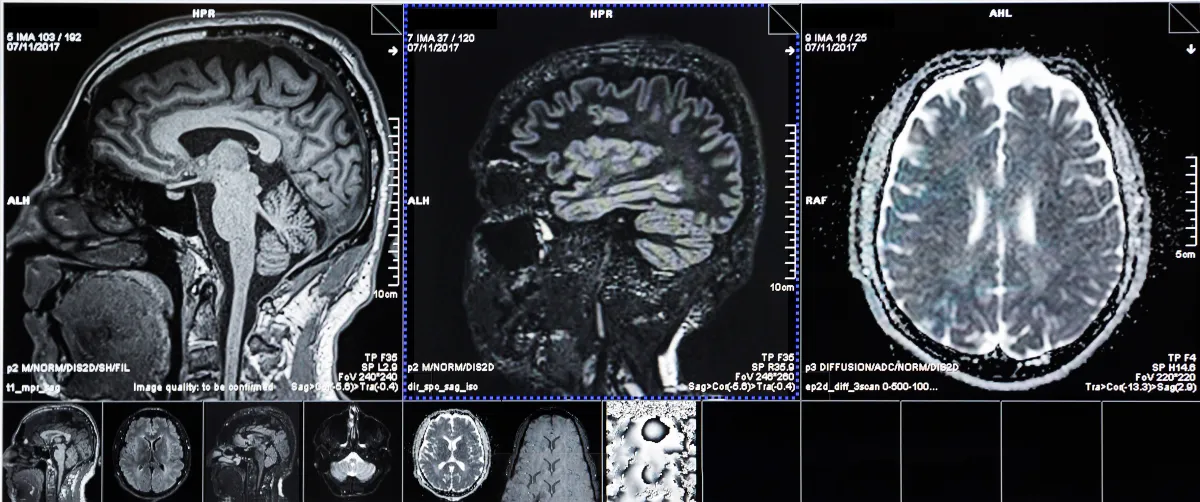
The researchers, led by a team including Teodora Markova from Brandeis University, dove into a treasure trove of data from a large-scale, long-running project called the Alzheimer’s Disease Neuroimaging Initiative. This initiative has been meticulously tracking a large group of older adults for years, some with no memory problems, some with mild cognitive impairment (a condition that often precedes Alzheimer’s), and others with full-blown Alzheimer’s dementia. What makes this dataset so powerful is that it includes both brain scans that can detect the presence and location of tau protein in living people, and annual assessments of their mental health and cognitive function. By analyzing these two streams of data side-by-side, the team could look for patterns and see which changes came first. Did a person’s mood start to dip around the same time they showed a spike in tau buildup? Or did the tau accumulation happen after the depressive symptoms began?
What they found was a striking and specific correlation. In the group of participants who were cognitively normal at the start of the study, increases in depressive symptoms were tightly coupled with increases in tau levels in the brain. The more quickly tau was accumulating, the more quickly their scores on depression scales rose. This relationship was powerful and held up even after accounting for other factors like age and general health. However, this pattern completely vanished in the participants who already had mild cognitive impairment or Alzheimer’s disease. In these groups, there was no longer a strong link between the progression of their mood symptoms and the progression of tau buildup. This suggests that the signaling between tau and mood is a phenomenon unique to the earliest, “pre-symptomatic” phase of the disease. It’s as if the emotional centers of the brain are the first to sound the alarm, but once the disease has taken a firmer hold and cognitive decline is apparent, other, more dominant factors drive the clinical picture.
So, what does this mean for the future of Alzheimer’s care? It challenges the common perception of depression as merely a reaction to the stress of aging or a response to a fading memory. Instead, it reframes depression as a potential, and perhaps primary, part of the disease process itself. The implications are profound. It suggests that a sudden, new, or unexplained onset of depressive symptoms in an older person—even without any noticeable memory problems—could be a significant early warning sign. This is not to say that every case of late-life sadness is a precursor to Alzheimer’s, as depression is a complex condition with many causes. But it does mean that persistent low mood should be taken seriously, not just as an emotional struggle, but as a potential brushstroke on a larger clinical canvas that warrants a check-up with a doctor. It gives healthcare providers another data point, a “red flag” that might prompt them to dig deeper or begin more focused monitoring.
This study is a powerful call to shift our perspective on the early detection of Alzheimer’s. We often focus on the mind as a purely cognitive organ, a machine that stores and retrieves information. But this research reminds us that the brain is also the seat of our emotions, and that these emotional changes can be just as informative as cognitive ones. The researchers are the first to acknowledge the need for more work, and they call for longer studies to track more people over a greater span of time. The goal is to understand if these mood changes can reliably predict who will go on to develop dementia and who won’t. They also want to explore the underlying biological mechanisms driving this link. But above all, this research offers a new and hopeful lens on the disease. By recognizing an “emotional signature” of early Alzheimer’s, we may be able to spot the disease years earlier, opening a much wider window for potential interventions, lifestyle changes, and future treatments to make the greatest possible difference.