


The air in Butler County hung thick with the kind of electric tension that only a razor-thin election can produce, a palpable hum of anxiety and hope that gripped the crowded campaign offices well into the early hours of Wednesday morning. When the unofficial returns finally flickered across the county election screens, the result was as delicate as a thread, as Democratic challenger Brandon Dukes edged out Republican Scott Timko by a margin so slim it felt almost like a breath. With 8,434 votes against Timko’s 8,346, Dukes held a lead of just 88 votes—a statistical whisper that nonetheless thundered through the political landscape of Pennsylvania and, indeed, the entire nation. This was not a generic suburban swing district where such flips are routine; this was Pennsylvania’s 12th District, a working-class, deeply conservative stronghold that had not sent a Democrat to the state House in nearly thirty years. The scene outside the courthouse was a mix of disbelief, exhaustion, and jubilant tears, as volunteers who had braved the cold to knock on doors realized they had achieved what many considered mathematically impossible. They had overcome a district where Donald Trump had cruised to victory by an eighteen-point margin in the 2024 presidential election. For the Democratic Party, licking its wounds after years of electoral setbacks in rural and exurban America, this tiny victory represented a seismic crack in the GOP’s armor—a glimmer of hope that perhaps the working class was not permanently lost to the Republican brand, but merely waiting for the right candidate and the right message to bring them back.
Yet, despite the jubilant cries of victory, the final outcome is far from settled, as the narrow margin of 88 votes has thrust this special election into a procedural purgatory that will test the patience of both campaigns. Under Pennsylvania law, an automatic recount is triggered for a statewide race if the margin of victory falls within 0.5 percent, but this is a special election, and the legal applicability of that statute remains clouded in ambiguity. Chantell McCurdy, the director of the election bureau, acknowledged the confusion, stating that officials were immediately consulting with their legal team to determine whether the rule applies to this particular contest, a decision that could prolong the suspense for days or even weeks. For Dukes and Timko, this waiting period is a grueling exercise in emotional endurance, as the victor’s trophy could be snatched away by a handful of damaged ballots or a recount algorithm. The human drama here is profound: imagine spending months pouring your life into a campaign, shaking hands at diners, debating your opponent, and then having your entire future hinge on the interpretation of a legal footnote. The residents of the 12th District, who have already seen their fair share of political turbulence, are now bracing for a drawn-out process that will likely dominate the local news cycle, keeping the community on edge. Regardless of the final certified result, the psychological victory has already been claimed by the Democrats, who can use this moral triumph to energize their base, but for the individual candidates facing the uncertainty, every day feels like an eternity as they await the verdict that will define the next chapter of their lives and the legislative balance of Harrisburg.
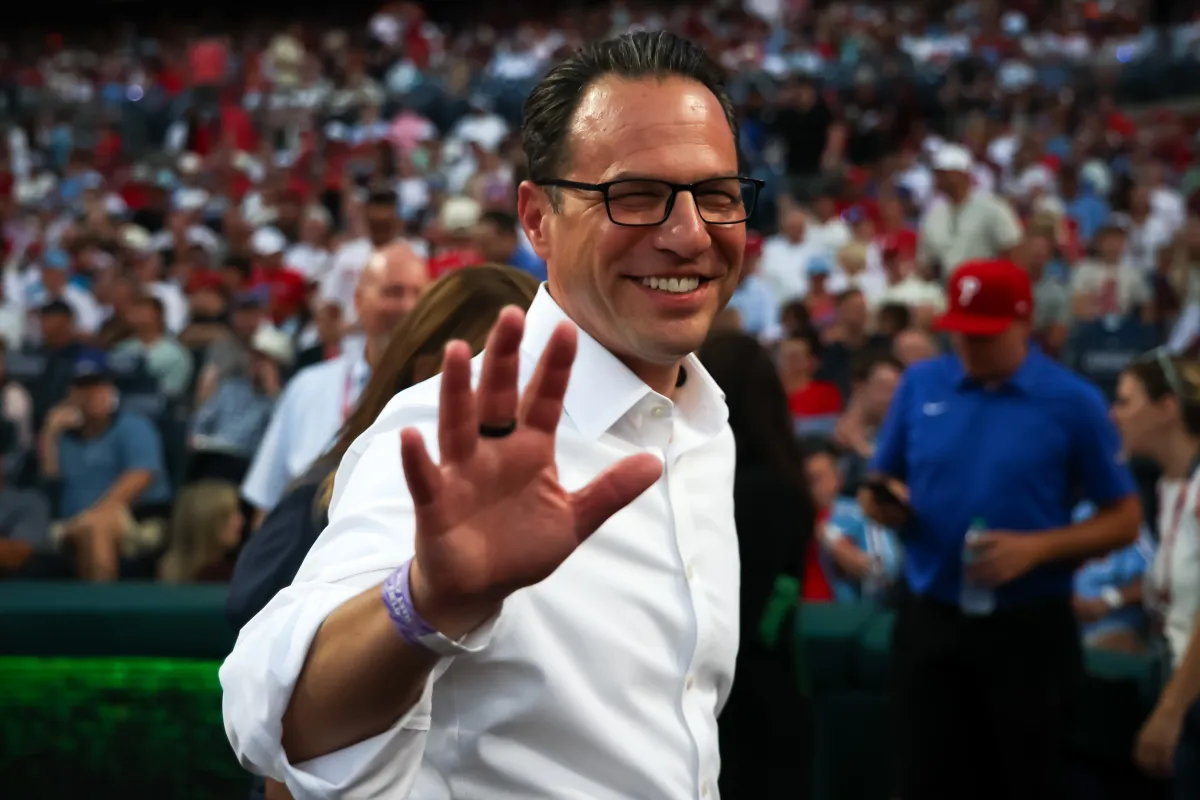
Perhaps the most vocal celebration came from Governor Josh Shapiro, a man whose political future is inextricably linked to moments like these. In a passionate Facebook post that quickly went viral, Shapiro declared victory for his party, framing the result not just as a win for Dukes, but as a resounding rebuke of the current administration’s approach. He meticulously pointed out the odds that had been stacked against them: a district that Trump carried by 18 points in 2024, and where the previous GOP state representative had won by a staggering 30 points just a year ago. “Pennsylvanians are rising up and using their power to combat the chaos, cruelty, and corruption—and we’re not slowing down,” Shapiro wrote, his language deliberately invoking the fiery rhetoric that has positioned him as a leading contender for the White House in 2028. He proudly announced his backing of Dukes, adding “Congratulations State Representative-Elect Dukes—I look forward to getting stuff done together.” For Shapiro, this special election is more than just a scalp to add to his political collection; it is a data point that validates his theory of how Democrats can win in contested territory. By focusing on kitchen-table issues, integrity in governance, and a no-nonsense approach to executive power, he believes Democrats can chip away at the rural-urban divide that has plagued the party for a decade. The fact that a blue wave could crest in Butler County—a region known for its fierce independence and heavy industry—suggests that voters are hungry for alternatives to the current political circus, and Shapiro is betting his own future on that hunger.
To truly grasp the magnitude of this flip, one must look backward at the long shadow of conservative dominance in this seat. For over a quarter of a century, Republican Daryl Metcalfe held the 12th District with an iron grip, first winning in 1999 and becoming a legendary figure in Pennsylvania politics known for his staunchly conservative votes on labor, taxation, and social issues. After Metcalfe’s lengthy tenure, Republican Stephanie Scialabba took the torch, but her term was cut short when she resigned earlier this year, creating the vacancy that set the stage for Tuesday’s dramatic showdown. The district itself is a microcosm of the American heartland—a mix of rolling farmlands, small industrial towns, and a growing suburban fringe, populated by auto workers, nurses, teachers, and small business owners. These are the voters who famously showed up in droves for Trump, drawn to his promises of economic revival and his outright rejection of the coastal elite. Yet, something shifted in the past year. The community has also been seared by national trauma; it is the very county where a gunman attempted to assassinate President Trump during a July rally, an event that left the community rattled and grappling with the dark side of political polarization. In the aftermath, many residents began to question the status quo, and when Dukes entered the race, his message of pragmatic cooperation, healthcare access, and infrastructure investments resonated with those tired of perpetual gridlock. The Republican machine, confident in their historical advantage, may have overlooked the stirring discontent beneath the surface, and on Tuesday, that discontent erupted in the form of 8,434 ballots cast for change.
The national implications of this narrow victory cannot be overstated, as analysts on both sides of the aisle scramble to decipher the message sent by the voters of Butler County. In Harrisburg, the state capital, the flip tightens the Democratic grip on the State House, handing them a crucial bulwark against the Republican-controlled Senate and Governor Shapiro’s veto pen. This legislative reality means that upcoming budget negotiations, which have historically been bitter partisan battles, will now have a slightly different flavor, with Democrats possessing the leverage to push through some of their priority agenda items. Beyond the statehouse mechanics, however, lies the presidential forecasting. Democrats are desperate for a strategy that can win them back the working-class voters who abandoned them in droves, and this race offers a tantalizing blueprint. It suggests that a candidate who runs a hyper-local campaign, who actually shows up and listens, and who refuses to be draped in the often-unpopular national Democratic brand, can overcome even the most hostile terrain. For the GOP, the result is a stark warning that their dominance in rural America is not guaranteed, especially if voters perceive the party as prioritizing chaos over governance. As Shapiro eyes a potential 2028 bid, he can point to this exact election as proof of his electability and his ability to translate progressive values into the language of the heartland. The echo from this local district will undoubtedly resonate through the halls of power for years to come, serving as a case study in political science classes and a talking point on every cable news segment.
Ultimately, beyond the political calculus and the strategic maneuvering, this election is a profound story about ordinary people exercising their most sacred civic power. It is a reminder that in a democracy, an 88-vote margin can change the course of a state, proving that every single knock on the door, every leaflet handed out, and every hesitant conversation at a local diner holds the weight of history. For Brandon Dukes, a man who dared to challenge a thirty-year dynasty, his victory represents the culmination of relentless community engagement, a testament to the belief that local politics are where the real change begins. For the residents of the 12th District, their choice to break with tradition was not an act of blind partisanship, but a thoughtful, human decision based on their hopes for their children’s schools, their ability to afford healthcare, and their desire for leaders who speak to them with respect rather than condescension. As the recount looms, the community will hold its breath, but the memory of this Tuesday night—the electric energy, the improbable triumph, the sudden shift in the political winds—will linger long after the legalities are settled. The human spirit that propelled Dukes to this threshold is the same spirit that built America, a relentless optimism that refuses to accept the world as it is, but insists on shaping it as it should be. As Shapiro looks forward to working with his new colleague, and as both parties digest this shocking result, one thing remains clear: democracy is alive, it is messy, and it is breathtakingly close.