




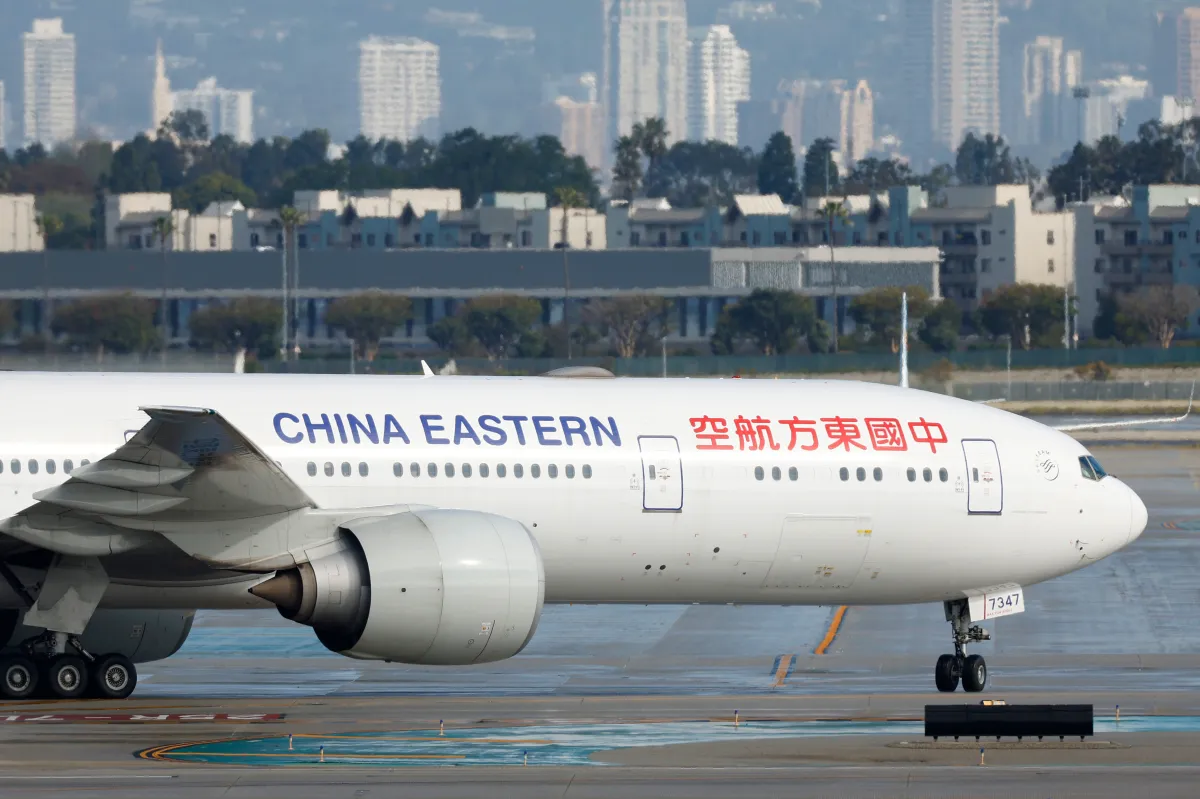
China Eastern Airlines Breaks World Record with Marathon Flight to Buenos Aires
In a remarkable feat of modern aviation, China Eastern Airlines has shattered the world record for the longest commercial passenger flight, connecting Shanghai and Buenos Aires while drastically reducing travel time between Asia and South America. The historic flight, covering an astounding 20,000 kilometers (12,400 miles), marks a significant milestone in global air travel and represents the growing trend of ultra-long-haul flights that are reshaping how we traverse our planet.
The groundbreaking journey began when China Eastern flight MU745 departed Shanghai Pudong International Airport in the early hours of Thursday morning. Using a Boeing 777-39P, the route includes a strategic stopover in Auckland, New Zealand, where the aircraft refuels and the crew rotates before continuing onward to Argentina’s capital. This new “southern corridor” slashes travel time between China and South America by more than four hours compared to previous “northern routes” that required connections through North America or Europe. Before this innovation, travelers faced journeys of approximately 30 hours with multiple stops and transfers – a significant inconvenience for business travelers and tourists alike. The new route’s total duration of 25 hours and 30 minutes eclipses the previous record holder – Xiamen Airlines’ New York to Fuzhou service, which takes 19 hours and 20 minutes.
These marathon flights represent more than just technological achievements – they reflect fundamental changes in global connectivity and passenger preferences. Recent advances in aircraft engineering, particularly the development of fuel-efficient, ultra-long-range models like the Airbus A350 and Boeing 787, have made such ambitious routes commercially viable. Airlines are responding to a growing segment of travelers willing to pay premium prices to avoid the hassle of connecting flights, layovers, and the stress of navigating multiple airports. For business travelers in particular, the ability to arrive at distant destinations with minimal interruption can justify the higher ticket prices these direct flights command. The record-setting China Eastern route now joins other prestigious ultra-long-haul services, such as Singapore Airlines’ flights connecting Singapore with Newark and JFK airports (taking approximately 19 hours), and Air New Zealand’s Auckland to New York service.
“This new route, spanning 20,000 kilometers, fills the gap in direct flights between Shanghai and major South American cities,” China Eastern Airlines stated in their announcement. “It opens a ‘southbound corridor’ connecting opposite ends of the Pacific and reshapes air travel between three continents.” The significance extends beyond mere convenience – such routes strengthen economic ties, facilitate tourism, and create new opportunities for cultural exchange between regions previously separated by prohibitively long travel times. For China specifically, this route enhances its growing commercial presence in South America, a region rich in natural resources and increasingly important to Chinese economic interests.
The logistics of such long-distance flights present extraordinary challenges that airlines must overcome. Crew fatigue management becomes critical, requiring precise scheduling of rest periods and strategic crew changes. Fuel calculations must account for changing weather patterns across multiple climate zones and potential diversions. Even passenger comfort receives special consideration, with airlines designing specific meal schedules, lighting systems, and entertainment options to help travelers cope with extended periods in the air. The Auckland stopover in this particular route serves multiple purposes – beyond refueling and crew changes, it breaks the journey into more manageable segments for passengers while maintaining the efficiency of a single ticketed journey with the same aircraft.
Looking to the future, the race for ultra-long-haul supremacy shows no signs of slowing. Australian flag carrier Qantas is poised to claim the ultimate crown in 2027 with its planned nonstop service from Sydney to London. This ambitious “Project Sunrise” route will span approximately 9,500 miles and keep passengers airborne for around 22 hours, utilizing specially configured Airbus A350-1000ULR aircraft. As technology continues to advance, we may soon see direct flights connecting even more distant city pairs, further shrinking our perception of global distances. These developments raise fascinating questions about the future of international travel – will premium direct flights become the norm for certain traveler segments? How will airlines balance the environmental impact of such flights with passenger demand? And how might these changing travel patterns influence global business, tourism, and cultural exchange in ways we’re only beginning to understand? The record-breaking China Eastern flight represents not just an aviation milestone, but a glimpse into the evolving nature of our interconnected world.