





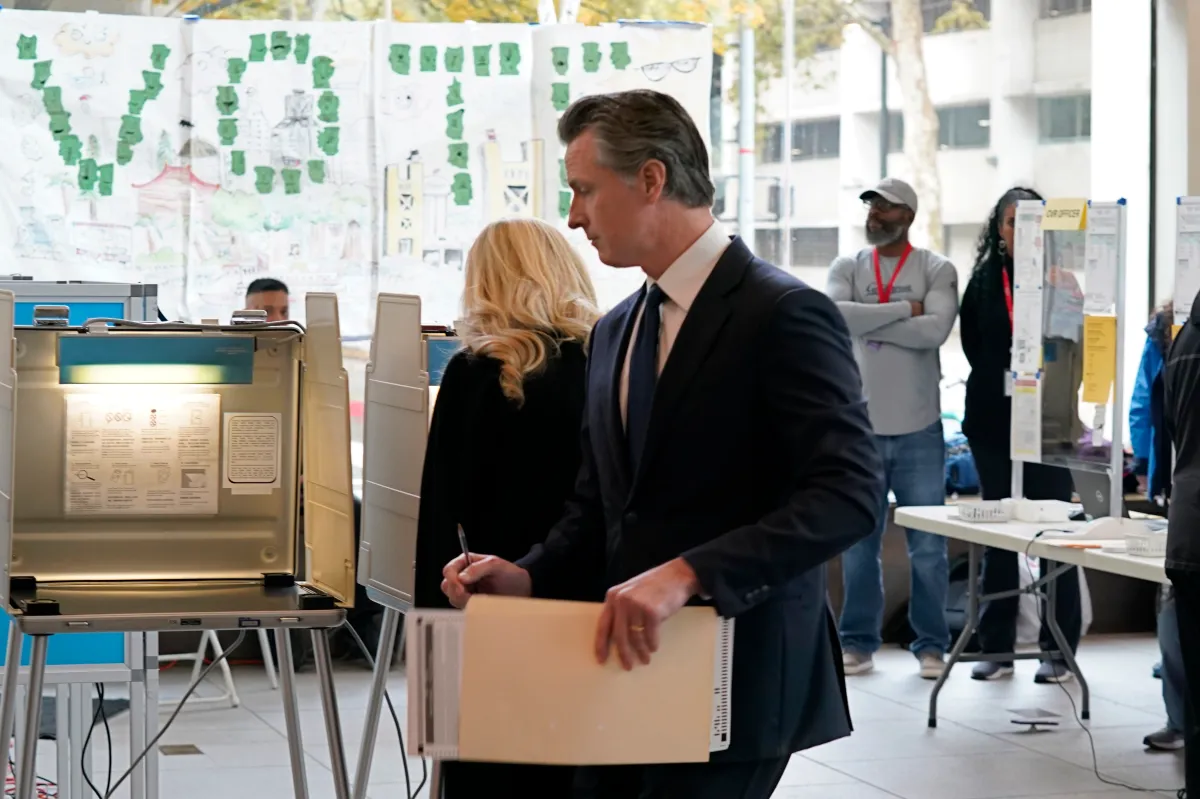
For many Californians, Election Night has transformed from a dramatic evening of high-stakes suspense into a quiet, weeks-long exercise in collective patience. As voters head to the polls and drop off their mail-in ballots for a highly anticipated state primary, they do so under the shadow of a familiar irony: California possesses the world’s fourth-largest economy, boasts some of the most advanced technological hubs on the planet, and yet takes longer to count its votes than almost any other democratic entity in the modern world. While peer democracies with far larger populations—such as India, Japan, and the United Kingdom—frequently deliver comprehensive, definitive election results within a matter of hours, California’s process routinely stretches out for days and even weeks. This sluggish pace is not merely an administrative quirk; it creates a prolonged holding pattern that leaves local communities, candidate campaigns, and public policy in a state of suspended animation. The delayed closure does not just test the patience of anxious political hopefuls; it challenges the very rhythm of civic life, fundamentally altering how voters experience the democratic process and leaving the ultimate shape of their leadership unresolved long after the initial excitement of election night has faded into the background.
This delay is not born out of institutional failure or digital incompetence, but is rather the deliberate result of a system intentionally designed to balance absolute precision with an aggressive pursuit of “maximum participation.” Unlike states like Florida, which prioritize rapid reporting by enforcing strict early voting timelines and swift processing, California’s legislature has steadily reshaped its election laws to prioritize the individual voter’s convenience over the speed of the count. Every single registered resident is automatically mailed a ballot, allowing citizens the comfort of voting from their living room tables. Furthermore, state law permits these ballots to arrive at election offices up to seven full days after Election Day, provided they carry a postmark showing they were sent on time. Before a single one of these late-arriving envelopes is opened, election workers must painstakingly compare the signature on the outside with historical records, a highly meticulous human safety check designed to ensure integrity. When mismatches are flagged, the law grants voters a generous window to “cure” their ballots, giving them the chance to correct errors and save their vote from being discarded. As MIT’s Charles Stewart III points out, the system is engineered to bend over backward to ensure every legitimate voice is heard, giving counties up to thirty days to complete their legally mandated audits before certifying the election.
Yet, this gentle, extremely accommodating framework has sparked a complex debate over whether our modern pursuit of accessibility has inadvertently diminished the magic and momentum of the democratic ritual. Intuitively, one would assume that making voting as easy as breathing would skyrocket civic engagement, but recent data suggests a more complicated psychological reaction among the electorate. According to a study from the Center for Inclusive Democracy at the University of Southern California, the state’s voter turnout actually dropped by nearly five percentage points between the highly charged 2020 presidential cycle and the 2024 elections—a decline representing over one million fewer ballots cast. While some of this decline can be attributed to the natural shifts in national political energy, it raises poignant questions about whether the loss of a singular, communal “Election Day” has watered down the collective enthusiasm surrounding voting. In a fast-paced society where financial markets react in milliseconds and news cycles are refreshed by the minute, California’s prolonged, slow-motion counting process can feel like an archaic relic from a bygone era, potentially draining the urgency and social excitement that historically drove citizens to get out and make their voices heard.
Beyond the psychological impact on everyday voters, this extended counting timeline forces political campaigns and grassroots organizers into a highly stressful, resource-intensive post-election twilight zone. When the voting booths close, the work of a modern California campaign is often only halfway complete, requiring a massive pivot from public policy persuasion to the grueling administrative logistics of “ballot chasing.” Instead of celebrating victories or dissecting defeats, sleep-deprived campaign staffs and volunteer networks must spend weeks tracking down voters whose ballots were flagged for signature discrepancies or provisional issues, personally knocking on doors and making urgent phone calls to guide citizens through the state’s curing process. This post-election scramble forces campaigns to bleed precious financial resources that could otherwise be reserved for future governance, keeping candidates locked in a state of exhausting limbo. When contests for local mayoral seats, congressional districts, or statewide offices remain undecided for a month, the transition of power is frozen, delaying key legislative agendas, preventing newly elected leaders from hiring staff, and leaving representation vacant at times when communities require active, decisive governance.
Perhaps the most fragile casualty of California’s deliberate, slow-rolling count is the preservation of public trust in a deeply polarized political climate. In an era where skepticism of democratic institutions runs dangerously high, the prolonged silence that hangs over the state’s counting centers creates a psychological vacuum that is easily filled with doubt, rumors, and bad-faith conspiracy theories. Charles Stewart III notes that while these delays do not influence how people vote before the election, they heavily impact the post-election narrative regarding legitimacy, giving artificial energy to those who wish to construct stories of election fraud or administrative wrongdoing out of thin air. For the average citizen who does not understand the painstaking safety checks, signature verifications, and legal audits happening behind closed doors, seeing a candidate’s lead evaporate or shift over a three-week period can feel confusing and counterintuitive. This tension exposes a modern democratic paradox: the very measures implemented to protect and validate every single citizen’s vote can, through their slow and deliberative nature, feed the flames of public distrust among an electorate conditioned to expect instantaneous confirmation.
As California voters navigate this latest high-stakes primary, the real-world consequences of this slow democratic machinery are set to play out once more on a massive stage. With Governor Gavin Newsom reaching the end of his term, a diverse field of candidates is fighting for the chance to lead the nation’s most populous state, alongside a cascade of critical congressional races and local battles that will dictate the future of cities from San Francisco to Los Angeles. When the polls close, the initial results will offer only a fleeting, highly incomplete snapshot of the state’s political direction, leaving the ultimate victors shrouded in uncertainty for weeks to come. It is a system that demands a shift in perspective, asking candidates and citizens alike to view the agonizing delay not as a bureaucratic failure, but as a deliberate act of patience. In a world that demands instant gratification, California continues to stand by its stubborn, slow-moving commitment to inclusivity, proving that in the golden state, the road to democracy is not a sprint to the finish line, but a long, slow marathon where every single step is carefully measured.