





For decades, the rules of engagement in college football were as immutable as the laws of physics: once an athlete signed a professional contract, their collegiate career was over. It was a clean, symbolic severing of a tether that linked the amateur ranks to the professional world, a one-way door that slammed shut on the gridiron dreams of those who chose to chase the NFL bag. A player who left early or tested the draft waters without an agent always had the safety net of returning to campus, but the moment ink hit paper on an NFL deal, that net was pulled violently away. The message was clear: you are a professional now, and you have no business playing with the boys. However, the tectonic plates of the collegiate athletics world have shifted so dramatically in recent years—fueled by the advent of Name, Image, and Likeness (NIL) deals and the chaotic legal rulings that have dismantled the old guard—that this long-held maxim has crumpled into dust. In a stunning turn of events that would have seemed absurd just a few years ago, a loophole has emerged, allowing players who spent their entire summer sweating it out in NFL training camps to subsequently return to campus and suit up for their college teams this fall. The amateur ideal is officially dead; in its place is a chaotic, financial broth where the line between the minor leagues and the major leagues is not just blurred—it is practically non-existent.
The mechanics of this new phenomenon are as fascinating as they are unsettling to traditionalists. It used to be that an undrafted free agent or a late-round pick who didn’t make the final roster would either find their way onto a practice squad, where they’d grind for a relatively modest weekly stipend, or they would simply move on to another chapter of their lives, their football careers ending with a quiet whimper. Now, that same player can check his phone, see that he’s been cut, and immediately field calls from his former college coaches asking if he wants to come back for a final season of eligibility. Why? Because the financial calculus has shifted so heavily in favor of the NCAA that the NFL’s practice squad—which pays around $12,000 a week, contingent on actually surviving the weekly cuts—pales in comparison to a guaranteed, six-figure NIL deal that comes with a scholarship, housing, and the adulation of a campus full of students. For a 22-year-old who just experienced the brutal, lonely reality of an NFL locker room—where his body is constantly analyzed, his sleep is monitored, and his future is decided by coaches who haven’t learned his name yet—returning to the loving embrace of a college town is not just a consolation prize; it is a calculated upgrade. The agents representing these players have recognized this arbitrage opportunity and are now actively negotiating with NFL front offices, requesting that their clients be released early from training camp so they can secure ten-game paydays that are far more lucrative and vastly more secure than the weekly grind of a practice squad, where a hamstring tweak can lead to immediate termination.
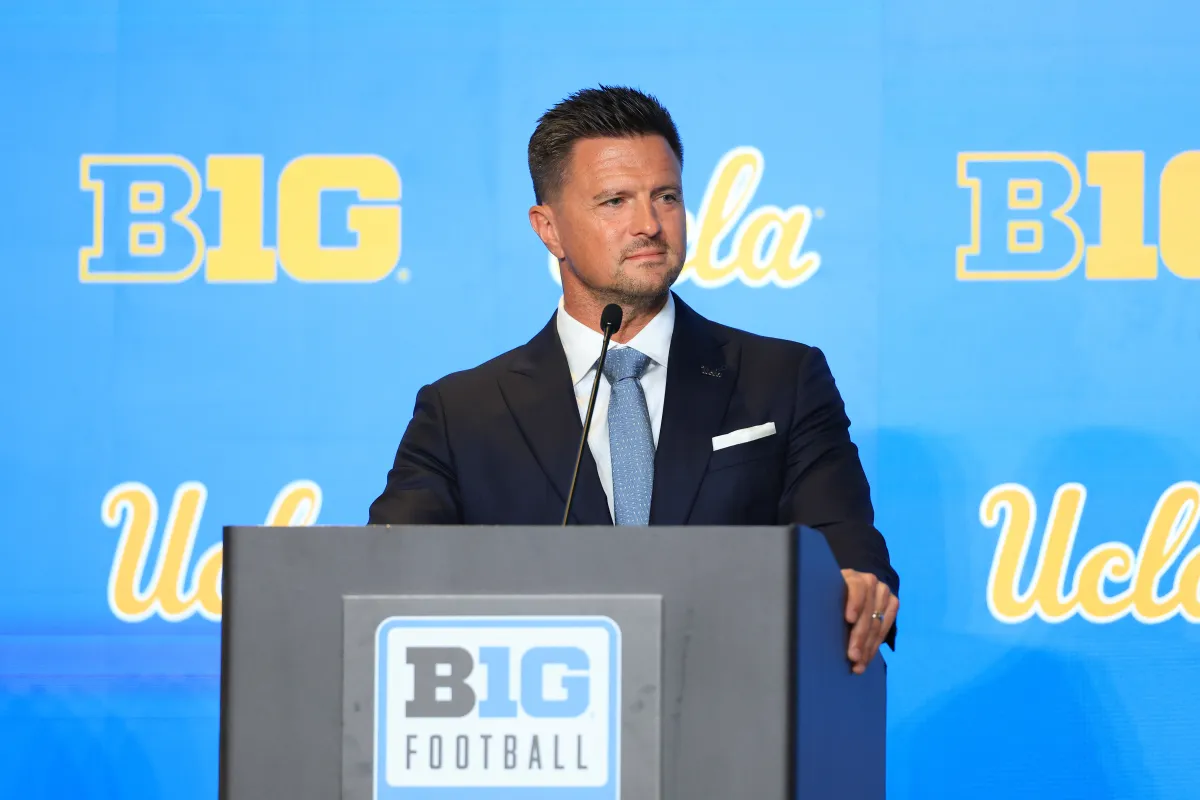
This seismic shift has not gone unnoticed by the coaches who are caught directly in the middle of this professionalization of the amateur ranks. Bob Chesney, the newly minted head coach at UCLA, recently offered a stark and somewhat weary perspective on the new reality, suggesting that college football is rapidly morphing into a de facto feeder system for the NFL—a triple-A franchise, if you will, that exists not to develop young men into citizens, but to fine-tune professional assets. “We’re slowly moving to more of a triple-A team for the NFL in a way and I think just is what it is,” Chesney lamented, his tone reflecting a resignation that is becoming common among his peers. He pointed out the cruel irony that while the NFL has famously escaped the financial and logistical burden of establishing its own minor league system—relying instead on the free labor (now paid, but still subsidized) of the NCAA to develop its talent—it is now the college coaches who are left to deal with the whiplash of roster instability. For Chesney, who is trying to build a winning culture in Westwood, the greatest challenge is not diagramming plays but managing a roster that is perpetually in flux, where a star player might leave for the draft, get cut, and then return, all within the span of a few months. He sees the writing on the wall: the NFL offers stability in terms of guaranteed contracts and clear career paths, while college football has become a volatile marketplace where the only constant is change.
The NFL front offices, for their part, are starting to feel the sting of this new paradigm. For years, they have enjoyed the luxury of a “free” development league, but now that pipeline is springing leaks. As the summer progresses this year, teams are facing a bizarre logistical headache: agents are requesting that certain players from the draft class be released from training camp early, not because they are performing poorly, but because the athletes have determined that a college campus offers a better return on investment than a future on an NFL practice squad. This turns the traditional power dynamic on its head. General managers are used to being the gatekeepers, the ones who decide who gets a chance and who gets cut. Now, they are finding themselves in a bizarre negotiation where the prospect holds the leverage, threatening to take their talents elsewhere—not to a rival NFL team, but back to a school in the SEC or Big Ten. The irony is thick: the men who hold the keys to the NFL’s billion-dollar empire are being heckled by 22-year-olds who are essentially saying, “Unless you guarantee me a roster spot and a real salary, I’m going to go make more money playing for an A&M or an Alabama.” This has created a wave of early releases and waived players that is flooding the college transfer portal, forcing NFL coaches to scramble to find replacements for fringe players who have decided that the “minor league” is a safer bet than the big show.
Perhaps no one embodies the pragmatic acceptance of this new reality better than Ole Miss head coach Lane Kiffin, a man who has never been shy about embracing the cutthroat, transactional nature of modern college football. In a recent statement defending his program’s aggressive pursuit of these returning pros, Kiffin offered a brutally honest assessment of the state of the sport. “At the end of the day, because of these rulings, they’re either going to play for you or they’re going to play for someone else around the country,” he stated, his logic sound and impossible to refute. “So we’ve made the decision to recruit them like probably most people are.” Kiffin understands that the old notion of “student-athlete” is a vestigial myth; these are professional mercenaries, and the only question is who is willing to pay the market rate. If you refuse to recruit a veteran who has spent months training with NFL strength coaches, learning advanced film study, and playing against elite professional athletes, you are simply handicapping your own roster. That player brings a level of physical maturity and nuanced understanding of the game that is unmatched by a true 18-year-old freshman. Thus, the decision becomes not a moral one, but a tactical one. Kiffin, ever the tactician, is simply ensuring that his cupboard is stocked, seeing the return of these players as an opportunity to infuse his roster with grown men who have tasted the highest level and are hungry to dominate on a college stage, all while earning a substantial paycheck from the collective boosters who fund these programs.
Ultimately, this entire situation reveals a profound truth about the current state of college athletics: the financial incentives have completely inverted the traditional hierarchy. For a fringe NFL player, the security of a college NIL contract—which is often paid directly to the athlete in staggering sums—is vastly superior to the precarious existence of being a training camp body or a practice squad member who lives in constant fear of the next cut. The college game offers glory, guaranteed playing time, and a chance to be a king on campus, while the NFL offers a business trip to a barren locker room. When Chesney muses about the NFL’s stability, he is highlighting the fact that college football has become a chaotic, Wild West financial arena, where the teams are not franchises but ever-shifting rosters of opportunists. The NFL teams are annoyed because they are losing their cheap labor, but the players are finally realizing that they hold the cards. As the 2024 season kicks off, and fans see familiar faces trotting out in college uniforms who were wearing NFL jerseys just weeks ago, the only thing left to say is that we are officially living in the era of the mercenary athlete. The loophole isn’t just a quirk; it is the defining characteristic of a sport that has thrown away its amateur past and embraced a professionalized future, where the minor league is not always beneath the major league, but sometimes, quite simply, more profitable.