

At its heart, the promise of America has always been sustained by a delicate, intergenerational covenant: those who stand on the front lines to defend our freedoms are met with the unwavering support of the communities they fought to protect. Today, this covenant is being beautifully realized in the state of Florida, where a unique and deeply moving collaboration has brought together some of the nation’s youngest citizens and its most resilient defenders. Building Homes for Heroes (BHH), a celebrated national nonprofit organization, has dedicated decades to constructing, custom-modifying, and gifting mortgage-free homes to wounded veterans, brave first responders, and Gold Star families who have experienced the unimaginable loss of a loved one in military service. Recognizing that true community healing requires collective effort, the New York-based organization recently joined forces with a remarkable group of young people from The Villages Charter School (TVCS) Construction Management Academy in Florida. This inspiring partnership does more than simply lay concrete and raise drywall; it connects the energetic, forward-looking optimism of high school students with the battle-tested, often weary souls of American veterans, creating a bridge of mutual respect, healing, and profound transformation.
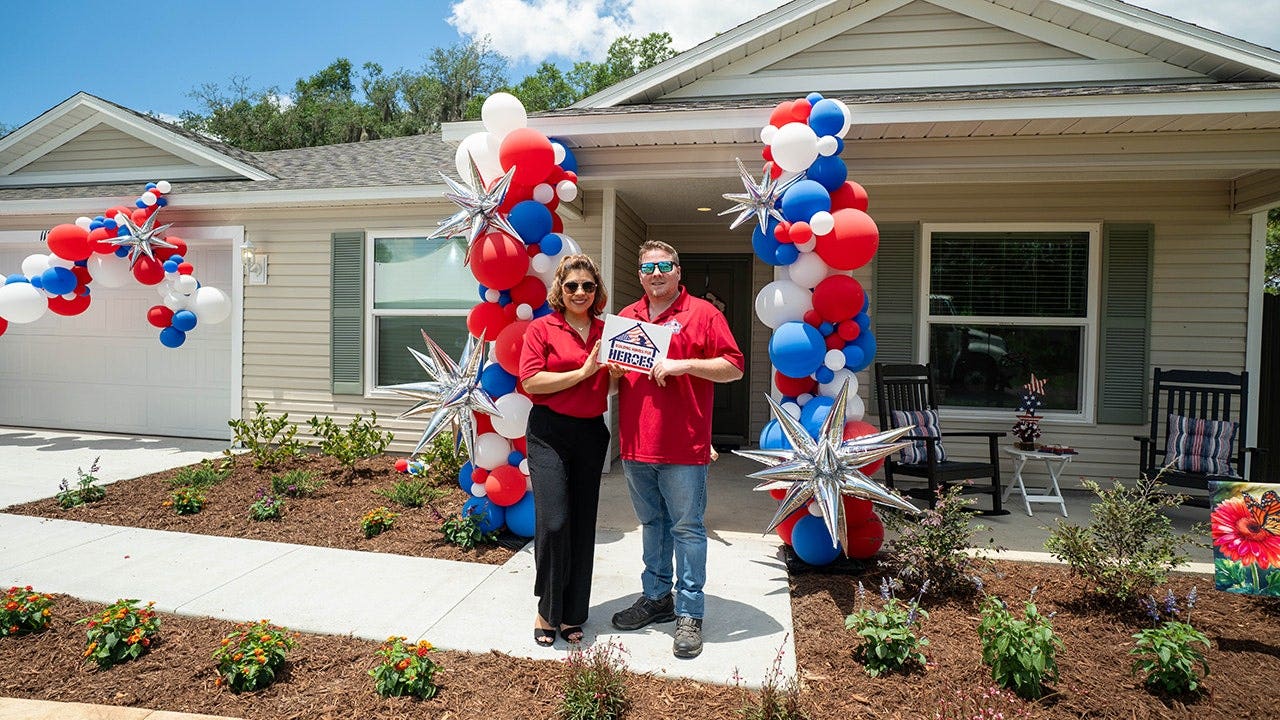
The tangible fruits of this intergenerational alliance blossomed fully in Lake Panasoffkee, Florida, where two brand-new, customized homes were proudly unveiled and gifted to U.S. Army Specialist Rajae Jones and U.S. Army Sergeant James Tabares. Built entirely from the ground up, these homes represent the culmination of months of intense, hands-on labor by the TVCS charter students, who traded traditional classroom hours for long, perspiration-soaked days on a live construction site. For these teenagers, the opportunity to participate went far beyond learning a valuable vocational trade; it was a masterclass in empathy and civic duty. They watched as a barren, quiet stretch of white Florida sand was slowly transformed, day by day, into a physical sanctuary of safety, stability, and future memories for two decorated military families. In an era where younger generations are often stereotyped as disconnected or self-absorbed, these students proved that when given the proper guidance, tools, and purpose, they are entirely capable of stepping up to construct the literal and metaphorical foundations upon which their local heroes can rebuild their lives.
For Kim Vesey, the president and general counsel of Building Homes for Heroes, witnessing the completion of these homes—and watching the interactions between the young builders and the veteran families—was a profoundly emotional experience. Vesey, who has spent years advocating for the specialized housing needs of returning service members, characterized the partnership with The Villages Charter School as an absolute triumph of community spirit. She recalls with immense warmth the very first home built through this collaboration in early 2024, which was gifted to a military family that had been trapped in a seemingly endless cycle of struggle and despair. The father, carrying both severe physical injuries from his military service and the heavy, invisible wounds of Post-Traumatic Stress Disorder (PTSD), found it incredibly difficult to maintain steady employment, forcing his wife and two young sons to live out of temporary transitional housing. The gift of a permanent, mortgage-free home by BHH and the TVCS students acted as a powerful diagnostic intervention, instantly relieving the crushing economic pressure and allowing the family to plant deep, fertile roots; today, both sons are gainfully employed at the charter school, and the veteran father has found a renewed sense of purpose by running a therapeutic program at the local School of Autism.
This life-changing impact is felt just as deeply by the students who pushed through the fatigue of manual labor to construct these physical spaces of healing. Among them is eighteen-year-old Blake Tart, a recent graduate of TVCS who carried a personal motivation into the project, coming from a family with deep roots in military service. Recalling the journey from watching the initial excavation of the sandy plot to handing over the keys of a fully decorated, pristine home, Tart expressed a profound sense of pride and a newfound understanding of his own capabilities. He and his classmates approached the construction with a relentless, painstaking devotion to quality, refusing to accept any mistakes or settle for “good enough” because they understood that the people moving into these spaces had sacrificed their physical and mental well-being for the nation. For Tart and his peers, the experience was a transformative rite of passage, teaching them not only the physical mechanics of building a home that they can carry into their own future adult lives, but also cementing the timeless moral truth that a healthy society must always extend a compassionate, helping hand to those who have selflessly served.
The critical importance of programs like Building Homes for Heroes becomes glaringly obvious when analyzing the harsh economic realities and structural vulnerabilities that modern service members face upon returning to civilian life. While BHH maintains a highly active nationwide presence across thirty-seven states, Florida experiences some of the most intense, localized demands for veteran housing assistance in the country. Vesey points out a systemic vulnerability that civilian society often overlooks: many men and women enter the military not as a temporary detour, but with the intention of dedicating a full thirty-year career to service—viewing it as their pension, their retirement security, and their primary path to providing for their loved ones. When a sudden, catastrophic physical injury or psychological trauma cuts that career short through no fault of their own, these individuals are abruptly thrust back into the civilian world without stable roots, a traditional college degree, or an established backup career plan. In a modern economy where many hardworking families are already just a few missed paychecks away from systemic poverty, a sudden medical discharge can instantly plunge a veteran’s household into a spiral of homelessness and housing insecurity.
Ultimately, the powerful collaboration between Building Homes for Heroes and the young minds of The Villages Charter School stands as an inspiring, replicable model for how grassroots communities can step forward to heal the nation’s deepest divides. When a young man or woman answers the call of duty and steps onto a battlefield, they accept a high-risk lifestyle that frequently demands their health, their peace of mind, and their long-term economic stability. It is therefore a profound moral imperative that when they return home carrying the scars of that sacrifice, their fellow citizens are waiting on the home front to catch them, lift them up, and carry them forward. By actively involving high school students in this sacred process of transition and reintegration, this program does more than just build beautiful, physical structures of brick and mortar; it actively cultivates a rising generation of highly compassionate, socially responsible leaders who understand that true patriotism is not found in empty rhetoric, but in the dirty, sweaty, and deeply rewarding work of building a brighter, safer home for our heroes.