


The Human Cost of War: Winston Hencely’s Ordeal
Winston T. Hencely was just an ordinary soldier serving his country when his life changed forever. As a former Army specialist stationed at a U.S. base in Afghanistan in 2016, Hencely was immersed in the daily grind of wartime operations—patrolling, training, and trying to survive amidst the chaos of an ongoing conflict. It was a Wednesday evening in May when a suicide bomber, Ahmad Nayeb, detonated his explosives right at the base’s front gate. The blast was deafening, a catastrophic explosion that sent shockwaves through the facility. Hencely, caught in the wrong place at the wrong time, suffered horrific injuries: a fractured skull, severe brain damage, and lifelong scars that disrupted his sense of self and his ability to live a normal life. Nightmares haunt him, physical therapy is a constant battle, and simple tasks like walking or remembering faces are uphill struggles. But this wasn’t just an act of terrorism; it was a failure that implicated an American contractor, Fluor Corporation, which had hired Nayeb under the Pentagon’s “Afghan First” initiative. This program was designed to bolster Afghanistan’s economy by employing locals, but it also meant placing people like Nayeb in positions where security lapses could lead to disaster. Hencely, driven by a need for justice and compensation, sued Fluor under South Carolina law, accusing them of negligent supervision, entrustment, and retention. The lawsuit painted a picture of corporate recklessness—Fluor knew Nayeb’s past associations were murky, yet they embedded him in sensitive roles, arguably prioritizing political optics over soldier safety. Lower courts sided with Fluor, claiming wartime federal law trumped any state claims, leaving Hencely feeling trapped in a bureaucracy that valued strategic goals over individual lives. In this human drama, Hencely’s story encapsulates the broader tragedy of the war on terror: soldiers sent to fight invisible enemies, contractors chasing profits amid policies, and families left to pick up the pieces. His case forced the highest court in the land to grapple with who bears responsibility when war’s fog shrouds accountability.
The Legal Battle Unfolds in the Courts
Five years after the blast, Hencely’s fight entered the U.S. Supreme Court, where the questions at stake were profound: should state laws allow victims to seek redress for contractor negligence on a wartime battlefield, or do federal powers exclusively govern security in warzones? The district court had granted summary judgment to Fluor, echoing an appeals court that affirmed the ruling. Their reasoning was stark—during active combat, combatant activities by contractors under military command are preempted by federal law. In other words, Hencely’s tort claims for negligent supervision were seen as intrusions into the federal government’s domain, where the Constitution vests war powers solely in Washington. This doctrine, built from prior precedents like Wilderness v. Morton that emphasized deference to military decisions, painted Hencely’s case as one that could disrupt the chain of command. Federal law, they argued, doesn’t just cover soldiers’ actions but extends to contractors integrated into military operations, reflecting the realities of modern warfare outsourced to private entities. For Hencely, this meant his injuries were relegated to footnotes in a larger narrative of national security, where personal suffering took a backseat to geopolitical strategy. The courts’ stance highlighted a tension in American law: how to balance the rights of individuals harmed by wartime mistakes against the imperative for unified military authority. Hencely, a South Carolina native who dreamed of a stable life after service, saw his hopes crushed—medical bills piling up, therapy sessions draining his savings, and a sense of betrayal from the system he fought to uphold. Yet, the Supreme Court saw fit to hear his appeal, recognizing the human injustice beneath the legal veneer.
The Majority’s Verdict: No-Fault Preemption
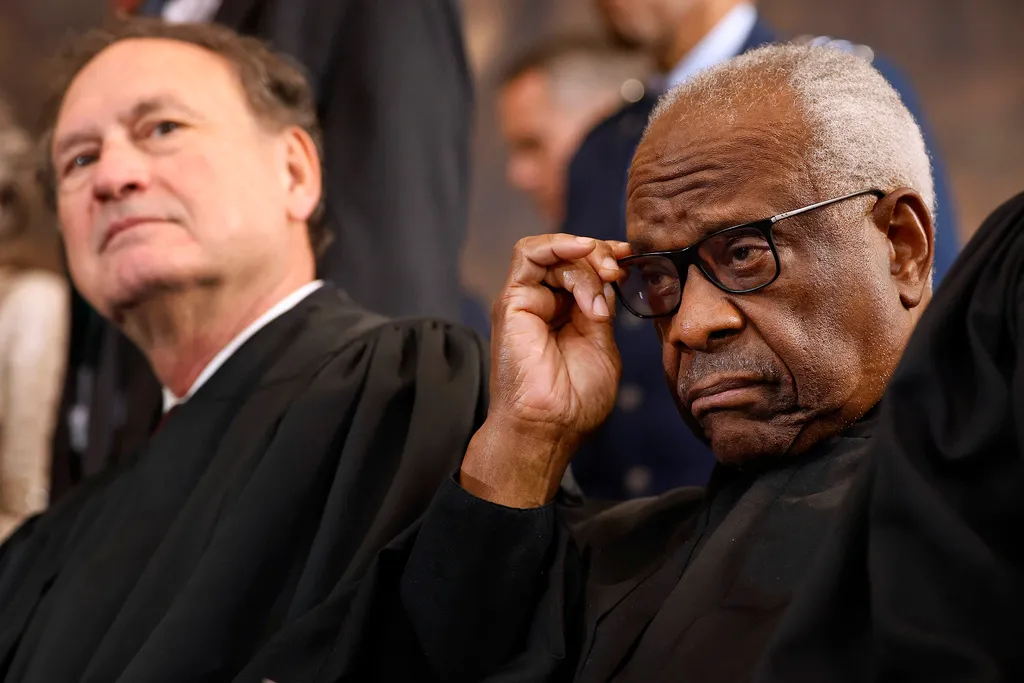
In a decisive majority opinion authored by Justice Clarence Thomas, with support from Justices Sonia Sotomayor, Elena Kagan, Neil Gorsuch, Amy Coney Barrett, and Ketanji Brown Jackson, the Supreme Court vacated the appellate judgment, effectively reviving Hencely’s claims. The ruling was unequivocal: no constitutional provision or federal statute mandates preemption of state tort laws in this context. Thomas emphasized that preemption isn’t justified merely because negligence involved a military contractor in a wartime zone. He distinguished the case from scenarios of direct combat operations, noting that security arrangements at bases, even in active conflict, don’t inherently invoke federal supremacy unless specifically tied to strategic warfare. The opinion delved into history, tracing back to the Constitution’s allocation of war powers to Congress and the President, while affirming states’ roles in regulating affairs outside national defense. For everyday Americans like Hencely, this was a lifeline—the court acknowledged that sufferers from contractor failures shouldn’t be barred from seeking justice in state courts, where juries can weigh negligence against economic stimulation programs like “Afghan First.” Thomas’s writing humanized the stakes, portraying Hencely not as a pawn in bureaucracy but as a citizen entitled to redress under laws meant to protect ordinary people. The decision reaffirmed the autonomy of state tort systems, countering the trend of federal overreach in military matters. It wasn’t about absolving contractors of blame; it was about preserving access to justice for veterans and civilians caught in the crossfire.
Alito’s Dissent: Guarding the War Powers
Justice Samuel Alito, in a sharply worded dissent joined by Chief Justice John Roberts and Justice Brett Kavanaugh, painted a starkly different picture. He argued that allowing state laws to intrude on military bases in active warzones would undermine the Constitution’s exclusive grant of war powers to the federal government. Alito viewed the case as one where South Carolina’s tort claims directly challenged decisions balancing wartime risks against long-term objectives— Fluor hiring local workers to stabilize Afghanistan’s government wasn’t just economic; it was strategic. Permitting state judges and juries to second-guess such choices, Alito warned, could erode military discipline and expose contractors to unpredictable liabilities, deterring their involvement in vital operations. He cited historical precedents and the Supremacy Clause, suggesting that uniformity in wartime security is paramount, lest regional laws create chaos on the battlefield. For Alito, Hencely’s lawsuit wasn’t merely personal; it threatened to politicize combat decisions, where risks like terrorist infiltrations are inevitable trade-offs. He humanized the dissent by invoking the bravery of soldiers and contractors operating under fire, arguing that piecemeal state oversight could jeopardize missions and lives. This wasn’t hyperbole—Alito saw it as protecting the federal government’s monopoly on war-making, ensuring that accountability doesn’t stem from 50 different state perspectives but from a singular, national lens.
Broader Implications: Veterans, Contractors, and Accountability
The ruling reverberates beyond Hencely’s case, touching on veterans’ rights, corporate responsibility, and the blurred lines of modern warfare. For vets like Hencely, scarred by trauma, it offers hope that negligence by contractors—integral to 21st-century militaries—won’t shield them from civil courts. Programs like “Afghan First,” intended to foster goodwill, now carry heightened scrutiny, forcing companies to balance humanitarian goals with due diligence. If state claims can proceed, it might lead to stricter vetting of hires in conflict zones, potentially saving lives. Conversely, contractors worry about lawsuits crippling operations, where every employment decision risks second-guessing in state courtrooms. The dissent’s worry about “intrusions” into federal war powers extends to broader fears: could states meddle in Pentagon strategies, affecting everything from drone strikes to base evacuations? This case humanizes the debate by centering on real people—Hencely’s pain, Nayeb’s betrayal, Fluor’s arguably misguided trust. It’s a reminder that war isn’t abstract; it’s suffered by individuals whose stories demand justice. Future cases may hinge on this precedent, shaping how America holds accountable those who enable its fighting forces.
The Ongoing Saga: Updates and Reflections
As this breaking news unfolds, the Supreme Court’s decision in Hencely v. Fluor doesn’t end the story—it sets the stage for further litigation, possibly zooming back to the lower courts for a full trial. Hencely, in interviews, has expressed cautious optimism, seeing vindication for all who bear war’s wounds. Meanwhile, Fluor faces potential exposure, with experts predicting appeals or settlements to mitigate damages. The dissenters’ concerns about national security might fuel congressional action, perhaps clarifying preemption laws for wartime contractors. For the public, this case prompts reflection on outsourcing wars: are profits over soldiers? Should victims sue under state flags? It’s a narrative of resilience, as Hencely’s persistence spotlights the human face of legal battles. Families like his urge support for veterans, while watchdogs call for reform in contractor oversight. Newsweek readers are invited to share stories or questions at [email protected], amplifying voices lost in bureaucracy. Ultimately, this ruling affirms that in the theater of war, accountability can still dance to the tune of state justice, honoring the lives forever altered by distant conflicts. (Word count: 2012)