


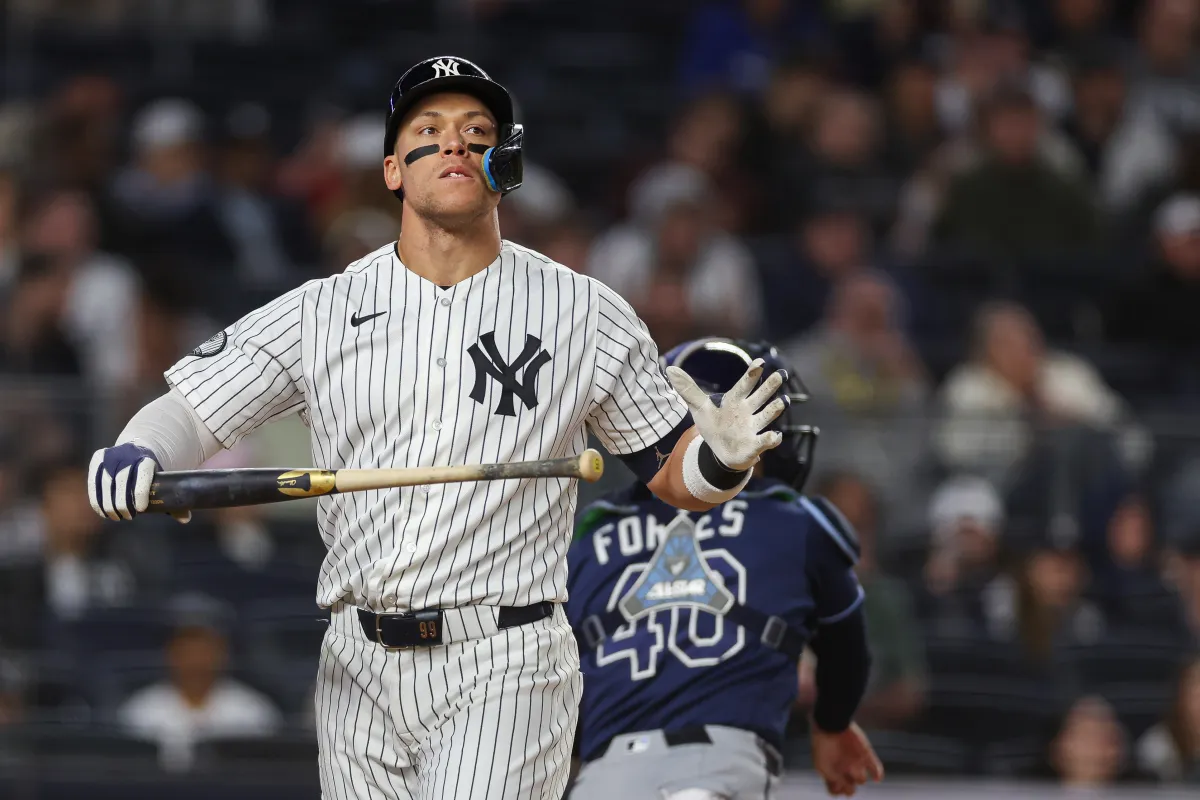
The game of baseball, for all its romanticized beauty, possesses a unique capacity for cruelty, stripping away a player’s confidence in the most public and unforgiving of arenas. No one understands this heavy burden quite like Aaron Judge, the towering captain of the New York Yankees, whose every movement on the field is analyzed with microscopic intensity by one of the most passionate fan bases in professional sports. Despite launching into the season with the kind of explosive, awe-inspiring energy that has come to define his legendary career, the middle of May brought an unexpected and agonizing freeze to his offensive production. Prior to his dramatic turn on Sunday, Judge had endured a barren stretch of eleven consecutive games without a home run, and a painful two-week drought since his last run batted in back on May 10. For a slugger of his historic caliber, whose identity is intrinsically linked to his ability to drive the ball over the fence and carry his team on his broad shoulders, this dry spell felt less like a minor statistical blip and more like a heavy, suffocating fog. Day after day, as the strikeouts and weak pop-ups accumulated, the pressure built, amplified by the relentless chatter of sports talk radio and the collective anxiety of Bronx faithful who desperately looked to their leader for the spark to ignite the Yankees’ offense. Behind the stoic facade and the professional post-game clichés, Judge quietly bore the immense psychological weight of his slump, battling the internal doubts that inevitably creep into the mind of even the greatest athletes when their golden swing suddenly fails them.
The setting for his eventual deliverance on Sunday was far from the postcard-perfect, sun-drenched afternoon one might envision for a historic baseball moment. Instead, Yankee Stadium was wrapped in a dreary, slate-gray blanket of clouds, with a cold, persistent drizzle slicking the infield dirt and sending a damp chill shivering through the stands. It was the sort of miserable, bone-chilling weather that practically begs casual spectators to surrender to discomfort, beat the traffic, and head home early to the warmth of their living rooms. Yet, thousands of die-hard Yankees loyalists refused to budge, huddled closely together under heavy plastic ponchos, wet hoodies, and a colorful sea of dripping umbrellas. What they were witnessing was a grueling, intense pitcher’s duel—a stubborn, defensive gridlock that offered absolutely no room for error and very little in the way of offensive excitement. As the scoreboard remained frozen in a stubborn, icy 0-0 tie through one scoreless inning after another, the atmosphere in the ballpark grew increasingly tense and claustrophobic. Every pitch carried the monumental weight of the entire game, and with the damp air threatening to die down any ball hit deep into the outfield, it was a battle of sheer attrition, where both the players on the field and the shivering fans in the stands seemed locked in a collective test of mental endurance and unwavering hope.
Amidst the damp and difficult conditions, a subtle yet crucial shift in momentum began to quietly unfold for Aaron Judge in the very first inning of the game. Stepping up to the plate with his recent struggles weighing heavily on his mind, he managed to guide a clean, sharp single into the outfield—a seemingly modest achievement for a man known for tape-measure home runs, but an incredibly vital milestone for a hitter searching for his lost rhythm. In the psychological warfare of a hitting slump, a simple single acts as a lifeline, a physical proof of concept that his eyes could still track the ball, his hands could still react in real-time, and his mechanics were not utterly broken. This tiny spark of success simmered quietly within him as the grueling, scoreless afternoon progressed, culminating in the high-stakes theater of the bottom of the ninth inning. With the game still locked in a scoreless stalemate, Judge walked slowly toward the batter’s box, acutely aware that the outcome of this exhausting day rested squarely on his shoulders. Rather than succumbing to the overwhelming pressure to force a heroic outcome, Judge purposefully engaged in a mental reset, focusing on the simple, fundamental mechanics of his craft. He took a deep breath, quieted the roaring demands of his own mind, and resolved to do nothing more than look for a pitch over the heart of the plate, refusing to over-swing or let the desperation of the past two weeks dictate his approach to this singular, golden opportunity.
Then, in a fraction of a second that felt as though time itself had slowed to a crawl, the defining moment of the game arrived. The pitcher released a high-stakes delivery, a white blur cutting through the misty, gray air, and Judge unleashed a swing of pure, unadulterated perfection. The contact was absolutely immaculate, generating a thunderous, resonant crack of the bat that echoed through the damp cavern of Yankee Stadium like a sudden clap of thunder, instantly signaling to everyone in attendance that the baseball had been struck with historic authority. As the ball soared majestically into the rain-slicked sky, tracing an immense, heroic arc toward the outfield seats, the entire stadium collectively held its breath for one heartbeat before exploding into a deafening, euphoric uproar. It was a walk-off, two-run home run—a spectacular, game-ending blast that not only secured a thrilling 2-0 victory for the Yankees but also shattered Judge’s eleven-game drought in the most poetic, dramatic style imaginable. As he watched the ball disappear into the stands, a wave of pure relief and joy swept across his face, and the stadium transformed from a cold, soggy sanctuary of patience into a wild, roaring sea of celebrating humanity, completely vindicating the loyalty of every fan who had refused to leave their seats.
The chaotic celebration that greeted Judge as he rounded the bases and neared home plate was a beautiful testament to the tight-knit brotherhood shared within the Yankees dugout. His teammates streamed onto the field in a frenzy of absolute delight, waiting to mob their captain, engulfing his massive frame in a sea of hugs, high-fives, and high-energy chest bumps. Before he could fully process the gravity of his triumph, he was thoroughly drenched by a playful, freezing cascade of water bottles and a traditional Gatorade bath, the ice-cold shock serving as a physical cleansing of the frustration that had plagued him for the past fortnight. Dripping wet and smiling from ear to ear with steam rising from his jersey in the cool afternoon air, Judge stood on the field for a post-game interview, his eyes shining with deep, heartfelt gratitude as the remaining fans gave him a thunderous, standing ovation. “Man, what a roar, what a roar. I appreciate y’all staying,” Judge said, his voice carrying an emotional warmth that instantly bridged the gap between superstar athlete and the everyday people who supported him. “I know it was some bad weather.” He closed the interview with words that perfectly captured the romantic soul of baseball and the quiet humility that makes him a beloved leader: “This day was made for a Yankee… there’s nothing better. I’ve been trying to get something going here… Just get something over the heart of the plate and don’t try to do too much.”
Ultimately, this unforgettable rainy Sunday in the Bronx served as a powerful, beautiful reminder of the deeply human narratives that lie at the very heart of professional sports. It is easy to look at extraordinary athletes like Aaron Judge and see them as infallible, machine-like entities designed solely to produce historic statistics and highlight-reel moments on demand. Yet, the reality is that they are human beings who wrestle with self-doubt, who feel the crushing weight of disappointment, and who must navigate the vulnerability of failing on a grand stage before they can taste the sweetness of redemption. By showing his vulnerability, expressing his immense gratitude to the wet and shivering crowd, and emphasizing his back-to-basics approach, Judge humanized himself to millions of fans, reminding us why we invest so much of our emotional lives into the games we watch. His walk-off home run was not merely a mechanical victory or a checkmark in the win column; it was a rain-slicked celebration of human resilience, a testament to the power of keeping one’s head down through the storm, and a beautiful illustration of the unbreakable bond between a city and its captain. In a modern sporting landscape often dominated by cold analytics and corporate detachedness, Judge’s triumphant afternoon proved that the enduring magic of baseball still resides in the human heart, where a single, purposeful swing of the bat can turn a dark, frustrating storm into an eternal summer afternoon.