







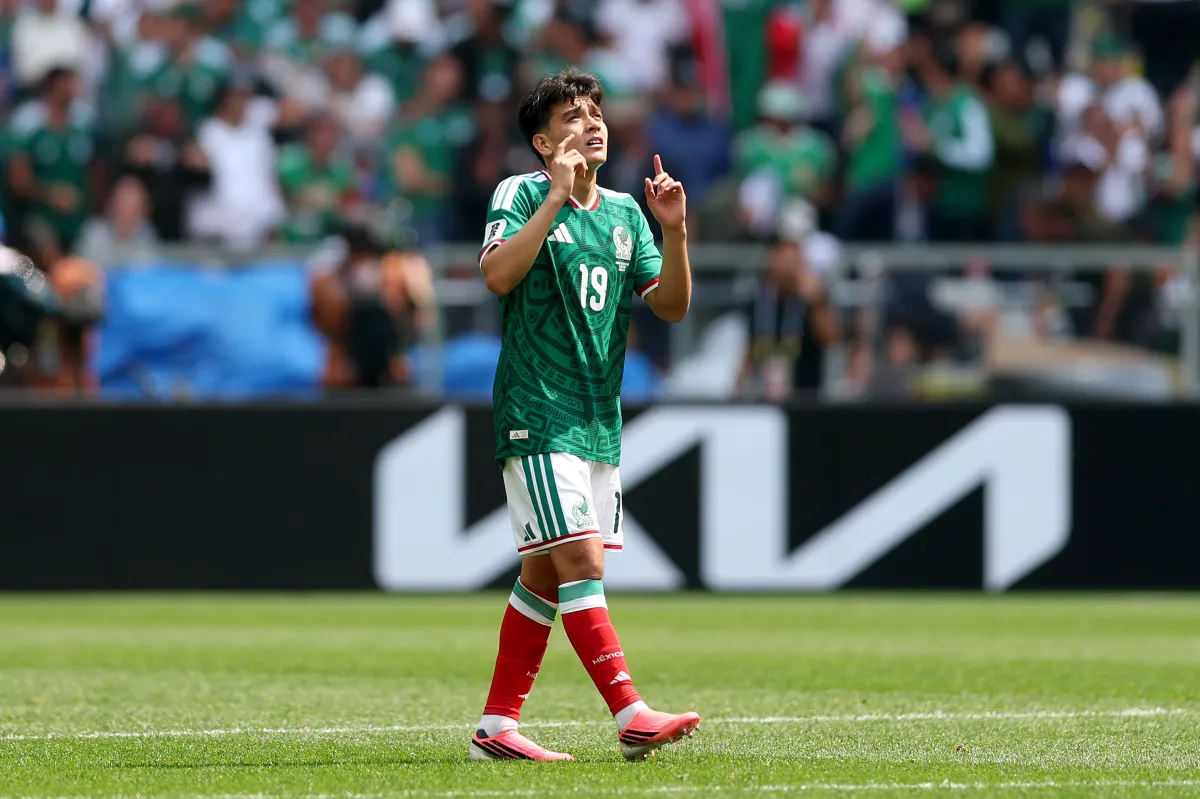
The air in Mexico City was thick with a mixture of historical reverence and nervous electricity as the 2026 FIFA World Cup, the most expansive iteration of the global tournament to date, officially got underway. Within the towering, sun-drenched concrete bowl of the legendary Estadio Azteca, a cathedral of football that has witnessed the crowning of Pelé and Maradona, there was a palpable sense that history was once again unfolding. Hosting a record-breaking 48-team tournament is no small administrative or emotional feat, and the weight of an entire nation’s expectations rested squarely on the shoulders of Mexico’s national team, El Tri, as they prepared to face a resilient South African squad. From the first whistle, the stadium vibrated with the deafening passion of home supporters, a sea of green jerseys waving under the afternoon sky. It did not take long for that collective hope to transform into pure, unadulterated ecstasy. In just the ninth minute of play, Julian Quinones ignited the crowd, capitalizing on a brilliant offensive sequence to slot home the tournament’s first goal. The earth-shaking roar that followed seemed to reverberate far beyond the stadium walls, setting a vibrant, celebratory tone for a tournament that promises to captivate the globe.
However, the beautiful game is rarely simple, and what began as a joyous carnival quickly devolved into a gritty, high-stakes battle of attrition that tested Mexico’s resolve. The opening match of any World Cup is notoriously pressure-packed, and this encounter proved to be no exception, as the referee’s whistle became a frequent disruptor to the rhythm of the game. A chaotic atmosphere settled over the pitch, characterized by fierce physical challenges and boiling tempers that ultimately saw the referee brandish three red cards amidst the rising tension. Despite the dwindling numbers and the threat of a South African equalizer looming, Mexico’s defensive unit held firm under immense pressure. The nerve-wracking 1-0 lead persisted past the hour mark, keeping fans on the absolute edge of their seats until the 67th minute brought the long-awaited sigh of relief. It was Mexican striker Raul Jimenez, a veteran of countless high-pressure battles, who rose to the occasion by leaping gracefully in the box to head home a pinpoint cross. The ball hit the back of the net to seal a crucial 2-0 victory, providing the ultimate cushion and ensuring that the host country would secure three vital points on their opening night.
Yet, for all the veteran leadership and defensive resilience displayed on the pitch, the defining storyline of this historic evening belonged to a teenager who was not even born when many of his teammates began their professional careers. In the 65th minute, with the game still hanging in the balance at 1-0, the stadium’s fourth official held up the substitution board, signaling that Alvaro Fidalgo was to be replaced by Gilberto Mora. As the 17-year-old stepped across the white touchline and onto the iconic Azteca turf, he did not just enter a football match; he stepped directly into the history books. At exactly 17 years and 240 days old, the prodigy from Chiapas became the youngest player in the long, storied history of Mexican football to ever appear in a FIFA World Cup match. In doing so, Mora shattered a record that had stood untouched for nearly a century, eclipsing the legendary Manuel “Chaquetas” Rosas, who set the previous benchmark way back in the inaugural tournament of 1930. Furthermore, Mora’s introduction rewrote global football history, as he officially became the youngest player from any nation to ever participate in a World Cup while representing a host country.
To understand the magnitude of this moment, one must trace the rapid, almost fairytale-like rise of Gilberto Mora from his humble beginnings to the brightest stage in sports. Born on October 14, 2008, in the southern city of Tuxtla Gutiérrez, Chiapas, Mora was identified early as a diamond in the rough, eventually finding his footballing home with Club Tijuana in Liga MX. In a league known for its physical demands and intense scrutiny, the young midfielder transitioned from academy prospect to senior sensation with astonishing ease. At just 15 years old, he cemented his status as a prodigy by becoming the youngest-ever goalscorer in Liga MX history, a feat that drew instant nationwide attention. By the time he was 16, his meteoric rise had carried him all the way to the senior national team, where he played a pivotal role in Mexico’s triumphant 2025 Gold Cup campaign. That victory allowed him to surpass modern icon Lamine Yamal and even the legendary Pelé as the youngest player to ever win a senior international trophy. Recognizing the generational talent in their ranks, Club Tijuana acted decisively just two days before the World Cup opener, securing Mora’s future with a lucrative three-year contract and handing him the prestigious No. 10 jersey.
This rapid ascension has naturally triggered a fierce bidding war among Europe’s elite, turning the young Mexican playmaker into one of the most coveted transfer targets on the planet. The footballing world is a predator’s ecosystem where top-tier clubs are constantly looking to secure the next superstar before their evaluation skyrockets out of reach. Reports have consistently linked Mora to a glittering array of European giants, including Real Madrid, Paris Saint-Germain, Chelsea, AC Milan, Barcelona, and Manchester City, all of whom have reportedly sent scouts to monitor his development in North America. By tying him down to a new contract and handing him the iconic playmaker’s shirt, Tijuana sent a defiant, high-value message to these European suitors, demonstrating that while they may eventually part ways with their crown jewel, it will only be on their own terms. Navigating this sudden, astronomical rise to global prominence would be overwhelming for most adults, let alone a teenager who is still legally a minor. Yet, on that warm Thursday evening in Mexico City, Mora displayed a level of maturity that belied his tender years, unbothered by the transfer rumors or the billions of eyes watching his every move.
Though his time on the pitch in the opening game spanned just over thirty minutes, Mora’s impact on the collective psyche of the Mexican supporters was immediate and profound. The very instant his boots touched the grass, the cavernous Azteca erupted into a rhythmic, deafening chant of “Mora! Mora! Mora!”, a vocal coronation from a fanbase desperate for a new hero to lead them into a bold new era. Such adoration naturally invites comparisons to the game’s immortal figures, evoking memories of a 17-year-old Pelé taking the 1958 World Cup by storm, or a 19-year-old Kylian Mbappé electrifying Russia in 2018. To burden a 17-year-old kid from Chiapas with the expectation of replicating the careers of the greatest players to ever lace up a pair of boots is arguably unfair, and perhaps even dangerous for his developmental path. However, in the romantic, passion-fueled theater of international football, fans do not deal in cautious moderation; they deal in dreams. As the tournament progresses and the stakes grow increasingly higher, Gilberto Mora’s journey is no longer just his own—it is the modern folklore of a football-crazy nation that believes, with every fiber of its being, that they are witnessing the birth of a legend.