


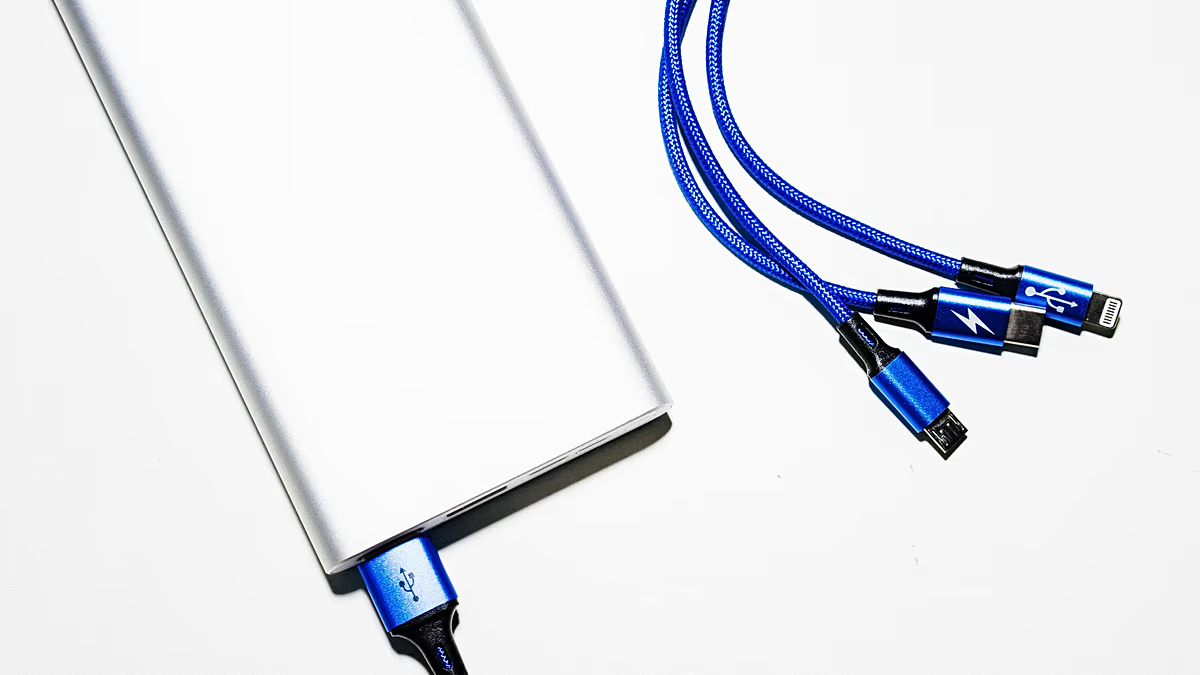
As millions of eager holidaymakers gear up to take to the skies this summer, aviation authorities are issuing an urgent, heartfelt plea regarding one of the most common everyday items hiding in our luggage. Passengers are being strongly urged to double-check their suitcases and keep power banks, vapes, e-cigarettes, and any other lithium battery-powered gadgets out of their checked bags. This renewed warning comes on the heels of a worrying, sharp rise in battery-related incidents on aircraft worldwide. Now, airlines across Europe and the globe are rapidly tightening their safety protocols, deeply concerned about the catastrophic fire risks that a single faulty or overheating lithium battery can pose when trapped deep inside the inaccessible cargo hold of a passenger plane.
To put the scale of the issue into perspective, the British Civil Aviation Authority (CAA) has recently made a startling revelation: the fire threat posed by these commonplace batteries has officially climbed to the number one safety risk facing modern aircraft. According to the CAA, the number of battery-powered devices mistakenly or carelessly packed into check-in hold bags has nearly doubled within just a single year. This problem is compounded by our modern, tech-heavy lifestyles; on average, a single traveler now carries four different lithium-ion-powered devices onto a flight. While these lightweight, high-energy batteries have revolutionized how we stay connected, their incredible ability to pack vast amounts of power into tiny packages also makes them highly volatile, creating a silent hazard that aviators are working tirelessly to manage.
The fundamental danger lies in how these batteries behave when they fail. If a lithium battery suffers a short circuit, gets crushed, has a manufacturing defect, or simply overheats, it can enter a state called “thermal runaway,” rapidly catching fire and releasing toxic, flammable gases. In the cozy, closely monitored environment of the passenger cabin, a smoking device is relatively easy for trained flight attendants to quickly notice and extinguish. However, if that same device malfunctions deep within the belly of the plane, surrounded by hundreds of nylon bags, the situation becomes infinitely more dangerous and incredibly difficult to control. In the UK alone, detected incidents of lithium devices in checked bags skyrocketed from 316 in 2024 to a staggering 643 in 2025. Currently, safety teams are dealing with an average of two critical lithium battery incidents every single week, causing not just safety panics, but also massive flight delays and costly, stressful emergency diversions.
Real-world scares have highlighted just how quickly these situations can escalate. Just this past May, an easyJet flight traveling from Hurghada, Egypt, to London was forced to make an unscheduled emergency diversion to Rome when a passenger suddenly realized, mid-flight, that their portable charger was buried deep in the cargo hold. Back in October, terrifying video footage went viral online showing thick, black smoke and fierce flames belching from the overhead luggage compartments of an Air China flight, an emergency later traced back to an overheating lithium battery. These dramatic incidents serve as a stark reminder of why aviation bodies are pleading with the traveling public to take packing rules seriously before boarding.
In response to this growing threat, international watchdogs are stepping up with stricter guidelines. The International Civil Aviation Organisation (ICAO) has recommended limiting passengers to carrying a maximum of just two power banks, with a strict ban on recharging these portable chargers while onboard, whether using the plane’s built-in USB outlets or other means. The CAA has echoed these sentiments, expressing concern that the vast majority of holidaymakers are completely unaware of these flight regulations. Travelers are also reminded that if they absolutely must pack a laptop in their checked luggage, the device must be powered down completely—not merely left asleep or in standby mode, which still generates heat. Tim Alderslade, the Chief Executive of Airlines UK, emphasized that while pilots and cabin crews are expertly trained to handle mid-air emergencies, the safest outcome is always prevention, which relies entirely on mindfulness when we pack our bags at home.
This safety crackdown is rapidly becoming a global standard as major international airlines align their policies to protect passengers and crew. Heavyweights like Qantas, Emirates, Cathay Pacific, and Singapore Airlines have already instituted strict bans on using or charging power banks during flights. Similarly, Europe’s aviation giant, the Lufthansa Group—which includes Swiss, Austrian Airlines, and Eurowings—updated its policies to strictly limit the number of power banks allowed per passenger, requiring them to be kept within arm’s reach, either in a pocket or safely tucked under the seat. With nations like Türkiye also upgrading their aviation laws to match the strict new ICAO standards, the message to travelers this summer is loud and clear: protect your flight, protect your fellow passengers, and make sure your portable power stays in your pocket, not in the hold.